
Aref Nasrallah
Iraqi activist
About Aref Nasrallah
Born 1958. Aref Nasrallah is an Iraqi ibn Fahd Helli and sadiq Hussaini Shirazi.
Sayyid Aref Muhammad Nasrallah (; born 1958) is an Iraqi Shia social activist, philanthropist, and official commissioner of the Ibn Fahad shrine and seminary.
He was one of the preeminent leaders of the Islamic Action Organisation.
Nasrallah is the founder of the al-Wala' wa al-Fida' wa al-Fateh Association, an organisation that helps revive religious Shia sites that are affected by war or terrorism, as well as hold functions to commemorate the memory of the Ahl al-Bayt.
Early life Nasrallah was born in Karbala, to Muhammad Nasrallah, a merchant and servant at the al-Abbas shrine. Both of his parents hail from the noble Al Faiz family, and claim agnatic descent from Muhammad's daughter Fatimah and her husband, Ali, the first Shia Imam. His ancestors on some occasions ruled the city, and held custodianship of its holy sites. Nasrallah grew up in Karbala, and spent his childhood serving with his father. Nasrallah's life took a turn when his father died in 1969, and he was taken under the care of his uncles. Nasrallah joined the risali movement, known as the Islamic Action Organisation (IOA) in 1973, after the injustices the Baathist regime was projecting towards the Shia of Iraq. By 1976, he was wanted by the regime, because he was both, not enrolled in the army, which was obligatory at that time, and had been reported to the authorities as a member of al-Modarresi's illegal movement. In 1979, he was sentenced to death in absentia, whilst he was still in Karbala.
Combat History Straight after his sentence, he fled to Kuwait, and remained there for just under a year. He then went to Iran, upon the start of the Iran-Iraq war, and carried on with the IAO, which was fully functional and operational in Iran. The IAO was also working with the Islamic Revolutionary Guard Corps (IRGC), and so the IRGC were impressed with Nasrallah's capabilities, and decided to train him and send him out for combat missions abroad. He carried out numerous missions in Kurdistan in 1981. He fought alongside the Peshmerga in the Kurdish mountains until 1987, and then became the manager of the IOA's office in Kurdistan and settled there for ten years.
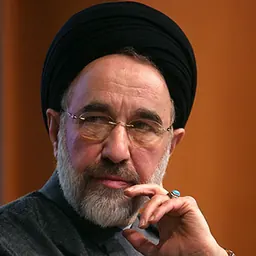
In the nineties, the IOA began to disintegrate, and the leadership was divided into a number of factions. Because of this, Nasrallah began to gradually withdraw himself. When they were released three years later, al-Shirazi turned to Nasrallah for help–who at that time had grown close to the Shirazis–to smuggle them out of Iran and go to Syria. After Nasrallah successfully transported both of al-Shirazi's sons, he returned to Iran. A little while after his arrival, he was imprisoned. A year later in prison, he was sentenced to death, but was then saved, following a decision by Mohammad Khatami to pardon a number of political prisoners, in an easing of the Islamic Republic's strict security policies. After he was released, he remained in Qom, near al-Shirazi–who was now pretty much alone, with most of his children and students abroad or in prison–for approximately six months, until al-Shirazi insisted that Nasrallah leave Iran, as it was not safe anymore.
Nasrallah fled to Kurdistan and then left for Damascus. He set foot in the Syrian capital in February 1999.
Return to Iraq In March 2003, just before Baghdad fell, Nasrallah returned to Iraq. Upon his return, he was assigned as the commissioner of the Ibn Fahd shrine and seminary in Karbala by the Shiite Endowment Office. He also assumed the position of director for the public relations office of Ayatollah Shirazi.
Samarra expedition Three days after the 2006 bombing, Nasrallah organised a protest in Karbala condemning the bombing of the al-Askari shrine. Three thousand people joined in the protest, and from there they decided to go to Samarra. However upon reaching Latifiya, they were stopped by troops from both the US and Iraqi army. As much as Nasrallah insisted they let them through, they were denied. In the end, he was connected to Nouri al-Maliki's personal assistant, who made it clear to Nasrallah that it was impossible for the troops to allow them to proceed for a number of reasons. Despite Nasrallah's countless attempts at convincing al-Maliki's assistant that all they wanted to do was go and protect the shrine from any further potential danger, they were denied. These sentiments were shared by the vast majority of Iraqis, who wanted their country to remain whole and free of ethnic conflict.
After that, Samarra remained untouched, with very little development to return it to its old state. It was slowly fading away and considered a bygone by the majority of the Shias. This was because many of them were either scared of going, or simply avoiding to even think about it since they feared to go. However, Nasrallah was uncomfortable with this and felt he needed to revive the case. He organised another protest in Bayn al-Haramayn, this time demanding the reconstruction of the al-Askari shrine. The protest lasted for three days, however the response was relatively weak. So he consulted al-Shirazi - his spiritual leader – and was granted religious permission to go to Samarra, adding that this will be considered a "religious crusade" and their deaths will be considered martyrdom. to liaise. Nasrallah made five demands to the government, that needed to be addressed if they wanted them to leave, they were:
Inspired by Mirza Shirazi and his revitalisation and re-centralisation of Samarra, Nasrallah has been working to return the city to its prior academic status and become a centre for teaching and training those seeking Islamic sciences and knowledge taught by the Ahl al-Bayt, especially since it took a halt after the death of Shirazi. He has been working on establishing religious and cultural centres. This includes Husayniyat al-Rasool al-Adam, which he personally funds and supervises.
Activism Nasrallah hosts an annual protest, in Arar, near the Iraqi-Saudi border, condemning the demolition of the al-Baqi' cemetery, and demanding the Saudi government to rebuild the graves of the prominent Islamic figures buried there.
He also called for the legislation of a vatican-like vicinity to be made for the city of Karbala, with its own holy laws that will prevent the violation of the sanctity of the city.
In Syria, after the civil war set off, he took the first mourning delegation to visit the Sayeda Zainab shrine, and helped many Afghans that lived in Damascus, relocate to Karbala.
Philanthropy Nasrallah sponsors a number of charitable initiatives in Iraq, some of them include:
The Fatima al-Zahra Charitable Foundation in Iraq, which distributes financial aid to newly weds that are struggling financially in Karbala. The Grand Hussaini Project, which annually provides multiple services (such as accommodation, food and drink, etc.) for free to the public, during the Arbaeen pilgrimage. Al-Rahiq al-Makhtoom campaign that saw the distribution of food bags to underwhelmed families in face of the COVID-19 pandemic.
Personal life Nasrallah is married and has seven children. His son Muhammad-Mehdi was killed in an explosion on June 6, 2016, in Karbala. The attack was claimed by ISIS, and was initially targeting Nasrallah. An annual football tournament was set up in honour of Muhammad-Mehdi by the Youth and Sport Welfare Authority in the Imam Husayn Shrine. Karbala's city council also renamed the road in which the explosion took place in to al-Shahid Muhammad Aref Nasrallah Road.
Nasrallah is a close friend of Kuwaiti MP, Saleh Ashour.
Don’t just read it —
keep it.
Full-length biographies made to live with: read them, listen on the way to work, watch them tonight.
- E-book
- Audio
- Video
Instant download · yours to keep · every purchase keeps this site free
Important facts
People in Aref Nasrallah's life
Named in this biography and alive at the same time


Contemporaries
People whose lives overlapped Aref Nasrallah's



Frequently asked questions
Who is Aref Nasrallah?
Iraqi activist
When was Aref Nasrallah born?
Aref Nasrallah was born on 17 June 1958 in Karbala.
What is Aref Nasrallah's occupation?
Aref Nasrallah is an ibn Fahd Helli and sadiq Hussaini Shirazi.
What nationality is Aref Nasrallah?
Aref Nasrallah is Iraqi.
Sources & further reading
Cite this page
APA: Biography.guide. (2026). Aref Nasrallah. https://biography.guide/aref-nasrallah/
MLA: "Aref Nasrallah." Biography.guide, https://biography.guide/aref-nasrallah/.
Chicago: "Aref Nasrallah." Biography.guide. https://biography.guide/aref-nasrallah/.
Data last updated: 2026-09-22 · Spot an error? Report a correction.
Page generated 2026-09-27 05:21 UTC