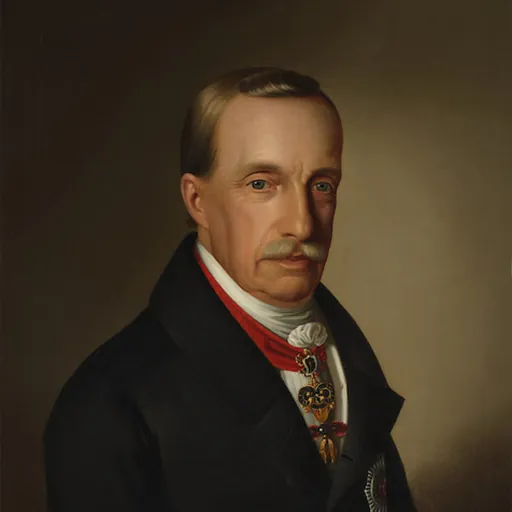
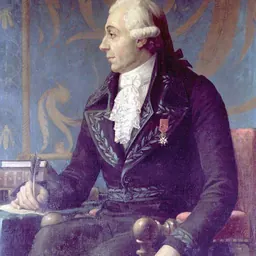
Archduke Joseph, Palatine of Hungary
Archduke of Austria
About Archduke Joseph, Palatine of Hungary
Lived 1776 – 1847 (aged 70). Archduke Joseph, Palatine of Hungary was an Austrian politician, aristocrat, military commander and patron of the arts.
Archduke Joseph Anton of Austria (; ; 9 March 1776 – 13 January 1847) was the 103rd and penultimate palatine of Hungary who served for over fifty years from 1796 to 1847, after a period as governor in 1795.
The latter half of his service coincided with the Hungarian Reform Era, and he mediated between the government of Francis I, King of Hungary and Holy Roman Emperor and the Hungarian nobility, representing the country's interests in Vienna. He played a prominent role in the development of Pest as a cultural and economic centre; the neoclassical buildings constructed on his initiative define the city's modern appearance. The landscaping of the City Park of Budapest and Margaret Island happened under his supervision. He supported public education, technical higher education, the arts, the construction of railroads, and various progressive-thinking societies and associations. He donated substantially towards the establishment of the Hungarian National Museum, the Hungarian Academy of Sciences, and the National Széchényi Library.
He was an archduke of Austria and a prince of Bohemia, Hungary, and Tuscany as the son of Leopold II, Holy Roman Emperor. The Hungarian or Palatinal branch of the House of Habsburg-Lorraine descends from him. In the Imperial Army, and later in the Austrian Army, he bore the rank of Feldmarschall.
Early life and education
Childhood in Tuscany The grand ducal family of Tuscany in 1776 on Johan Zoffany's painting. Left to right: Maria Theresa, Charles, Alexander Leopold, Maximilian, Maria Anna, the Grand Duchess, Joseph, the Grand Duke, Francis, and Ferdinand. alt=A family seated/stood towards the viewer. The women are wearing stays and hoop skirts with close-bodied, low-necked gowns. They wear their hair in high rolls, powdered white. The men are wearing coats, waistcoats and white breeches. On the laft stands a 9-year-old girl in blue, holding the hand of a 6-year-old by in bright red. Before them sits a 4-year-old boy in yellow, with a light blue belt, playing with a black dog. Behind them, in a golden-and-green chair sits a 2-year-old boy in a long, light pink dress. He and a 5-year-old girl in blue are playing with a white dove. Then, a middle-aged woman sits in a white dress, holding an infant in red, Joseph. Next to them is a man wearing black, standing, and two blonde boys, one in red silk, the other in light green, holding hands. Archduke Joseph of Austria was born on 9 March 1776 in Florence, Grand Duchy of Tuscany as the ninth child and seventh son of Leopold I, Grand Duke of Tuscany and Infanta Maria Luisa of Spain. He had fifteen siblings, two of whom died in infancy. Through his father, he was a grandson of Maria Theresa, Holy Roman Empress Dowager, Queen Regnant of Bohemia and Hungary. The family lived in the Palazzo Pitti in Florence, spent summers in the Villa del Poggio Imperiale or the Villa di Poggio a Caiano, and some winters in Pisa.
The grand ducal couple fostered a warm, intimate family environment, raising their children according to the age's modern principles. They paid attention to their diet and regular physical exercise, incorporating ideas from Locke and Rousseau in addition to a traditional courtly upbringing that emphasised etiquette and royal duty. Until the age of four, the children were entrusted to German-, Italian-, and French-speaking women, who were only allowed to use their respective mother tongues. Instruction in reading and writing started at the age of three, and language classes a year later.
Following their grandmother Maria Theresa's instructions, the family's life revolved around Catholicism. Every day, the children listened to religious texts while dressing, attended mass, studied the catechism, and prayed the rosary. The Empress followed their development closely through her correspondence with their parents and educational staff. alt=An elderly woman in a black dress and a black cap and weil, standing next to a table displaying the crowns and regalia of Hungary and Bohemia. With her right hand, she is pointing towards the crown, in the left, she holds a gilded fan. Maria Theresa appointed the young archdukes' ajo (governor), Count , assisted by sottoajo (vice-governor) Major Marquess Federigo Manfredini and tutors. Grand Duke Leopold and Colloredo aimed to teach the children to lead a simple life, be humble, dutiful, and devoted to the well-being of their subjects. In their studies, they were taught to be inquisitive and independent. The Grand Duke wished for his children to live as free and unrestricted as possible, while the ajo expected them to be graceful, serious, and disciplined beyond their years, leading to disagreements. Archduke Joseph was only under Colloredo's guidance for two and a half years; when he left in 1782, Manfredini was promoted to his place, who allowed his charges more freedom. alt=Black-and-white portrait of an elderly man wearing a white powdered wig and the robes and cross of an archbishop. The preparatory stage of Joseph's education lasted until the age of nine, by when he had learned to speak and write in German, French, Italian, and Latin. He received the traditional education of Austrian archdukes, learning etiquette and conduite (the behaviour expected in high society), genealogy, geography, history, ethics, law, natural law, political science, and mathematics. Joseph had a preference for history, archaeology, and natural history, and was not as apt in mathematics. It was important for his parents that all of their children learned some form of manual labour; Joseph was instructed in gardening, botany, and horticulture. In 1795, he uncovered and repressed a conspiracy of the led by Ignác Martinovics. Soon after, he joined his family in Laxenburg castles, where, being an enthusiastic pyrotechnician, he prepared fireworks to surprise his sister Amalia on her name day. for an area of 282,870 km2/109,220 sq mi in 1790) and at what a “backwards stage of culture, among what primitive economic conditions” people lived. Arriving on 20 February (O.S.), he was welcomed warmly. The Archduke was enchanted by the “charm” and “reserved modesty” of Alexandra Pavlovna, a tall, blonde girl aged fifteen, whom he described as “well-built and very beautiful”, as well as “clever” and “talented”. After a grave robbery in the late 1980s, an investigation was carried out, determining that Alexandra Pavlovna suffered and probably died of tuberculosis. The examinations ruled out poisoning, rumours of which had surfaced following her death. On 30 August 1815, in Schaumburg Castle, he married Princess Hermine of Anhalt-Bernburg-Schaumburg-Hoym, the seventeen-year-old eldest daughter of the late Victor II, Prince of Anhalt-Bernburg-Schaumburg-Hoym and Princess Amelia of Nassau-Weilburg. On 14 September 1817, she prematurely gave birth to twins, Hermine and Stephen. The labour was complicated, and Hermine died of postpartum infections within twenty-four hours. now in a more central place. and helped Joseph in his job as palatine. Their main shared cause was making Hungarian the country's official language (instead of Latin). On New Year's Day 1826, she gave a speech in Hungarian, the first time a Habsburg archduchess addressed the country in its own language. Maria Dorothea actively participated in the social life of Pest, frequenting the houses of the Károlyis and the Széchenyis, with whom she conversed in Hungarian. She often wore a Hungarian-style dress. Knight of the Golden Fleece (1790) Grand Cross of St. Stephen, in Diamonds (1794) Gold Civil Cross of Honour (1813/14) Knight of the Red Eagle, 1st Class boxstyle_1=background-color: #fcc; boxstyle_2=background-color: #fb9; boxstyle_3=background-color: #ffc; boxstyle_4=background-color: #bfc; boxstyle_5=background-color: #9fe; 1= 1. Archduke Joseph, Palatine of Hungary 2= 2. Leopold II, Holy Roman Emperor 3= 3. Maria Louisa of Spain 4= 4. Francis I, Holy Roman Emperor 5= 5. Maria Theresa of Austria 6= 6. Charles III of Spain 7= 7. Maria Amalia of Saxony 8= 8. Leopold, Duke of Lorraine 9= 9. Élisabeth Charlotte of Orléans 10= 10. Charles VI, Holy Roman Emperor 11= 11. Elisabeth Christine of Brunswick 12= 12. Philip V of Spain 13= 13. Elisabeth Farnese 14= 14. Augustus III of Poland 15= 15. Maria Josepha of Austria
Don’t just read it —
keep it.
Full-length biographies made to live with: read them, listen on the way to work, watch them tonight.
- E-book
- Audio
- Video
Instant download · yours to keep · every purchase keeps this site free
Important facts
Family & relationships
People in Archduke Joseph, Palatine of Hungary's life
Named in this biography and alive at the same time

Related people
Same field, nearest in time



Contemporaries
People whose lives overlapped Archduke Joseph, Palatine of Hungary's


Frequently asked questions
Who was Archduke Joseph, Palatine of Hungary?
archduke of Austria (1776-1847)
When was Archduke Joseph, Palatine of Hungary born?
Archduke Joseph, Palatine of Hungary was born on 9 March 1776 in Florence.
When did Archduke Joseph, Palatine of Hungary die?
Archduke Joseph, Palatine of Hungary died on 13 January 1847 in Buda.
What was Archduke Joseph, Palatine of Hungary's occupation?
Archduke Joseph, Palatine of Hungary was a politician, aristocrat, military commander and patron of the arts.
What nationality was Archduke Joseph, Palatine of Hungary?
Archduke Joseph, Palatine of Hungary was Austrian.
Sources & further reading
· Wikipedia: Archduke Joseph, Palatine of Hungary
· DBpedia: Archduke Joseph of Austria (Palatine of Hungary)
Cite this page
APA: Biography.guide. (2026). Archduke Joseph, Palatine of Hungary. https://biography.guide/archduke-joseph-palatine-of-hungary/
MLA: "Archduke Joseph, Palatine of Hungary." Biography.guide, https://biography.guide/archduke-joseph-palatine-of-hungary/.
Chicago: "Archduke Joseph, Palatine of Hungary." Biography.guide. https://biography.guide/archduke-joseph-palatine-of-hungary/.
Data last updated: 2026-09-21 · Spot an error? Report a correction.
Portrait: Wikimedia Commons · author & licence
Page generated 2026-09-27 05:00 UTC