
About Appleton P. Clark, Jr.
Lived 1865 – 1955 (aged 89). Appleton P. Clark, Jr. was an American architect.
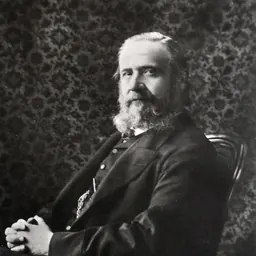
Appleton Prentiss Clark Jr. (November 13, 1865 – March 25, 1955) was an American architect from Washington, D.C. During his 60-year career, Clark was responsible for designing hundreds of buildings in the Washington area, including homes, hotels, churches, apartments and commercial properties. He is considered one of the city's most prominent and influential architects from the late 19th and early 20th centuries. Many of his designs are now listed on the National Register of Historic Places (NRHP).
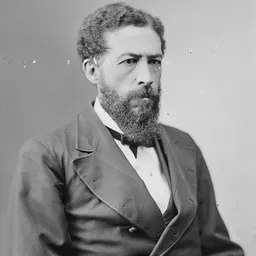
Early life During the Civil War, Clark's family moved from Philadelphia to Washington, D.C., shortly before his birth on November 13, 1865. His father was a lawyer and prominent local Republican who was a strong advocate of voting rights for African Americans. After graduating from Central High School in 1883, Clark apprenticed with prominent architect Alfred B. Mullett until 1885. He then traveled to Europe to observe and study the continent's famous buildings and returned to Washington in 1886 where he opened his own practice. In 1891, he married Vermont native Florence Perry with whom he had two children, Waldo and Marguerite.
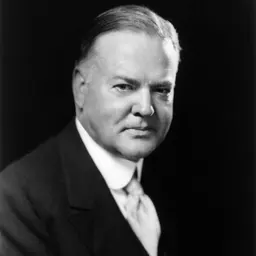
Career Clark originally designed buildings in the Romanesque Revival style, influenced by his time working with Mullett. Examples include Eastern Presbyterian Church (now Imani Temple) at 609 Maryland Avenue NE (built 1891) and the Washington Post Building at 1337 E Street NW (built 1893, razed 1954). Like other architects, his design preferences changed throughout his career. His works include buildings designed in the Colonial Revival, Gothic Revival, Italianate, Renaissance Revival, Shingle and Spanish Colonial Revival styles. Many of his house designs used the Georgian Revival style, including the Thomas Gales House (once the residence of Herbert Hoover, and now the Embassy of Myanmar) at 2300 S Street NW, and the J. Philip Herrmann House (once the residence of William Howard Taft, now the Embassy of Syria) at 2215 Wyoming Avenue NW.
Clark's residential designs were not limited to houses. He designed 27 apartment buildings in Washington, D.C., including The Presidential at 1026 16th Street NW, The Rockingham at 1317 Rhode Island Ave NW and The Roosevelt at 2101 16th Street NW. Clark also specialized in designing commercial and public properties, including fifteen banks and five schools. He was a member of the Washington Board of Trade and American Institute of Architects (AIA), serving as president of the AIA's local chapter. He also served on the board of directors of the Equitable Life Insurance Company, the Terminal Refrigerating and Warehousing Company, the Washington Hotel Company and the Washington Sanitary Housing Company. Clark was also an author, contributing an essay titled "History of Architecture in Washington" for volume II of John Clagett Proctor's Washington: Past and Present, and writing Institutional Homes for Children, a book advocating for improved residential facilities for orphans. A strong advocate for these improved facilities, he designed three children's homes in the Washington area. He left an estate of approximately $700,000 to his family members. Clark is now considered one of "Washington's most influential architects" and one of the "most prominent and prolific early twentieth century architects."
Several of Clark's designs, including buildings he designed expansions or alterations, are now listed on the NRHP, including: 1644-1666 Park Road NW, 1833 Park Road NW, the Christian Heurich Mansion, Engine Company 21, the Denrike Building, the John Mercer Langston School, the National Saving And Trust Company, Riggs National Bank, Second Baptist Church, Second National Bank and the U.S. Civil Service Commission Building. Many of his buildings are also designated contributing properties to historic districts throughout the city. In addition, his buildings listed on the District of Columbia Inventory of Historic Sites include the Homer Building, Owl's Nest, Saint Phillips Baptist Church, and the Victor Building. 1921 19th Street NW (1906) 2007 Columbia Road NW (1899) The Chelsea, 201 E Street SE (1905) also designed rebuild in 1907 after the first theater was destroyed in a fire The Lurgan, 919 L Street NW (1913) William L. Crounse House (now the Austrian ambassador's residence), 2419 Wyoming Avenue NW (1926)
Don’t just read it —
keep it.
Full-length biographies made to live with: read them, listen on the way to work, watch them tonight.
- E-book
- Audio
- Video
Instant download · yours to keep · every purchase keeps this site free
Important facts
People in Appleton P. Clark, Jr.'s life
Named in this biography and alive at the same time



Related people
Same field, nearest in time



Contemporaries
People whose lives overlapped Appleton P. Clark, Jr.'s



Frequently asked questions
Who was Appleton P. Clark, Jr.?
American architect
When was Appleton P. Clark, Jr. born?
Appleton P. Clark, Jr. was born on 13 November 1865 in Washington, D.C..
When did Appleton P. Clark, Jr. die?
Appleton P. Clark, Jr. died on 25 March 1955 in St. Petersburg.
What was Appleton P. Clark, Jr.'s occupation?
Appleton P. Clark, Jr. was an architect.
What nationality was Appleton P. Clark, Jr.?
Appleton P. Clark, Jr. was American.
Sources & further reading
· Wikipedia: Appleton P. Clark, Jr.
· DBpedia: Appleton P. Clark Jr.
Cite this page
APA: Biography.guide. (2026). Appleton P. Clark, Jr.. https://biography.guide/appleton-p-clark-jr/
MLA: "Appleton P. Clark, Jr.." Biography.guide, https://biography.guide/appleton-p-clark-jr/.
Chicago: "Appleton P. Clark, Jr.." Biography.guide. https://biography.guide/appleton-p-clark-jr/.
Data last updated: 2026-09-22 · Spot an error? Report a correction.
Page generated 2026-09-27 05:22 UTC