
About Appia Annia Regilla
Lived 125 – 160 (aged 34–35). Appia Annia Regilla was a Roman aristocrat and priestess.
Appia Annia Regilla, full name Appia Annia Regilla Atilia Caucidia Tertulla (Greek: , 125–160), was a wealthy, aristocratic and influential Roman woman, who was a distant relative of several Roman emperors and empresses. She was the wife of the prominent Greek Herodes Atticus.
Genealogy Regilla was born into an aristocratic family of consular rank. She was a member of the gens Annia, of the venerable branch of the Annii Regilli. Regilli means "Little Kings". Regilla's brother, Appius Annius Atilius Bradua, served as an ordinary consul in 160. Her mother's brother was Marcus Atilius Metilius Bradua Caucidius Tertullus...Bassus. Her uncle served as a polyonymous Proconsul of the Africa Province under the Roman Emperor Antoninus Pius (138-161). Herodes Atticus was a very wealthy, influential, aristocratic Athenian who was a friend to the Roman Emperor Antoninus Pius and was a tutor to the Emperor's adopted son Marcus Aurelius.
Herodes Atticus and Regilla married in 139. Regilla was about 14 years old and Herodes Atticus was 40 years old. When Regilla married Herodes Atticus, Annius Gallus gave his daughter a dowry. With this dowry Regilla bought with her husband a villa on the third mile of the Appian Way just south of Rome and together they controlled a large area of land, which was known as the "Triopio" (from Triopas, King of Thessaly), and later, in medieval times, as Capo di Bove.
Regilla and Herodes Atticus only lived in Italy for a while. In a few years after their marriage, Herodes Atticus, Regilla and their children left Italy and moved to Greece. Although she was directly cut off from her immediate influential family, relatives and friends in Italy, Regilla became a part of the highest Greek circle of society, in particular in Athens.
Greece and Olympia Regilla spent her remaining years living and travelling around Greece. When she lived in Athens, she was awarded as a priestess of the goddess Tyche and the venerable, long-established office of priestess of Demeter Chamyne in Olympia, Greece in 153. As a priestess of Demeter Chamyne, Regilla was the only woman officially present at the Olympic Games. Regilla sat on or near the altar of Demeter Chamyne on the north side of the stadium in Olympia opposite on the stand of the judges to view the competitions. Being a priestess serving Demeter Chamyne, was a great honor and was quite physically demanding.
Using her own considerable influence and wealth, Regilla erected a great nymphaeum (a monumental fountain) at Olympia. Her husband constructed an aqueduct that fed the nymphaeum. The fountain that Regilla built made the cool refreshing water available to the people in this hot, dusty area. In the centre of the nymphaeum stood a life-sized statue of a bull. On that bull there is an honorific inscription dedicated to Regilla stating: “Regilla, priestess of Demeter, dedicated the water and the things around the water to Zeus”. At Olympia, bulls were sacrificed at the Temple of Zeus, the chief divinity of Olympia.
The fountain that Regilla built had two levels of niches bearing statues and a columnar façade. Statues have survived from the monument. The central niche on each level held a statue of Zeus, surrounding by portrait statues on each side. The lower level contained the Roman Emperor Antoninus Pius and the ancestors and descendants of the emperor. These included the previous Roman emperor Hadrian; Hadrian's cousin-wife Vibia Sabina; the Roman empress Faustina the Elder; the daughter of the elder Faustina and Antoninus Pius, Faustina the Younger; and Antoninus Pius’ adopted son and son-in-law, the future Roman emperor Marcus Aurelius. This level also showed several children of Marcus Aurelius and Faustina the Younger, in particular their first daughter Annia Galeria Aurelia Faustina (aged about 7 but shown as a young adolescent). On the upper level, paralleling the imperial family, were statues of Regilla, Herodes Atticus, Regilla's parents, Regilla's maternal grandfather and Herodes Atticus’ parents. There were four statues of the children of Regilla and Herodes Atticus, named Elpinice, Athenais, Atticus Bradua and Regillus. The life-sized statue of the bull and the statues from the fountain are on display at the Archaeological Museum of Olympia. Regilla's consul brother brought charges in Rome against his brother-in-law, alleging that Herodes Atticus had ordered her to be beaten to death. Herodes was acquitted after defending himself at the trial. This followed an earlier legal case in which the emperor, Marcus Aurelius, had exonerated Atticus - his old tutor.
Posthumous honors and legacy After Regilla died, Herodes Atticus was stricken with grief. Herodes Atticus made various dedications to the memory of his wife. He offered Regilla's jewels to the goddesses Ceres and Proserpina. The building that is believed to be her tomb, known as the Temple of Rediculum, was built in the grounds of the villa she owned with Herodes Atticus, in what is now the Caffarella Park close to the Appian Way; the building is still well-preserved. Atticus also had raised on the boundary line of the property two columns bearing this inscription in Greek and Latin:
“To the memory of Annia Regilla, wife of Herodes, the light and soul of the house, to whom these lands once belonged”.
In an agricultural village located in the Datça Peninsula, a temple was dedicated to Faustina the Younger under the title of the New Ceres, a burial place for the family was placed under the protection of Minerva and Nemesis, and lastly a grove was consecrated to the memory of Regilla. In 161, Herodes Atticus erected a monument in Athens called the Odeon to honor her memory.
From the 2nd century to the present day, Regilla and Herodes Atticus have continued to be considered as great benefactors in Greece, in particular in Athens. Two streets in Athens are named after them—Herodou Attikou Street and Rēgíllēs Street—as is a Square in downtown Athens. The residence of the Prime Minister of Greece is on Rēgíllēs Street, while the Prime Minister's official seat is 19 Herodou Attikou Street. Regilla and Herodes Atticus also have streets named after them in Rome; these are located in the Quarto Miglio suburb close to the area of the Triopio.
Children Regilla bore Herodes Atticus six children; three survived to adulthood. Their children were: Son, Claudius – born and died in 141 Daughter, Elpinice – born as Appia Annia Claudia Atilia Regilla Elpinice Agrippina Atria Polla, 142-165 Daughter, Athenais – born as Marcia Annia Claudia Alcia Athenais Gavidia Latiaria, 143-161 Son, Atticus Bradua – born as Tiberius Claudius Marcus Appius Atilius Bradua Regillus Atticus, born 145 Son, Regillus – born as Tiberius Claudius Herodes Lucius Vibullius Regillus, 150-155 Unnamed child who died with Regilla or died even perhaps three months later in 160
Gallery
Don’t just read it —
keep it.
Full-length biographies made to live with: read them, listen on the way to work, watch them tonight.
- E-book
- Audio
- Video
Instant download · yours to keep · every purchase keeps this site free
Important facts
People in Appia Annia Regilla's life
Named in this biography and alive at the same time


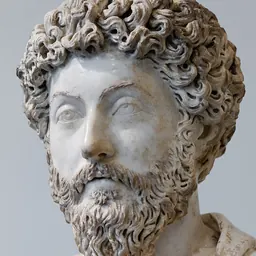

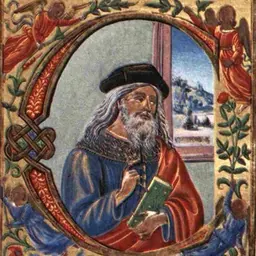
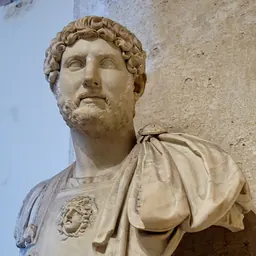

Related people
Same field, nearest in time




Contemporaries
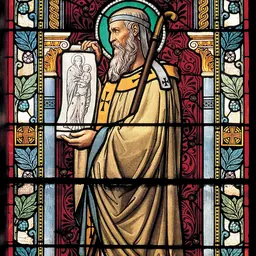
People whose lives overlapped Appia Annia Regilla's

Frequently asked questions
Who was Appia Annia Regilla?
Roman noblewoman (125-160)
When was Appia Annia Regilla born?
Appia Annia Regilla was born in 125 in Rome.
When did Appia Annia Regilla die?
Appia Annia Regilla died in 160 in Marathon.
What was Appia Annia Regilla's occupation?
Appia Annia Regilla was an aristocrat and priestess.
What nationality was Appia Annia Regilla?
Appia Annia Regilla was Roman.
Sources & further reading
· Wikipedia: Appia Annia Regilla
· DBpedia: Appia Annia Regilla
Cite this page
APA: Biography.guide. (2026). Appia Annia Regilla. https://biography.guide/appia-annia-regilla/
MLA: "Appia Annia Regilla." Biography.guide, https://biography.guide/appia-annia-regilla/.
Chicago: "Appia Annia Regilla." Biography.guide. https://biography.guide/appia-annia-regilla/.
Data last updated: 2026-09-25 · Spot an error? Report a correction.
Page generated 2026-09-27 05:10 UTC