
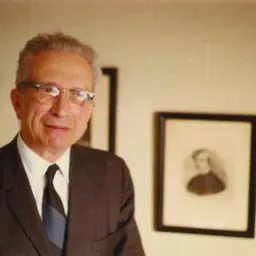
Anwarul Iqbal
Bangladeshi politician
About Anwarul Iqbal
Lived 1950 – 2015 (aged 64). Anwarul Iqbal was a Bangladeshi and Pakistani.
Anwarul Iqbal (born 1949 or 1950; died 2015) was a Bangladeshi police officer and an adviser to the caretaker government from 2007 to 2009.
Iqbal was a freedom fighter in the Bangladesh Liberation War. He joined the Bangladesh Police in 1973 and worked in numerous branches of the service. He also served in senior positions in the police contingents of UN peacekeeping missions to Mozambique and Angola. When the Rapid Action Battalion (RAB) was formed in 2004, he was chosen as its first director general and led it until April 2005. From July to November 2006, he was inspector general of police (IGP), the highest position in the police force. He was awarded the President Police Medal and was awarded the Bangladesh Police Medal twice.
Months after retiring from the police, Iqbal was appointed an adviser to the caretaker government led by Fakhruddin Ahmed. At first he was given charge of two ministries: the Ministry of Local Government, Rural Development and Co-operatives, and the Ministry of Labour and Employment. Later, he was put in charge of the Ministry of Textiles and Jute as well. He served until elections were held two years later.
Education Iqbal earned a master's degree in Bengali literature at the University of Chittagong. He was a freedom fighter in the Bangladesh Liberation War.
Career
Police Iqbal joined the Bangladesh Police on 22 August 1973. During his career, he would serve in various units at the sub-district and district levels, as well as the Chittagong and Khulna Metropolitan Police, and the Armed Police Battalion. He would receive additional training at the Police Staff College, UK, and the UN Human Rights Centre, Geneva. Iqbal was awarded the President Police Medal in 1980 for his contributions to the police and the country.
In the mid-1990s he participated in two UN peacekeeping missions. He was chief of staff of CIVPOL as part of ONUMOZ in Mozambique from December 1993 to December 1994. And he was police commissioner of UNAVEM III in Angola from March 1995 to June 1997.
He was awarded the Bangladesh Police Medal (BPM) in 2000. he was moved to head the Criminal Investigation Department. A second BPM followed in 2002.
In February 2004, he became the founding director general of the Rapid Action Battalion (RAB). Under his tenure, 133 RAB members were returned to the units they had come from as punishment for a range of offences, from breaches of discipline to robbery, corruption, and bribery. On 22 April 2005, he was transferred to police headquarters, and Abdul Aziz Sarkar replaced him as director general of the RAB.
On 6 July 2006, Iqbal became the inspector general of police (IGP), the top position in the force. At the beginning of November 2006, at the start of the 2006-2008 Bangladeshi political crisis, he was replaced by Khuda Baksh Chowdhury and made an officer on special duty. Days later, Iqbal took voluntary retirement, ending a 33-year police career.
Interim government 2007–2009
On 11 January 2007, President Iajuddin Ahmed resigned as chief adviser of the caretaker government, as did most of his advisers. Fakhruddin Ahmed, a former Bangladesh Bank governor, was made chief adviser. Iqbal was sworn in as an adviser (equivalent to a cabinet minister) of the caretaker government on 16 January 2007. He was given charge of two ministries: the Ministry of Local Government, Rural Development and Co-operatives, and the Ministry of Labour and Employment. In September, he travelled to Singapore for medical treatment, accompanied by his wife, Dora Anwar.
Iqbal led the drafting of several ordinances meant to empower local government and reduce control by the central government. The president promulgated ordinances regarding a local government commission and upazila parishads. Their effects were short-lived, however, because the next elected government did not ratify them. They were annulled or repealed.
The newspaper New Age reported that in the first six months of the interim government, Iqbal failed to fully implement an agreement on minimum wages in the garment manufacturing sector. Also, the government's slum clearance activities made tens of thousands jobless. No provisions had been made to rehabilitate those evicted, even though legally required. A year later, Iqbal spoke at the International Labour Organization (ILO) conference. He told them that the government had strengthened vocational training for the unemployed. He also said they aimed to get 30,000 children out of hazardous jobs by providing non-formal education and other assistance.
The number of child labourers in Bangladesh at the time was estimated at 8.5 million, 1.4 million of whom were doing risky work. A bright spot in the government's attempt to phase out child labour was the percentage of the population who had birth certificates (issued under the ministry of local government). It rose from 12% in 2006 to 40% in 2008. The absence of proof of age had hitherto complicated enforcement of child labour laws.
On 15 January 2008, a third ministry was added to Iqbal's portfolio. The Ministry of Textiles and Jute was reallocated from Geetiara Safya Chowdhury to him. The government wanted to privatise money-losing jute mills. In pursuit of this goal, in July 2008 they leased five mostly inoperative state-run jute mills to private operators. The mills (Karnaphuli Jute Mills, MM Jute Mills, People's Jute Mills, Qaumi Jute Mills, and RR Jute Mills) continued to struggle with losses and closures under the next government.
A general election was held in December 2008 under the caretaker government. The Awami League-led Grand Alliance won a commanding victory, and shortly Sheikh Hasina formed a new government. Iqbal's time as an adviser ended on 6 January 2009. He was buried at Banani graveyard.
Don’t just read it —
keep it.
Full-length biographies made to live with: read them, listen on the way to work, watch them tonight.
- E-book
- Audio
- Video
Instant download · yours to keep · every purchase keeps this site free
Important facts
People in Anwarul Iqbal's life
Named in this biography and alive at the same time



Contemporaries
People whose lives overlapped Anwarul Iqbal's


Frequently asked questions
Who was Anwarul Iqbal?
Bangladeshi politician
When was Anwarul Iqbal born?
Anwarul Iqbal was born on 1 October 1950 in Feni District.
When did Anwarul Iqbal die?
Anwarul Iqbal died on 15 January 2015 in Dubai, United Arab Emirates.
What nationality was Anwarul Iqbal?
Anwarul Iqbal was Bangladeshi and Pakistani.
Sources & further reading
Cite this page
APA: Biography.guide. (2026). Anwarul Iqbal. https://biography.guide/anwarul-iqbal/
MLA: "Anwarul Iqbal." Biography.guide, https://biography.guide/anwarul-iqbal/.
Chicago: "Anwarul Iqbal." Biography.guide. https://biography.guide/anwarul-iqbal/.
Data last updated: 2026-09-20 · Spot an error? Report a correction.
Page generated 2026-09-27 05:26 UTC