
Anwar al-Awlaki
American-Yemeni imam and suspected Islamist extremist
About Anwar al-Awlaki
Lived 1971 – 2011 (aged 40). Anwar al-Awlaki was an American and Yemeni engineer, imam and spokesperson, known for Inspire (magazine) and Spokesman.
Anwar Nasser Abdulla al-Awlaki (; April 21, 1971 – September 30, 2011) was an American-Yemeni Islamic cleric, lecturer, and propagandist. He was assassinated in Yemen in 2011 by a U.S. drone strike ordered by President Barack Obama. Al-Awlaki was the first U.S. citizen to be targeted and assassinated by a U.S. government drone strike. Al-Awlaki, a dual citizen of the U.S. and Yemen, was a key organizer for the Islamist militant group al-Qaeda.
Al-Awlaki was born in Las Cruces, New Mexico, U.S., in 1971 to parents from Yemen. Growing up partly in the United States and partly in Yemen, he attended various U.S. universities in the 1990s and early 2000s. He also worked as an imam despite having no religious qualifications and almost no religious education. Al-Awlaki returned to Yemen in early 2004 and became a university lecturer after a brief stint as a public speaker in the United Kingdom. U.S. officials said that in 2009, al-Awlaki was promoted to the rank of "regional commander" within al-Qaeda. He repeatedly called for jihad against the United States. In April 2010, al-Awlaki was placed on a CIA kill list by President Obama. Al-Awlaki's father and civil rights groups challenged the order in court. The U.S. deployed unmanned aircraft (drones) in Yemen to search for and kill him, Al-Awlaki was killed on September 30, 2011. The New York Times wrote in 2015 that al-Awlaki's public statements and videos had been more influential in inspiring acts of Islamic terrorism in the wake of his killing than they were before his death.
Early life Anwar al-Awlaki was born in Las Cruces, New Mexico, in 1971 to parents from Yemen, while his father, Nasser al-Awlaki, was doing graduate work at U.S. universities. His father was a Fulbright Scholar who earned a master's degree in agricultural economics at New Mexico State University in 1971, received a doctorate at the University of Nebraska–Lincoln, and worked at the University of Minnesota from 1975 to 1977. Yemen's prime minister from 2007 to 2011, Ali Mohammed Mujur, was a relative.
The family returned to Yemen in 1978, when al-Awlaki was seven years old. He lived there for 11 years, and studied at Azal Modern School.
Life in the United States, 1990–2002
Education Around 1990, al-Awlaki went to the U.S. to attend college. He earned a B.S. in civil engineering from Colorado State University (1994), where he was president of the Muslim Student Association. Mullah Mohammed Omar did not form the Taliban until 1994. When Al-Awlaki returned to campus, he showed increased interest in religion and politics. He worked on a doctorate in Human Resource Development at The George Washington University Graduate School of Education and Human Development in 2001.
Time as imam In 1994, al-Awlaki married a cousin from Yemen, He left Denver soon after, moving to San Diego.
From 1996 to 2000, al-Awlaki was imam of the Masjid Ar-Ribat al-Islami mosque in San Diego, California, where he had a following of 200–300 people. U.S. officials later alleged that Nawaf al-Hazmi and Khalid al-Mihdhar, hijackers of American Airlines Flight 77, attended his sermons and personally met him during this period, although Al-Awlaki told authorities their conversations were trivial in nature. Hazmi later lived in Northern Virginia and attended al-Awlaki's mosque there. The 9/11 Commission Report said that the hijackers "reportedly respected [al-Awlaki] as a religious figure". In 2004, the FBI described this group as a "front organization to funnel money to terrorists". Al-Awlaki told reporters that he resigned from leading the San Diego mosque "after an uneventful four years," and took a brief sabbatical, traveling overseas to various countries.
Al-Awlaki decided to pursue his PhD and was accepted at George Washington University in Washington, D.C., and was soon recruited to be the imam of the nearby suburban Dar al-Hijrah mosque in 2000. The new imam, who was described as alluring and charming at this time, began to draw young people to Dar Al-Hijrah His proficiency as a public speaker and command of the English language helped him attract followers who did not speak Arabic. "He was the magic bullet", according to the mosque spokesman Johari Abdul-Malik. "He had everything all in a box." Al-Awlaki was considered a moderate during his time at Dar Al-Hijrah, publicly condemned the September 11 attacks and Al-Qaeda, was even invited to speak at the United States Department of Defense and became the first imam to conduct a prayer service for the Congressional Muslim Staffer Association at the U.S. Capitol. He led academic discussions frequented by FBI Director of Counter-Intelligence for the Middle East Gordon M. Snow. Al-Awlaki also served as the Muslim chaplain at George Washington University. Soon after the 9/11 attacks, al-Awlaki was sought in Washington, D.C., by the media to answer questions about Islam, its rituals, and its relation to the attacks. He was interviewed by National Geographic, The New York Times, and other media. Al-Awlaki condemned the attacks. The New York Times said at the time that he was "held up as a new generation of Muslim leader capable of merging East and West." In 2010, Fox News and the New York Daily News reported that some months after the 9/11 attacks, a Pentagon employee invited al-Awlaki to a luncheon in the Secretary's Office of General Counsel. The U.S. secretary of the Army had suggested that a moderate Muslim be invited to give a talk.
In a video clip bearing the imprint of al-Qaeda in the Arabian Peninsula, issued on April 16 in al-Qaeda's monthly magazine Sada Al-Malahem, al-Awlaki said: "What am I accused of? Of calling for the truth? Of calling for jihad for the sake of Allah? Of calling to defend the causes of the Islamic nation?" In the video he also praises both Abdulmutallab and Hasan, and describes both as his "students".
In late April, Representative Charlie Dent (R-PA) introduced a resolution urging the U.S. State Department to withdraw al-Awlaki's U.S. citizenship. By May, U.S. officials believed he had become directly involved in terrorist activities.
On July 16, the U.S. Treasury Department added him to its list of Specially Designated Global Terrorists. Stuart Levey, Under Secretary of the Treasury for Terrorism and Financial Intelligence, called him "extraordinarily dangerous", and said al-Awlaki was involved in several organizational aspects of terrorism, including recruiting, training, fundraising, and planning individual attacks.
A few days later, the United Nations Security Council placed al-Awlaki on its UN Security Council Resolution 1267 list of individuals associated with al-Qaeda, describing him as a leader, recruiter, and trainer for al-Qaeda in the Arabian Peninsula. The resolution stipulates that U.N. members must freeze the assets of anyone on the list, and prevent them from travelling or obtaining weapons. The following week, Canadian banks were ordered to seize any assets belonging to al-Awlaki. The Royal Canadian Mounted Police's senior counter-terrorism officer Gilles Michaud described him as a "major, major factor in radicalization".
In October 2010, U.S. Congressman Anthony Weiner (D-NY) urged YouTube to take down al-Awlaki's videos from its website, saying that by hosting al-Awlaki's messages, "We are facilitating the recruitment of homegrown terror." Pauline Neville-Jones, British security minister, said "These Web sites ... incite cold-blooded murder." YouTube began removing the material in November 2010. Ali al-Saneaa, the head of the prosecutor's office, announced the charges during the trial of Hisham Assem, who had been accused of killing Jacques Spagnolo, an oil industry worker. He said that al-Awlaki and Assem had been in contact for months, and that al-Awlaki had encouraged Assem to commit terrorism. Al-Awlaki's lawyer said that his client was not connected to Spagnolo's death.
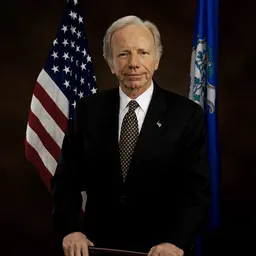
In his book Ticking Time Bomb: Counter-Terrorism Lessons from the U.S. Government's Failure to Prevent the Fort Hood Attack (2011), former U.S. Senator Joe Lieberman described al-Awlaki, Australian Muslim preacher Feiz Mohammad, Muslim cleric Abdullah el-Faisal, and Pakistani-American Samir Khan as "virtual spiritual sanctioners" who use the internet to offer religious justification for Islamist terrorism.
Lawsuit against the US In July 2010, al-Awlaki's father, Nasser al-Awlaki, contacted the Center for Constitutional Rights and the American Civil Liberties Union to represent his son in a lawsuit that sought to remove Anwar from the targeted killing list. ACLU's Jameel Jaffer said:
he United States is not at war in Yemen, and the government doesn't have a blank check to kill terrorism suspects wherever they are in the world. Among the arguments we'll be making is that, outside actual war zones, the authority to use lethal force is narrowly circumscribed, and preserving the rule of law depends on keeping this authority narrow.
Lawyers for Specially Designated Global Terrorists must obtain a special license from the U.S. Treasury Department before they can represent their clients in court. The lawyers were granted the license on August 4, 2010.
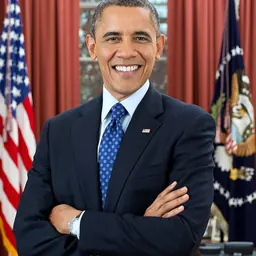
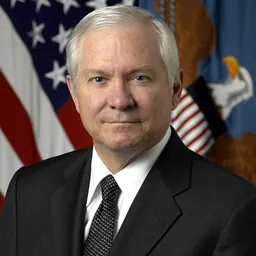
On August 30, 2010, the groups filed a "targeted killing" lawsuit, naming President Obama, CIA Director Leon Panetta, and Secretary of Defense Robert Gates as defendants. They sought an injunction preventing the targeted killing of al-Awlaki, and also sought to require the government to disclose the standards under which U.S. citizens may be "targeted for death". Judge John D. Bates dismissed the lawsuit in an 83-page ruling, holding that the father did not have legal standing to bring the lawsuit, and that his claims were judicially unreviewable under the political question doctrine inasmuch as he was questioning a decision that the U.S. Constitution committed to the political branches.
On May 5, 2011, the United States tried but failed to kill al-Awlaki by firing a missile from an unmanned drone at a car in Yemen. A Yemeni security official said that two al-Qaeda operatives in the car died.
Death
On September 30, 2011, al-Awlaki was killed in a U.S. drone strike in Al Jawf Governorate, Yemen. According to U.S. sources, the strike was carried out by Joint Special Operations Command, under the direction of the CIA. A witness said the group he was in had stopped to eat breakfast while traveling to Ma'rib Governorate. The occupants of the vehicle spotted the drone and attempted to flee in the vehicle before Hellfire missiles were fired. Yemen's Defense Ministry announced that al-Awlaki had been killed. Also killed was Samir Khan, an American born in Saudi Arabia, thought to be behind al-Qaeda's English-language web magazine Inspire. U.S. President Barack Obama said:
The death of Awlaki is a major blow to Al-Qaeda's most active operational affiliate. He took the lead in planning and directing efforts to murder innocent Americans ... and he repeatedly called on individuals in the United States and around the globe to kill innocent men, women and children to advance a murderous agenda. [The strike] is further proof that Al-Qaeda and its affiliates will find no safe haven anywhere in the world. He mentioned doubt among Yemeni experts about al-Awlaki's role in al-Qaeda, and called U.S. government accusations against him unverified and lacking in evidence.
In a letter dated May 22, 2013, to the chairman of the U.S. Senate Judiciary committee, Patrick J. Leahy, U.S. attorney general Eric Holder wrote that
high-level U.S. government officials [...] concluded that al-Aulaqi posed a continuing and imminent threat of violent attack against the United States. Before carrying out the operation that killed al-Aulaqi, senior officials also determined, based on a careful evaluation of the circumstances at the time, that it was not feasible to capture al-Aulaqi. In addition, senior officials determined that the operation would be conducted consistent with applicable law of war principles, including the cardinal principles of (1) necessitythe requirement that the target have definite military value; (2) distinctionthe idea that only military objectives may be intentionally targeted and that civilians are protected from being intentionally targeted; (3) proportionalitythe notion that the anticipated collateral damage of an action cannot be excessive in relation to the anticipated concrete and direct military advantage; and (4) humanitya principle that requires us to use weapons that will not inflict unnecessary suffering. The operation was also undertaken consistent with Yemeni sovereignty. [...] The decision to target Anwar al-Aulaqi was lawful, it was considered, and it was just.
On April 21, 2014, the United States Court of Appeals for the Second Circuit ruled that the Obama administration must release documents justifying its drone killings of foreigners and Americans, including Anwar al-Awlaki. In June 2014, the United States Department of Justice disclosed a 2010 memorandum written by the acting head of the department's Office of Legal Counsel, David J. Barron. The memo stated that Anwar al-Awlaki was a significant threat with an infeasible probability of capture. Barron therefore justified the killing as legal, as "the Constitution would not require the government to provide further process". A lawyer for the ACLU described the memo as "disturbing" and "ultimately an argument that the president can order targeted killings of Americans without ever having to account to anyone outside the executive branch."
Legacy Seth Jones, an American political scientist specializing in al-Qaeda, says that the continuing relevance of al-Awlaki is due to his fluency in the English language as well as his charisma, precising that "he had a disarming aura and unnerving confidence, with an easy smile and a soothing, eloquent voice. He stood a lanky six feet, one inch tall [185 cm], weighed 160 pounds [], and had a thick black beard, an oversized nose, and wire-rimmed glasses. He spoke in a clear, almost hypnotic voice."
Al-Awlaki's videos and writings remain highly popular on the internet, where they continue to be readily accessible. Those who viewed and still view his videos are estimated by journalist Scott Shane to number in the hundreds of thousands, while his father Dr. Nasser Awlaqi says that "five million preaching tapes of Anwar Awlaqi have been sold in the West." And thus, even following his death, al-Awlaki has continued to inspire his devotees to carry out terrorist attacks, including the 2013 Boston Marathon bombing, the 2015 San Bernardino attack, and the 2016 Orlando nightclub shooting. According to the Counter Extremism Project (CEP), 88 "extremists", 54 in the U.S. and 34 in Europe, have been influenced by al-Awlaki. Because his work has "inspired countless plots and attacks", CEP has declared that "social media, particularly YouTube, must take action to permanently remove all of al-Awlaki's videos."
FOIA documents During the FBI investigation of the 9/11 attacks, it was discovered that a few of the attackers had attended the mosques in San Diego and Falls Church with which al-Awlaki was associated. Interviews with members of the San Diego mosque showed that Nawaz al-Hazmi, one of the attackers, may have had a private conversation with him. On that basis he was placed under 24-hour surveillance. It was discovered that he regularly patronized prostitutes. It was through FBI interrogation of prostitutes and escort service operators that al-Awlaki was tipped off in 2002 about FBI surveillance. Shortly thereafter, he left the United States. According to Judicial Watch, the documents show that the FBI knew that al-Awlaki had bought tickets for three of the hijackers to fly into Florida and Las Vegas. Judicial Watch further stated that al-Awlaki "was a central focus of the FBI's investigation of 9/11. They show he wasn't cooperative. And they show that he was under surveillance."
When queried by Fox News, the FBI denied having evidence connecting al-Awlaki and the September 11 attacks: "The FBI cautions against drawing conclusions from redacted FOIA documents. The FBI and investigating bodies have not found evidence connecting Anwar al-Awlaki and the attack on September 11, 2001. The document referenced does not link Anwar al-Awlaki with any purchase of airline tickets for the hijackers."
Family Abdulrahman al-Awlaki
Anwar al-Awlaki and Egyptian-born Gihan Mohsen Baker had a son, Abdulrahman Anwar al-Awlaki, born August 26, 1995, in Denver, who was an American citizen. Abdulrahman al-Awlaki was killed on October 14, 2011, in Yemen at the age of 16 in an American drone strike. Nine other people were killed in the same CIA-initiated attack, including a 17-year-old cousin of Abdulrahman. According to his relatives, shortly before his father's death, Abdulrahman had left the family home in Sana'a and travelled to Shabwa in search of his father who was believed to be in hiding in that area (though he was actually hundreds of miles away at the time ). Abdulrahman was sitting in an open-air cafe in Shabwa when killed. According to U.S. officials, the killing of Abdulrahman al-Awlaki was a mistake; the intended target was an Egyptian, Ibrahim al-Banna, who was not at the targeted location at the time of the attack.
Nasser al-Awlaki
Nasser al-Awlaki is the father of Anwar and grandfather of Abdulrahman al-Awlaki. Al-Awlaki stated he believed his son had been wrongly accused and was not a member of Al Qaeda. an op-ed in The New York Times stating that two years after killing his grandson, the Obama administration still declines to provide an explanation. In 2012, Nasser al-Awlaki filed a lawsuit, Al-Aulaqi v. Panetta, challenging the constitutionality of the drone killings of his son and grandson. This lawsuit was dismissed in April 2014 by D.C. District Court Judge Rosemary M. Collyer.
Tariq al-Dahab
Tariq al-Dahab, who led al-Qaeda insurgents in Yemen, was a brother-in-law of al-Awlaki. On February 16, 2012, the organization stated that he had been killed by agents, although media reports contain speculation that he was killed by his brother in a bloody family feud.
Nawar al-Awlaki
On January 29, 2017, Anwar al-Awlaki's 8-year-old daughter, Nawar al-Awlaki, who was an American citizen, was killed in a DEVGRU operation authorized by President Donald Trump.
Islamic education Al-Awlaki's Islamic education was primarily informal, and consisted of intermittent months with various scholars reading and contemplating Islamic scholarly works. Political Islam scholars, such as Olivier Roy, said they did not understand alAwlaki's popularity, because while he spoke fluent English and could therefore reach a large non-Arabic-speaking audience, he lacked formal Islamic training and study.
Ideology While imprisoned in Yemen after 2004, al-Awlaki was influenced by the works of Sayyid Qutb, described by The New York Times as an originator of the contemporary "anti-Western Jihadist movement".
Terrorism consultant Evan Kohlmann in 2009 referred to al-Awlaki as "one of the principal jihadi luminaries for would-be homegrown terrorists. His fluency with English, his unabashed advocacy of jihad and mujahideen organizations, and his Web-savvy approach are a powerful combination." He called al-Awlaki's lecture, "Constants on the Path of Jihad", which he says was based on a similar document written by al-Qaeda's founder, the "virtual bible for lone-wolf Muslim extremists". Philip Mudd, formerly of the CIA's National Counterterrorism Center and the FBI's top intelligence adviser, called him "a magnetic character ... a powerful orator."
U.S. officials and some U.S. media sources called al-Awlaki an Islamic fundamentalist and accused him of encouraging terrorism. According to documents recovered from bin Laden's hideout, the al-Qaeda leader was unsure about al-Awlaki's qualifications.
Works The Nine Eleven Finding Answers Foundation said al-Awlaki's ability to write and speak in fluent English enabled him to incite English-speaking Muslims to terrorism. In it, al-Awlaki states that "The hatred of kuffar is a central element of our military creed" and that all Muslims are obligated to participate in jihad, either by committing the acts themselves or supporting others who do so. He says all Muslims must remain physically fit so as to be prepared for conflict. Al-Awlaki wrote for Jihad Recollections, an English language online publication published by Al-Fursan Media.
Lectures Lectures on the book Constants on the Path of Jihad by al-Ayiri—concerns leaderless jihad. The Battle of Hearts and Minds The Dust Will Never Settle Down Dreams & Interpretations The Hereafter—16 CDs—Al Basheer Productions Also that month, he wrote: "I pray that Allah destroys America and all its allies."
In a video posted to the internet on November 8, 2010, al-Awlaki called for Muslims to kill Americans "without hesitation", and overthrow Arab governments that cooperate with the US. "Don't consult with anyone in fighting the Americans, fighting the devil doesn't require consultation or prayers or seeking divine guidance. They are the party of the devils", al-Awlaki said. That month, Intelligence Research Specialist Kevin Yorke of the New York Police Department's Counterterrorism Division called him "the most dangerous man in the world".
Don’t just read it —
keep it.
Full-length biographies made to live with: read them, listen on the way to work, watch them tonight.
- E-book
- Audio
- Video
Instant download · yours to keep · every purchase keeps this site free
Important facts
Family & relationships
People in Anwar al-Awlaki's life
Named in this biography and alive at the same time





Related people
Same field, nearest in time



Contemporaries
People whose lives overlapped Anwar al-Awlaki's



Frequently asked questions
Who was Anwar al-Awlaki?
American-Yemeni imam and suspected Islamist extremist (1971–2011)
When was Anwar al-Awlaki born?
Anwar al-Awlaki was born on 22 April 1971 in Las Cruces.
When did Anwar al-Awlaki die?
Anwar al-Awlaki died on 30 September 2011 in Al Jawf Governorate.
What was Anwar al-Awlaki's occupation?
Anwar al-Awlaki was an engineer, imam and spokesperson.
What was Anwar al-Awlaki known for?
Anwar al-Awlaki was known for Inspire (magazine) and Spokesman.
What nationality was Anwar al-Awlaki?
Anwar al-Awlaki was American and Yemeni.
Sources & further reading
Cite this page
APA: Biography.guide. (2026). Anwar al-Awlaki. https://biography.guide/anwar-al-awlaki/
MLA: "Anwar al-Awlaki." Biography.guide, https://biography.guide/anwar-al-awlaki/.
Chicago: "Anwar al-Awlaki." Biography.guide. https://biography.guide/anwar-al-awlaki/.
Data last updated: 2026-09-25 · Spot an error? Report a correction.
Page generated 2026-09-27 05:12 UTC