
About Antun Motika
Lived 1902 – 1992 (aged 89). Antun Motika was a Croatian draftsperson.
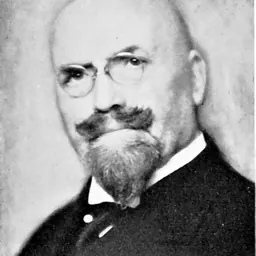
Antun Motika (30 December 1902 – 13 February 1992) was a Croatian artist. He was an innovative artist, not attached to any particular artistic school or tendency. Motika was a prolific painter, who left behind a great legacy.
He attended schools in Pula, Zminj, Pazin and Sušak, where he graduated in 1921. He studied sculpture at the Royal Academy of Art and Crafts with R. Valdec in Zagreb, only to eventually switch to painting, graduating in 1926.
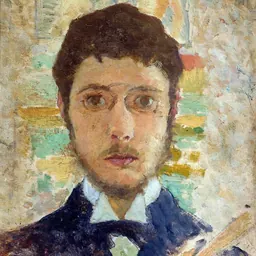
From the artist's early period, his works reveal "artistic talent and a tendency to examine multiple artistic disciplines." Thanks to his academic studies, focused on modeling and volume, he acquired assuredness in drawing and compositional freedom. From 1929 to 1930, he drew caricatures for the Zagreb satirical newspaper Koprive (initially he signed himself under the pseudonym Lopata). enabling him, after post-academic research and perturbations, "to base figurative expression on abstraction and minimalization of the visible world, and to devote himself exclusively to personal figurative expression" (so-called "post-impressionistic intimism"). After Paris, Motika is said to have opted for "a distinctive version of post-impressionist impressionism." He assimilated Pierre Bonnard's lyricism and Raoul Dufy's coloristic vibration. Simply put, before Paris, Motika's paintings are generally dark, after Paris the paintings are overtaken by light.
Until the second half of the 1950s, his painting is dominated by a harmonious rhythm of colors and strokes, sometimes accompanied by arabesque lines (the so-called "stenogrammatic approach") and unfilled white surfaces. Motika is said to have "built his paintings with brush strokes and subtly harmonized tonal values, with the drawing only being perceived as an arabesque, which was expressed in numerous interiors, portraits, erotic scenes, city views and landscapes."
From the beginning of 1940, he systematically worked on studio research (so-called experiments: decalcomania, collages, photographs, chimneys, frothing, works on cellophane and glass, study of lumino-kinetic effects, application of organic materials). In the late 1940s, he again painted urban views ranging from almost monochrome works (Na Zrinjevcu zimi, 1940) to the dominance of greenery and accents of pure colors (Maksimir, around 1948). In 1952, he created a cycle of drawings in Zagreb called Archaic Surrealism (Arhajski nadrealizam). The exhibition thereof has become the main subject of theoretical and ideological discussion in Croatian fine arts criticism. Motika's so-called Archaic Surrealism symbolically speaks of the author's attitude towards contemporary art and social context; Motika opts for liberation from the dictates of ideological propaganda (that is of social realism), and for freedom of artistic expression. In the same year, he exhibited for the second time at the Venice Biennale.
In numerous sketches for ceramics and gouache collages, he shaped autonomous artistic practice, "creating the preconditions for a new form syntax, which in the 1950s and 1960s was equally expressed in his drawings, projects and experiments, paintings and sculptures." In the 1950s, he worked on illustrations for books. In doing this, he presented his own experience of music and realized his own version of visual poetry. In the second half of the 1950s, he introduced increasingly pronounced expressionist accents into easel painting. In the early 1960s, he worked on glass sculptures, combining the skill of volume modeling and the obsession with "pure" light, its refraction and lumino-kinetic effects with the application of a painting texture.
Since 1982, he became increasingly introverted. He painted less often, experimented more and more, drew sketches and made projects, and the number of his exhibitions drastically decreased. Among the many drawings of this latter period there are artistic works he made for advertising companies such as Pliva and other pharmaceutical companies. In the 1970s and 1980s, he worked on grotesque stylizations of drawings, which resulted in a series of bronze medals and plaques. His artistic expression is "marked by high modernism, poeticism, lyricism and an intimacy that rejects artistic purism."
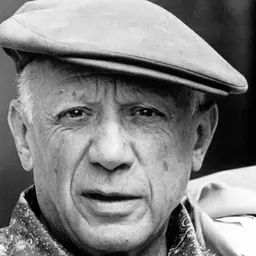
Motika painted and exhibited with Pablo Picasso, who reportedly praised his work. Motika and Picasso met on two occasions, in Murano and Basel.
Don’t just read it —
keep it.
Full-length biographies made to live with: read them, listen on the way to work, watch them tonight.
- E-book
- Audio
- Video
Instant download · yours to keep · every purchase keeps this site free
Important facts
People in Antun Motika's life
Named in this biography and alive at the same time

Related people
Same field, nearest in time




Contemporaries
People whose lives overlapped Antun Motika's




Frequently asked questions
Who was Antun Motika?
Croatian artist (1902–1992)
When was Antun Motika born?
Antun Motika was born on 30 December 1902 in Pula.
When did Antun Motika die?
Antun Motika died on 13 February 1992 in Croatia, Zagreb.
What was Antun Motika's occupation?
Antun Motika was a draftsperson.
What nationality was Antun Motika?
Antun Motika was Croatian.
Sources & further reading
Cite this page
APA: Biography.guide. (2026). Antun Motika. https://biography.guide/antun-motika/
MLA: "Antun Motika." Biography.guide, https://biography.guide/antun-motika/.
Chicago: "Antun Motika." Biography.guide. https://biography.guide/antun-motika/.
Data last updated: 2026-09-20 · Spot an error? Report a correction.
Page generated 2026-09-27 05:19 UTC