
About Antonios Eparchos
Lived 1492 – 1571 (aged 78–79). Antonios Eparchos was a scholar, merchant, poet and humanist.
Antonios Eparchos (Greek: Αντώνιος Έπαρχος; 1491–1571) was a Greek Renaissance humanist, teacher, poet, copyist, collector, soldier and translator of manuscripts.
He was born in Corfu and migrated to Venice in 1537. Later, he was placed in charge of the Greek college of Milan.
Biography
Eparchos was the descendant of a noble Corfiot family and he was born in Corfu in 1491. His father was the scholar and doctor George Eparchos while his mother was from Sparta, Laconia. The collection of ancient codices and the studies in medical schools was a tradition in his family.
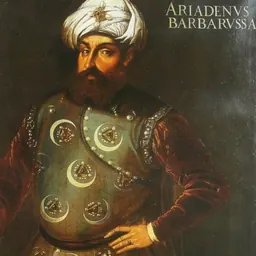
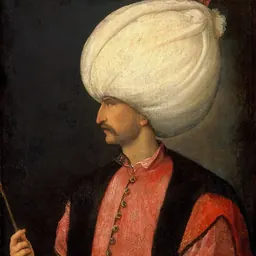
At the age of 15 he copied his first manuscripts, the Gospels. In 1536 Eparchos was elected as the Ambassador of the Community of Corfu, and represented the island before the Venetian Senate. It is also known that he took part in the Corfiot embassy that arrived from Corfu, which took the role of conveying the requests of its inhabitants to the Venetian Doge, in 1552 and 1570, one year before his death. A milestone in Eparchos's life was 1537: the Great Siege of Corfu by the Ottomans under Hayreddin Barbarossa, during the reign of Suleiman the Magnificent. This was his final letter and the latest news from him. He died, most likely from the aforementioned disease, in 1571. He left one daughter and two sons, the eldest of whom was named Nikephoros.
Works Ὑποτύπωσις τῆς Ὀτομάνων Τυραννίδος καὶ ποίω τρόπω ταύτην καταστρέψασθαι (Depiction of the Ottoman Tyranny and the way to destroy it)
The work was written in 1538-39 during the 3rd Ottoman-Venetian War. Eparchos suggests, that the struggle against the Ottomans must be waged within the Ottoman state itself with an attack from three different spots. It has been argued that, in his work, he tries to imitate the style of ancient writers and particularly of the ancient Greek orator Demosthenes.
Θρῆνος είς τὴν Ἑλλάδος καταστροφήν (Lament for Greece's catastrophe)
This work is a poem. It resulted in invocations to the leaders of the Christian West to unite and attack the common enemy, the Ottoman Empire. It was published in Venice in 1544, but it is possible that its writing had begun after the Siege of Corfu in 1537. It is written in Homeric Greek and it consists of 103 elegiac couplets.
Don’t just read it —
keep it.
Full-length biographies made to live with: read them, listen on the way to work, watch them tonight.
- E-book
- Audio
- Video
Instant download · yours to keep · every purchase keeps this site free
Important facts
People in Antonios Eparchos's life
Named in this biography and alive at the same time
Related people
Same field, nearest in time





Contemporaries
People whose lives overlapped Antonios Eparchos's






Frequently asked questions
Who was Antonios Eparchos?
16th-century Greek humanist
When was Antonios Eparchos born?
Antonios Eparchos was born in 1492 in Corfu.
When did Antonios Eparchos die?
Antonios Eparchos died in 1571.
What was Antonios Eparchos's occupation?
Antonios Eparchos was a scholar, merchant, poet and humanist.
Sources & further reading
· Wikipedia: Antonios Eparchos
Cite this page
APA: Biography.guide. (2026). Antonios Eparchos. https://biography.guide/antonios-eparchos/
MLA: "Antonios Eparchos." Biography.guide, https://biography.guide/antonios-eparchos/.
Chicago: "Antonios Eparchos." Biography.guide. https://biography.guide/antonios-eparchos/.
Data last updated: 2026-09-20 · Spot an error? Report a correction.
Page generated 2026-09-27 04:59 UTC