
About Antonio Valeriano
Lived 1520 – 1605 (aged 84–85). Antonio Valeriano was a politician.
Antonio Valeriano (c. 1521–1605) was a colonial Mexican, Nahua scholar and politician. He was a collaborator with fray Bernardino de Sahagún in the creation of the twelve-volume General History of the Things of New Spain, the Florentine Codex, He served as judge-governor of both his home, Azcapotzalco, and of Tenochtitlan, in Spanish colonial New Spain.
Career Antonio de Valeriano was the most accomplished pupil and then native scholar at the Franciscan Colegio de Santa Cruz de Tlatelolco. As with other students at the colegio, Valeriano was taught literacy in Nahuatl, Spanish, and Latin. Bernardino de Sahagún singled out Valeriano as "one of my collaborators ... collegians expert in grammar. The principal and most learned of them was Antonio de Valeriano of Atzcapoltzalco." He was also praised by Franciscan Fray Juan Bautista, who preserved the last letter that Valeriano wrote him in Latin. Valeriano says that "my hands are trembling, my eyes are clouded, and my ears closed" and signing as "Your most loving, but unworthy, Antonius Valerianus" ).
Valeriano and other pupils and former pupils of the colegio are to be credited with their collaboration with the Franciscans in creating religious texts, dictionaries, and other texts such as Sahagún's magnum opus of the General History of the Things of New Spain, the Florentine Codex.
Position in Tenochtitlan Another depiction of Valeriano in the Aubin Codex, with tlatoani-like attireValeriano served as judge-governor of San Juan Tenochtitlan, the former capital of the Aztec Empire, from 1573 to 1599. The city had only recently begun to be ruled by non-dynastic governors, its governors often having been descendants of the old Aztec emperors until the death of Luis de Santa María Nanacacipactzin in 1565. These dynastic governors used the old royal title tlatoani; beginning with Valeriano's predecessor Francisco Jiménez, governors of the city were simply called juez-gobernador. Though not noble himself, Valeriano was of Nahua origin and was connected to the previous royal dynasty through marrying a daughter of the tlatoani and governor Diego de Alvarado Huanitzin.
As judge-governor, Valeriano operated between two worlds; he spoke both Spanish and Nahuatl and served as both a preserver and destroyer of the pre-colonial culture. He dressed as a Spaniard, but artistic depictions of him varied. Some depicted him the same as the other judge-governors. It also appears that some in Tenochtitlan saw Valeriano as almost a tlatoani,
Suggestions have been made that its content is incompatible with someone (such as Valeriano) who had close bonds with the Franciscans, and others have suggested that the Huei tlamahuiçoltica is a unitary work which – despite the considerable objections against such a possibility – de la Vega wrote, with the assistance of a collaborator. Nevertheless, the general consensus among Mexican scholars (ecclesiastical and secular) remains that Valeriano is indeed the author of the Nican Mopohua.
Don’t just read it —
keep it.
Full-length biographies made to live with: read them, listen on the way to work, watch them tonight.
- E-book
- Audio
- Video
Instant download · yours to keep · every purchase keeps this site free
Important facts
People in Antonio Valeriano's life
Named in this biography and alive at the same time




Related people
Same field, nearest in time
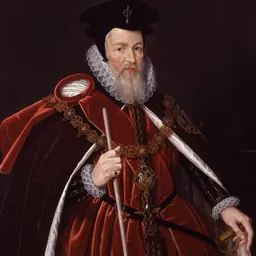
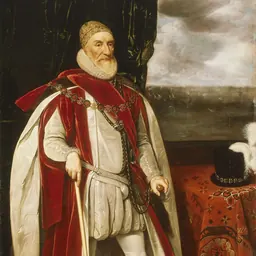
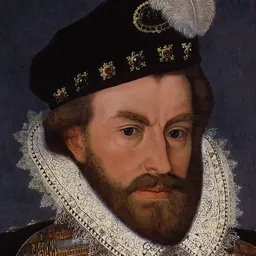
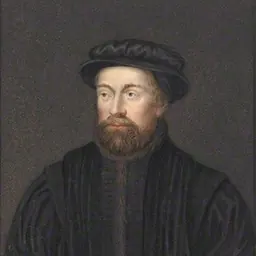

Contemporaries
People whose lives overlapped Antonio Valeriano's




Frequently asked questions
Who was Antonio Valeriano?
nahua writer, Mexican governor (1520-1605)
When was Antonio Valeriano born?
Antonio Valeriano was born in 1520 in Azcapotzalco.
When did Antonio Valeriano die?
Antonio Valeriano died in 1605 in Mexico City.
What was Antonio Valeriano's occupation?
Antonio Valeriano was a politician.
What nationality was Antonio Valeriano?
Antonio Valeriano's recorded nationality: New Spain.
Sources & further reading
· Wikipedia: Antonio Valeriano
Cite this page
APA: Biography.guide. (2026). Antonio Valeriano. https://biography.guide/antonio-valeriano-politician/
MLA: "Antonio Valeriano." Biography.guide, https://biography.guide/antonio-valeriano-politician/.
Chicago: "Antonio Valeriano." Biography.guide. https://biography.guide/antonio-valeriano-politician/.
Data last updated: 2026-09-26 · Spot an error? Report a correction.
Page generated 2026-09-27 05:14 UTC