
About Antonio Puigblanch
Lived 1775 – 1840 (aged 64–65). Antonio Puigblanch was a Spanish writer, politician, translator, philologist, grammarian and hebraist.
Antoni Puig i Blanch (; 1755 in Mataró – 1840 in Somers Town), also known as Antonio Puigblanch, was a Spanish philologist and politician. He was living in London during 1815–1820 and 1823–1840. There he published The Inquisition Unmasked, translation of the book that had caused his exile from Spain.
Biography Puigblanch was born in Mataró (near Barcelona) on February 3, 1775; son of Antoni Puig Bunyol and Cecília Blanch. Being a child he studied in the School of Santa Ana of the Escolapios (Mataró). Later, he was in the carthusian monastery of Montalegre, but for a short time. In 1799 he travelled to Madrid to continue his studies: Philosophy in the College of Santo Tomás de Aquino and ecclesiastic discipline in the Reales Estudios de San Isidro.
In 1807 he won the post of professor of Hebrew in the University of Alcalá de Henares. At this time he publishes Elementos de lengua hebrea (Elements of Hebrew language), where he gathers Francesc Orchell's theories.
During the Spanish War of Independence against the French invasion (1808–1814) the representatives of the Spanish Government escaped to Seville and then to Cádiz. At this time Puigblanch stands out among the liberals, who take advantage of the exceptional circumstances to make political reforms. He defends strongly the abolition of the Inquisition, and he shows his arguments publishing La Inquisición sin máscara (The Inquisition Unmasked; Cádiz, 1811–1813). For this reason, after the return of the king Fernando VII, Puigblanch has to leave Spain in 1815. He establishes in London. There he publishes the English revised edition of his polemic book The Inquisition Unmasked (1816). He begins to write a poem in Catalan about the fight for the freedom, personified in the Castilian War of the Communities (1520–1522), entitled Las Comunitats de Castella. By this Catalan poem, Puigblanch is recognized as the predecessor of the cultural movement called Renaixença.
In 1820-1823 Puigblanch was again in Spain, thanks to the political circumstances (Trienio Liberal). He was member of the Spanish Parliament for Catalonia.
In 1823 he returned to London for good, where he was employed at a press and at a pastry shop. In addition, he gave lessons of Spanish and French.
In 1828 and 1834 he published Opúsculos gramático-satíricos, in which among many other themes, he defends the possibility of constructing a federal Spanish State.
He translated to Spanish the Lectures on the Philosophy of the Human Mind by Thomas Brown, entitled Filosofía del espíritu humano en cien lecciones (1828) and a selection of Sermons by Robert Hall (1764–1831) entitled Sermones entresacados de los que escribió en idioma inglés el Rdo. Roberto Hall (1832).
He left unfinished and unpublished the translation of the Histoire de Gil Blas de Santillane, by Alain-René Lesage.
Antonio Puigblanch died on September 25, 1840, at 51 Johnson Street (now Cranleigh Street), Somers Town, London.
Works Elementos de lengua hebrea. Madrid, 1808. (As Natanael JOMTOB) La Inquisición sin máscara, o disertación en que se prueban hasta la evidencia los vicios de este tribunal y la necesidad de que se suprima. Cádiz: Imprenta de Josef Niel, 1811. The Inquisition Unmasked. London, 1816. (Translation of La Inquisición sin máscara. Cádiz, 1811–1813) Opúsculos gramático-satíricos. London: Guillermo Guthrie, 1828. 2nd edition in two volumes, London, 1832. Prospecto de la obra... intitulada Observaciones sobre el origen y genio de la lengua Castellana. London, 1828. Filosofía del espíritu humano en cien lecciones. London, 1828. Sermones entresacados de los que escribió en idioma inglés el Rdo. Roberto Hall. London: J. Hill, 1832.
Don’t just read it —
keep it.
Full-length biographies made to live with: read them, listen on the way to work, watch them tonight.
- E-book
- Audio
- Video
Instant download · yours to keep · every purchase keeps this site free
Important facts
People in Antonio Puigblanch's life
Named in this biography and alive at the same time
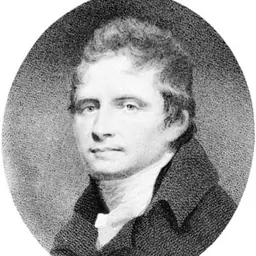
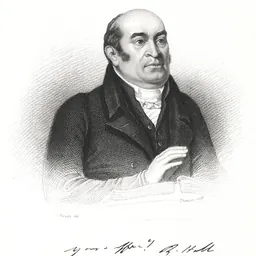
Related people
Same field, nearest in time

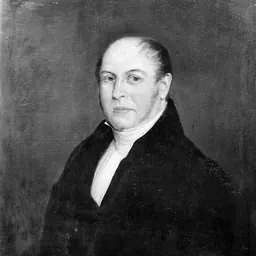


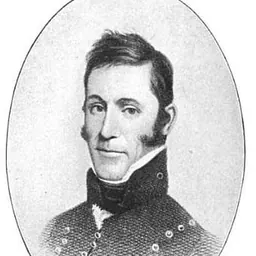

Contemporaries
People whose lives overlapped Antonio Puigblanch's



Frequently asked questions
Who was Antonio Puigblanch?
Spanish poet
When was Antonio Puigblanch born?
Antonio Puigblanch was born in 1775 in Mataró.
When did Antonio Puigblanch die?
Antonio Puigblanch died in 1840 in Somers Town.
What was Antonio Puigblanch's occupation?
Antonio Puigblanch was a writer, politician, translator, philologist, grammarian and hebraist.
What nationality was Antonio Puigblanch?
Antonio Puigblanch was Spanish.
Sources & further reading
· Wikipedia: Antonio Puigblanch
Cite this page
APA: Biography.guide. (2026). Antonio Puigblanch. https://biography.guide/antonio-puigblanch/
MLA: "Antonio Puigblanch." Biography.guide, https://biography.guide/antonio-puigblanch/.
Chicago: "Antonio Puigblanch." Biography.guide. https://biography.guide/antonio-puigblanch/.
Data last updated: 2026-09-20 · Spot an error? Report a correction.
Page generated 2026-09-27 05:06 UTC