
About Antonio Peticov
Born 1946. Antonio Peticov is a Brazilian painter and artist.
Antonio Peticov (born July 2, 1946) is a Brazilian painter, designer, sculptor, and engraver.
Self-taught, Peticov's approach is based on systematic personal research in the history of art and its integration into avant-garde artistic movements in the second half of the 1960s. He also specialized in sacred geometry and the golden ratio, giving his work a strong mathematical character. During the same period, he began his involvement with the Tropicália movement. and is a member of the Lewis Carroll Society of North America. He founded and directed the Núcleo de Arte Contemporânea (NAC) in São Paulo, between 1999 and 2006. In 2016, at the age of 70, he opened the Antonio Peticov Institute of Art and Culture.
Biography
Childhood and youth A Brazilian of Bulgarian descent, Peticov's grandparents immigrated to Brazil with tickets paid for by the Brazilian government, who, after abolishing slavery, needed to replace the labor force. Peticov was born in the city of Assis, São Paulo, close to the border of Paraná. In 1960, while his family was living in Rio de Janeiro, Peticov became interested in pursuing art after meeting Mauro Salles Júnior, the art director of the Batista publishing house.
Adult life In the late 1960s, influenced by the Beat Generation, Peticov saw himself as a hippie. Peticov visited London where he was an assistant to his friend, artist Hélio Oiticica, in the assembly of his exhibition at the Whitechapel Gallery. According to Vice, despite being tortured and taken to Carandiru Penitentiary, Peticov was subsequently cleared in what was the first judicial process of this matter in Brazil. During the 70 days he was at Carandiru, he continued to draw and paint, becoming friendly with a fellow prisoner, Giuseppe Baccaro, an Italian intellectual and art merchant, who was arrested for possession of a joint.
He was interviewed by Antônio Abujamra in 2016 on the TV Cultura interview program Provocações and stated: "In my hand there appeared a large amount of lysergic acid, which was perhaps the most important invention of the 20th century, because it was the opportunity to have in my hand, in my pocket, or in my wallet the ticket for the most important trip that a person can have in his life, the trip to his interior. I felt obliged to disclose that."
The severity of the prison experience and the strong repression of Brazil's military dictatorship, together with his new marriage to his first wife Maria Luiza, motivated Peticov to leave for exile in London, at the age of 24. In 1985 he moved again, this time to New York City, where he lived until 1999. While in New York, he designed the poster for the Javits Center inauguration, and created several of his best known works. He later married Elizabeth dos Santos Peixoto, with whom he had son, Pedro Antonio, born in Brazil in 1990. Due to the COVID-19 pandemic, he is active on livestreams about varied themes: usually art, mathematics, music, sacred geometry and curiosities.
Installations and productions Peticov has a diversified production that follows varied tendencies of the international artistic avant-garde of the last decades. He has created environmental installations and murals in Italy, Switzerland, the United States, and Brazil. He has also produced audiovisual productions, among them:
In 1982, the Bali Ballet in Cloudwalk Farm, Connecticut. In 1983, the installation The Big Ladder in front of the Coliseum in New York. In 1989, presented Projeto Natura - Rio Pinheiros at the 20th São Paulo International Biennial. In 1990, the mural Momento Antropofágico com Oswald de Andrade in the São Paulo Metro's Republica station (Line 3 - Vermelha). In 1992, the Projeto Bosque Natura in Rio de Janeiro. In 2020, the mini documentary "6 releituras de Antonio Peticov - Uma exposição guiada pelo artista" in collaboration with Funarte. PrimaVera Festival in São Paulo (1969) - cancelled by the dictatorship 48 hours before its undertaking Re Nudo Pop Festival (1973) Cover of the album "Visões" by Léo Gandelman (1981) Art Expo '86 - Inauguration of the Javits Convention Center (1986) Heitor Villa-Lobos 100th Birthday Celebration (1986/1987) Cover of the album "Festival" by Lee Ritenour (1988) 38th Festa do Peão de Boiadeiro de Barretos (1993) The Phoenix Symphony (1993/1994) Monark Turismo (1994) Heineken Concerts - São Paulo/Rio de Janeiro (1995) Sofia National Library - Creative Bulgarians Abroad (1996) Rock in Rio and Coca-Cola (2001)
Don’t just read it —
keep it.
Full-length biographies made to live with: read them, listen on the way to work, watch them tonight.
- E-book
- Audio
- Video
Instant download · yours to keep · every purchase keeps this site free
Important facts
People in Antonio Peticov's life
Named in this biography and alive at the same time

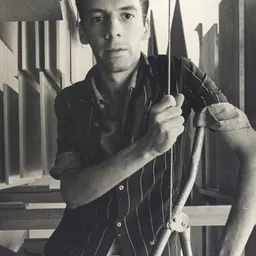

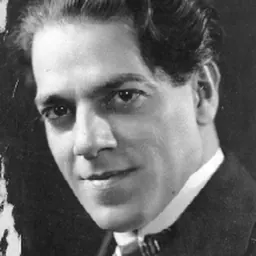

Related people
Same field, nearest in time


Contemporaries
People whose lives overlapped Antonio Peticov's

Frequently asked questions
Who is Antonio Peticov?
Brazilian painter
When was Antonio Peticov born?
Antonio Peticov was born on 2 July 1946 in Assis.
What is Antonio Peticov's occupation?
Antonio Peticov is a painter and artist.
What nationality is Antonio Peticov?
Antonio Peticov is Brazilian.
Sources & further reading
Cite this page
APA: Biography.guide. (2026). Antonio Peticov. https://biography.guide/antonio-peticov/
MLA: "Antonio Peticov." Biography.guide, https://biography.guide/antonio-peticov/.
Chicago: "Antonio Peticov." Biography.guide. https://biography.guide/antonio-peticov/.
Data last updated: 2026-09-20 · Spot an error? Report a correction.
Page generated 2026-09-27 05:21 UTC