
About Antonio Neri
Lived 1576 – 1614 (aged 37–38). Antonio Neri was an Italian chemist, engineer, stained-glass artist, poet, alchemist and inventor.
Antonio Neri (29 February 1576, Florence – 1614) was a Florentine priest who published the book L’Arte Vetraria or The Art of Glass in 1612. This book was the first general treatise on the systematics of glassmaking.
Early life and education Neri's father was a physician. Neri entered the priesthood in 1601. He then became a member of the household of Alamanno Bertolini, where he met the chemist Sir Emmanuel Ximenes, who introduced Neri to the fundamentals of glassmaking. An example is that Neri recognized that the red colour in the red glass called "crocus martis" is due to oxidized iron.
Much of what is known about Neri's life is based on correspondence between Neri and Ximenes in addition to research conducted by Muranese glass historian Luigi Zecchin during the 1960s. An annotated bibliography of written works by Neri has been published. Much of the correspondence between Neri and Ximenes is preserved at the Biblioteca Nazionale Centrale di Firenze.
Systematics of Glassmaking Between 1598 and 1600, Neri published his first compilation on glassmaking, Il Tesoro del Mondo, which included some basic information on equipment and raw materials for glassmaking. He was, at the same time, conducting his own experimentation on glassmaking in the household of his Medici family patron in Florence. Following the publication of Il Tesoro del Mondo, Neri began his travels to Antwerp and Pisa, during which time he interacted more frequently with Ximenes. He returned to Florence in 1611, publishing L'Arte Vetraria the following year.
In 1612, Neri published a seven-volume treatise, L' Arte Vetraria, that was a significant step toward systematizing the preparation of glass. The title of the book translates to English as The Art of Glass. The first volume describes the materials, mixing, and melting of the ingredients to produce crystals and colourless glass. Subsequent volumes describe colored glasses, leaded glass, artificial gemstones, enamels, and glass paints. The treatise includes many glass formulations that were devised by Neri by improving on formulations that he became aware of through his work in the Medici court, through his interactions with Ximenez, and likely other sources.
The contents of L'Arte Vetraria volume-by-volume are: Basic glass colours and preparation Chalcedony glass Advanced colours Lead glass and colours Artificial gemstones Vitreous enamel Paints and transparent red glass
L'Arte Vetraria went through three editions up until 1817. By 1752, it had been translated into Dutch, French, and English.
While Neri's contemporary Galileo Galilei made note of L'Arte Vetraria, more widespread recognition of the treatise came later. In 1662, British physician and scientist Christopher Merret published an English translation of L'Arte Vetraria, which included extensive annotations by Merret. Subsequent translations were usually based on Merret's version of Neri's treatise. By 1900, there were an estimated two dozen translations based on Merret's version or on Neri's original version. The L'Arte Vetraria was a standard reference book among glassmakers up until approximately 1900 and served to enhance the ability of glassmakers to improve upon prior glassmaking processes.
Don’t just read it —
keep it.
Full-length biographies made to live with: read them, listen on the way to work, watch them tonight.
- E-book
- Audio
- Video
Instant download · yours to keep · every purchase keeps this site free
Important facts
People in Antonio Neri's life
Named in this biography and alive at the same time

Related people
Same field, nearest in time

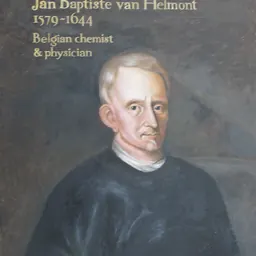
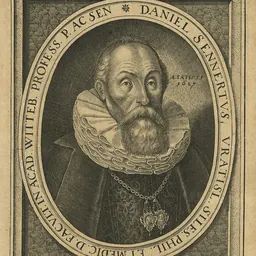

Contemporaries
People whose lives overlapped Antonio Neri's
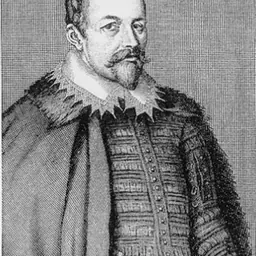


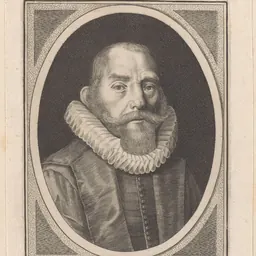
Frequently asked questions
Who was Antonio Neri?
Italian chemist
When was Antonio Neri born?
Antonio Neri was born on 29 February 1576 in Florence.
When did Antonio Neri die?
Antonio Neri died in 1614 in Florence.
What was Antonio Neri's occupation?
Antonio Neri was a chemist, engineer, stained-glass artist, poet, alchemist and inventor.
What nationality was Antonio Neri?
Antonio Neri was Italian.
Sources & further reading
· DBpedia: Antonio Neri (chemist)
Cite this page
APA: Biography.guide. (2026). Antonio Neri. https://biography.guide/antonio-neri-chemist/
MLA: "Antonio Neri." Biography.guide, https://biography.guide/antonio-neri-chemist/.
Chicago: "Antonio Neri." Biography.guide. https://biography.guide/antonio-neri-chemist/.
Data last updated: 2026-09-20 · Spot an error? Report a correction.
Page generated 2026-09-27 05:20 UTC