
About Antonio del Corro
Lived 1527 – 1591 (aged 63–64). Antonio del Corro was a Spanish writer, protestant theologian, linguist and religious.
Antonio del Corro (Corrano, de Corran, Corranus; 1527 in Seville – 1591 in London) was a Spanish monk who became a Protestant convert. A noted Calvinist preacher and theologian, he taught at the University of Oxford and wrote the first Spanish grammar in English.
Spain and exile on the Continent He was a Hieronymite of the Abbey of San Isidro, Seville. Influenced by Cipriano de Valera, he came into contact with the Protestant ideas of Luther, Melanchthon and Bullinger.
Against Inquisition He left Spain with others in 1557, fearing the Spanish Inquisition. Some scholars considered that he may be behind the pseudonym Reginaldus Gonsalvius Montanus (Renaldo Gonzalez Montano), who published in 1567 the account Sanctae Inquisitionis Hispanicae Artes aliquot detectae ac palam traductae, a major source for subsequent accounts of the Inquisition; however, others believe it belonged to Casiodoro de Reina.
European travels He travelled to Lausanne and Geneva but came to quarrel with Jean Calvin. On Calvin's recommendation, however, he became tutor to Henry of Navarre.
In France he used the name Bellerive, and served as a minister in Béarn. He was supported by both Jeanne d'Albret and Renée of France; but caused offence there too. Later Robert Dudley, Earl of Leicester was an important patron. In England, del Corro moved away from Calvinism to more tolerant and even free-thinking positions to become a controversialist. It has been suggested that his qualified acceptance stemmed from political expediency.
At the Temple Church, he showed the influence of the Lutheran theologian Hemmingius in his preaching. He retreated from the Calvinist view of predestination. That shift brought him under criticism from Richard Alvey, Master of the Temple.
Controversy over his views followed him to Oxford, where he did tutoring and catechism work (at Hart Hall, also at Oriel College and St John's College
In Oxford, his pupils included John Donne and Thomas Belson, a Catholic martyr.
The Spanish Grammar (1590) was an English translation by John Thorie of a grammar written by del Corro to teach Spanish to French speakers, and published in Oxford in 1586.
In his recent work "Silence: A Christian History", Diarmaid MacCulloch has drawn attention (pp 170,287) to "The Life and Works of Antonion del Corro, 1527-91", an unpublished PhD thesis by W.McFadden and to a published work, much indebted to McFadden but with additional material, "Protestant Reformers in Elizabethan Oxford", Oxford 1983, pp 119–122. MacCulloch notes that del Corro made "cautious and unmistakable statements of Unitarianism" but still ended his days "in comfort as a prebendary of St Paul's Cathedral in London".
Don’t just read it —
keep it.
Full-length biographies made to live with: read them, listen on the way to work, watch them tonight.
- E-book
- Audio
- Video
Instant download · yours to keep · every purchase keeps this site free
Important facts
People in Antonio del Corro's life
Named in this biography and alive at the same time




Related people
Same field, nearest in time

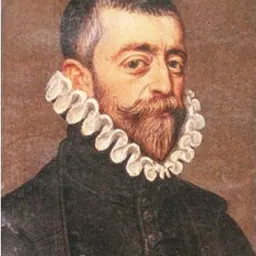
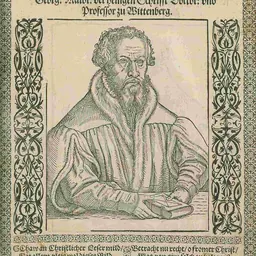
Contemporaries
People whose lives overlapped Antonio del Corro's
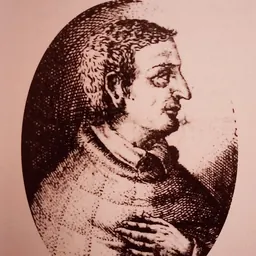




Frequently asked questions
Who was Antonio del Corro?
Spanish monk
When was Antonio del Corro born?
Antonio del Corro was born in 1527 in Seville.
When did Antonio del Corro die?
Antonio del Corro died in 1591 in London.
What was Antonio del Corro's occupation?
Antonio del Corro was a writer, protestant theologian, linguist and religious.
What nationality was Antonio del Corro?
Antonio del Corro was Spanish.
Sources & further reading
· Wikipedia: Antonio del Corro
Cite this page
APA: Biography.guide. (2026). Antonio del Corro. https://biography.guide/antonio-del-corro/
MLA: "Antonio del Corro." Biography.guide, https://biography.guide/antonio-del-corro/.
Chicago: "Antonio del Corro." Biography.guide. https://biography.guide/antonio-del-corro/.
Data last updated: 2026-09-20 · Spot an error? Report a correction.
Page generated 2026-09-27 05:24 UTC