
About António de Saldanha
Lived 1500 – 1600. António de Saldanha was an explorer, diplomat and seafarer.
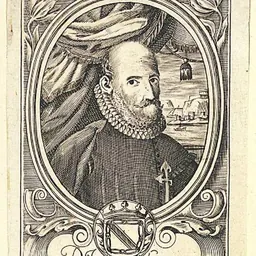
António de Saldanha was a Castilian-Portuguese 16th-century captain. He was the first European to set anchor in what is now called Table Bay, South Africa, and made the first recorded ascent of Table Mountain.
Background
Chroniclers Gaspar Correia (p. 412) and Fernão Lopes de Castanheda (p. 157) identify António de Saldanha as a "Castilian nobleman" who arrived in Portugal around 1497, in the household service of the queen Maria of Aragon. His original Castilian name is unknown, 'Saldanha' possibly referring to the Castilian town of Saldaña, which may have been his place of origin.
Expedition of 1503
Being a man of "some nautical experience", Saldanha was appointed to head a squad of three vessels, part of Afonso de Albuquerque's fleet bound for India to reinforce the Portuguese settlement at Cochin. Although accompanying the India fleet, Saldanha's squad was said to have been given separate instructions to patrol the mouth of the Red Sea, and prey on Arab shipping.
Saldanha's three-ship squad (himself, Rui Lourenço Ravasco and Diogo Fernandes Pereira) set out of Lisbon in early May 1503, intending to catch up with Albuquerque's main fleet, which had gone on ahead. Poor pilotage, however, led to numerous errors. The squad mistakenly sailed into the Gulf of Guinea, Saldanha and Lourenço alighting near São Tomé, with no idea where their third ship might be (Diogo Fernandes was actually on the proper track, sailing on alone). The remaining two began to make their way painfully south along the African coast, against the contrary winds and currents. Somewhere along the way, Saldanha and Lourenço lost sight of each other as well.
Again, by poor piloting, Saldanha miscalculated his Cape crossing, and ended up making landfall just north of the Cape of Good Hope. To check if the cape had been surpassed, Saldanha anchored in the hitherto unknown Table Bay, and went ashore. Saldanha thus became the first European to set foot in what was to become modern Cape Town. Saldanha climbed the flat-topped mountain adjacent to the bay and identified the tip of the Cape (Cape Point) further to the south. He named the peak Table Mountain and (legend has it that he and his men) carved a cross in the rock of a nearby formation, traces of which can still be found on Lion's Head today. Saldanha replenished his water supplies at a local watering hole (he also got into a brief skirmish with local Khoikhoi and was slightly wounded), before returning to his ship.
In late 1506/early 1507, when the fleet was lingering in Mozambique Island waiting for favorable winds, the admiral Tristão da Cunha placed his own flagship, the Sant' Iago, under the temporary command of Saldanha, while he went off on some exploratory expeditions on the African coast in a smaller boat.
Cunha soon came across the Flor de la Mar, the ship of João da Nova, who, on the return from India the previous year, had sprung a bad leak and been forced to stop for repairs. The spice cargo was transferred to another ship (unnamed) and placed under the command of Antonio de Saldanha, with instructions to sail it safely back to Lisbon.
It is said that Saldanha did stop by Saldanha Bay (the modern one, not Table Bay) on the return journey.
Captain of Sofala-Mozambique (1509)
In 1509, António de Saldanha was appointed for a three-year term as captain-major of Sofala and Mozambique Island (East Africa), succeeding the late Vasco Gomes de Abreu. He set out in the Spring of 1509 as a passenger with the 11th Armada under D. Fernando Coutinho, and was deposited at Mozambique Island in August, and took . During his tenure there, Saldanha helped oversee the dismantling of the Portuguese fort at Kilwa (Quiloa) in 1511.
In 1512, his term in Sofala-Mozambique finished, António de Saldanha was relieved by the new governor Simão de Miranda de Azevedo, who arrived in October. Saldanha took charge of Miranda's ship for the return to Lisbon.
Issue Aires de Saldanha - Viceroy of India and Governor of Tangiers
In memoriam Saldanha Bay in South Africa was named after the explorer.
Don’t just read it —
keep it.
Full-length biographies made to live with: read them, listen on the way to work, watch them tonight.
- E-book
- Audio
- Video
Instant download · yours to keep · every purchase keeps this site free
Important facts
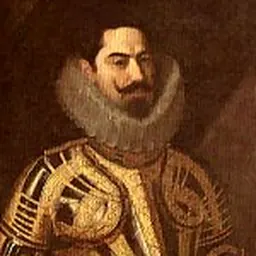
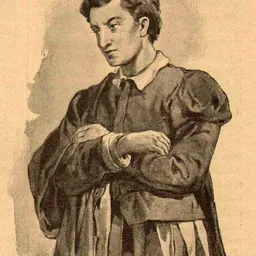
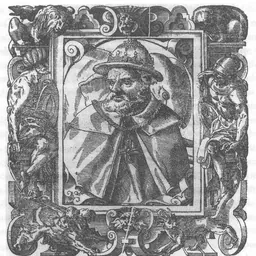
People in António de Saldanha's life
Named in this biography and alive at the same time





Related people
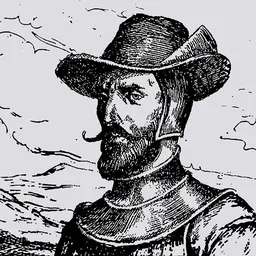
Same field, nearest in time


Contemporaries
People whose lives overlapped António de Saldanha's


Frequently asked questions
Who was António de Saldanha?
Portuguese explorer and diplomat
When was António de Saldanha born?
António de Saldanha was born in 1500.
When did António de Saldanha die?
António de Saldanha died in 1600.
What was António de Saldanha's occupation?
António de Saldanha was an explorer, diplomat and seafarer.
What nationality was António de Saldanha?
António de Saldanha's recorded nationality: Kingdom of Portugal.
Sources & further reading
· Wikipedia: António de Saldanha
· DBpedia: António de Saldanha
Cite this page
APA: Biography.guide. (2026). António de Saldanha. https://biography.guide/antonio-de-saldanha/
MLA: "António de Saldanha." Biography.guide, https://biography.guide/antonio-de-saldanha/.
Chicago: "António de Saldanha." Biography.guide. https://biography.guide/antonio-de-saldanha/.
Data last updated: 2026-09-20 · Spot an error? Report a correction.
Page generated 2026-09-27 05:30 UTC