
About Antonio da Correggio
Lived 1489 – 1534 (aged 44). Antonio da Correggio was an Italian painter, draftsperson and fresco painter.
Antonio Allegri da Correggio (August 1489 – 5 March 1534), usually known as just Correggio (, also , , ), was an Italian Renaissance painter who was the foremost painter of the Parma school of the High Renaissance, and was responsible for some of the most vigorous and sensuous works of the sixteenth century. In his use of dynamic composition, illusionistic perspective and dramatic foreshortening, Correggio prefigured the Baroque art of the seventeenth century and the Rococo art of the eighteenth century. He is considered a master of chiaroscuro.
Early life Antonio Allegri was born in Correggio, a small town near Reggio Emilia. His date of birth is uncertain (around 1489). His father was a merchant. Otherwise little is known about Correggio's early life or training. It is, however, often assumed that he had his first artistic education from his father's brother, the painter Lorenzo Allegri.
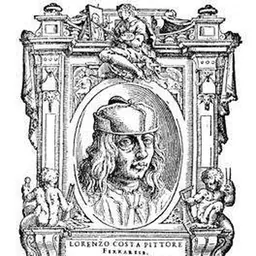
In 1503–1505, he was apprenticed to Francesco Bianchi Ferrara in Modena, where he probably became familiar with the classicism of artists like Lorenzo Costa and Francesco Francia, evidence of which can be found in his first works. After a trip to Mantua in 1506, he returned to Correggio, where he stayed until 1510. To this period is assigned the Adoration of the Child with St. Elizabeth and John, which shows clear influences from Costa and Mantegna. In 1514, he probably finished three tondos for the entrance of the church of Sant'Andrea in Mantua, and then returned to Correggio, where, as an independent and increasingly renowned artist, he signed a contract for the Madonna altarpiece in the local monastery of St. Francis (now in the Dresden Gemäldegalerie).
One of his sons, Pomponio Allegri, became an undistinguished painter. Both father and son occasionally referred to themselves using the Latinized form of the family name, Laeti.
Works in Parma Nativity (c.1529–30), Gemäldegalerie DresdenBy 1516, Correggio was in Parma, where he spent most of the remainder of his career. Here, he befriended Michelangelo Anselmi, a prominent Mannerist painter. In 1519 he married Girolama Francesca di Braghetis, also of Correggio, who died in 1529. These two works represented a highly novel illusionistic sotto in su treatment of dome decoration that would exert a profound influence upon future fresco artists, from Carlo Cignani in his fresco Assumption of the Virgin, in the cathedral church of Forlì, to Gaudenzio Ferrari in his frescoes for the cupola of Santa Maria dei Miracoli in Saronno, to Pordenone in his now-lost fresco from Treviso, and to the baroque elaborations of Lanfranco and Baciccio in Roman churches. The massing of spectators in a vortex, creating both narrative and decoration, the illusionistic obliteration of the architectural roof-plane, and the thrusting perspective toward divine infinity, were devices without precedent, and which depended on the extrapolation of the mechanics of perspective. The recession and movement implied by the figures presage the dynamism that would characterize Baroque painting.
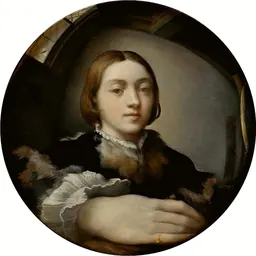
Other masterpieces include The Lamentation and The Martyrdom of Four Saints, both at the Galleria Nazionale of Parma. The Lamentation is haunted by a lambency rarely seen in Italian painting prior to this time. The Martyrdom is also remarkable for resembling later Baroque compositions such as Bernini's Truth and Ercole Ferrata's Death of Saint Agnes, showing a gleeful saint entering martyrdom. Correggio had no direct disciples outside of Parma, where he was influential on the work of Giovanni Maria Francesco Rondani, Parmigianino, Bernardo Gatti, Francesco Madonnina, and Giorgio Gandini del Grano.
Selected works
Madonna and Child with infant Saint John the Baptist, c. 1514–1515, National Gallery of Victoria, Melbourne
Judith and the Servant (c. 1510)—Oil on canvas, Musée des Beaux-Arts, Strasbourg Holy Family with Saints Elizabeth and John the Baptist (c. 1510)—Oil on panel-Pavia Civic Museums, Pavia The Mystic Marriage of St. Catherine (1510–1515)—National Gallery of Art, Washington, D.C. Madonna (1512–14)—Oil on canvas, Castello Sforzesco, Milan Madonna and Child with St Francis (1514)—Oil on wood, 299 × 245 cm, Gemäldegalerie, Dresden Madonna and Child (unknown, early 1500s)—Oil on canvas, National Gallery for Foreign Art, Sofia Madonna of Albinea (1514, lost) Madonna and Child with the infant Saint John the Baptist (1514–15)—Oil on wood panel, 45 × 35.5 cm, National Gallery of Victoria, Melbourne Madonna and Child with the Infant John the Baptist (c. 1515)—Oil on panel, 64.2 × 50.2 cm, Art Institute of Chicago, Chicago The Holy Family with Saint Jerome (1515)–East Closet of Hampton Court Palace as part of the Royal Collection Madonna and Child with the Young Saint John (1516)—Oil on canvas, 48 × 37 cm, Museo del Prado, Madrid Adoration of the Magi (c. 1515–1518)–Oil on canvas, 84 × 108 cm, Pinacoteca di Brera, Milan Saint Jerome (c. 1515–1518)–Oil on Wood 64 x 51 cm, Real Academia de Bellas Artes de San Fernando, Madrid Madonna and Child with the Infant John the Baptist (1518)–Oil on panel, 48 x 37 cm, Museo del Prado, Madrid Portrait of a Lady (c. 1517–1520)—Oil on canvas, 103 × 87.5 cm, Hermitage, St. Petersburg Frescoes for Camera di San Paolo (1519)—Monastery of San Paolo, Parma The Rest on the Flight to Egypt with Saint Francis (c. 1520)—Oil on canvas, 123.5 × 106.5 cm, Uffizi Gallery, Florence Portrait of a man (c. 1520)–Oil on canvas, 55 x 40 cm, Museo Nacional Thyssen Bornemisza, Madrid . Death of St. John (1520–1524)—Fresco, San Giovanni Evangelista, Parma St. Jerome, Real Academia de Bellas Artes de San Fernando, Madrid, c. 1515–1518Madonna della Scala (c. 1523)—Fresco, 196 × 141.8 cm, Galleria Nazionale, Parma Martyrdom of Four Saints (c. 1524)—Oil on canvas, 160 × 185 cm, Galleria Nazionale, Parma Virgin and Child with an Angel (Madonna del Latte) (c. 1524)—Oil on wood, 68 × 56 cm, Museum of Fine Arts, Budapest Lamentation (1525)—Oil on canvas, 158.5 × 184.3 cm, Galleria Nazionale, Parma Noli me Tangere (c. 1525)—Oil on canvas, 130 × 103 cm, Museo del Prado, Madrid Ecce Homo (1525–1530)—Oil on canvas, National Gallery, London Madonna della Scodella (1525–1530)—Oil on canvas, 216 × 137 cm, Galleria Nazionale, Parma Adoration of the Child (c. 1526)—Oil on canvas, 81 × 67 cm, Uffizi Gallery, Florence Mystic Marriage of St. Catherine (mid-1520s)—Wood, 105 × 102 cm, Musée du Louvre, Paris Assumption of the Virgin (1526–1530)—Fresco, 1093 × 1195 cm, Cathedral of Parma Madonna of St. Jerome (1527–28)—Oil on canvas, 205.7 × 141 cm, Galleria Nazionale, Parma Venus with Mercury and Cupid ('The School of Love') (c. 1528)—Oil on canvas, 155 × 91 cm, National Gallery, London Venus and Cupid with a Satyr (c. 1528)—Oil on canvas, 188 × 125 cm, Musée du Louvre, Paris Nativity (Adoration of the Shepherds, or Holy Night) (1528–1530)—Oil on canvas, 256.5 × 188 cm, Gemäldegalerie, Dresden Madonna and Child with Saint George (1530–1532)—Oil on canvas, 285 × 190 cm, Gemäldegalerie, Dresden Danaë (c. 1531)—Tempera on panel, 161 × 193 cm, Galleria Borghese, Rome Ganymede Abducted by the Eagle (1531–32)—Oil on canvas, 163.5 × 70.5 cm, Kunsthistorisches Museum, Vienna Jupiter and Io (1531–32)—Oil on canvas, 164 × 71 cm, Kunsthistorisches Museum Leda with the Swan (1531–32)—Oil on canvas, 152 × 191 cm, Gemäldegalerie, Staatliche Museen, Berlin Allegory of Virtue (c. 1531)—Oil on canvas, 149 × 88 cm, Musée du Louvre, Paris Allegory of Vice (c. 1531)—Oil on canvas, 149 × 88 cm, Musée du Louvre, Paris
Don’t just read it —
keep it.
Full-length biographies made to live with: read them, listen on the way to work, watch them tonight.
- E-book
- Audio
- Video
Instant download · yours to keep · every purchase keeps this site free
Important facts
more
Antoine Allegri dit Le Corrége, Le Correge, Coreçio, dit le Correge Antoine Allegri, Lieto, Antonio Allegri detto Correggio, allegri antonio gen. correggio, Coreggi, Antonius Allegri genannt Corregio, Correggia, Jacomo Corregio, Corejo, gen. Correggio Antonio Allegri, Antoine Correge, Corraggio, Coragio, correggio ant. allegri, Corregion, Corago, Correjio, a. allegri. correggio, Antonio Coreco, A. CPeople in Antonio da Correggio's life
Named in this biography and alive at the same time



Related people
Same field, nearest in time




Contemporaries
People whose lives overlapped Antonio da Correggio's




Frequently asked questions
Who was Antonio da Correggio?
Italian Renaissance painter (1489–1534)
When was Antonio da Correggio born?
Antonio da Correggio was born on 30 August 1489 in Correggio, Italy, Duchy of Modena and Reggio.
When did Antonio da Correggio die?
Antonio da Correggio died on 5 March 1534 in Correggio, Italy.
What was Antonio da Correggio's occupation?
Antonio da Correggio was a painter, draftsperson and fresco painter.
What nationality was Antonio da Correggio?
Antonio da Correggio was Italian.
Sources & further reading
· Wikipedia: Antonio da Correggio
· DBpedia: Antonio da Correggio
Cite this page
APA: Biography.guide. (2026). Antonio da Correggio. https://biography.guide/antonio-da-correggio/
MLA: "Antonio da Correggio." Biography.guide, https://biography.guide/antonio-da-correggio/.
Chicago: "Antonio da Correggio." Biography.guide. https://biography.guide/antonio-da-correggio/.
Data last updated: 2026-09-20 · Spot an error? Report a correction.
Page generated 2026-09-27 05:25 UTC