
About António Calvário
Born 1938. António Calvário is a Portuguese singer, actor and musician.
António Calvário da Paz (born 17 October 1938) is a Portuguese singer, actor, and writer. A five-time winner of the national title of King of Radio, he is best known for winning the first edition of the and representing Portugal at the Eurovision Song Contest in 1964 with the song "", which was the country's debut entry in the contest. The artist has also made a significant contribution to the local revue scene.
Early life Calvário was born in Lourenço Marques, Portuguese Mozambique (now Maputo, Mozambique), on 17 October 1938. His parents were António da Paz (29 January 1890 – ), who was a mechanic from Estômbar, Portugal, and Adelaide Nunes Calvário (1912, 1913 or 1914 – 2004). As a result, he began studying singing at the age of fifteen, although his initial priority was the piano. In his fifth year of high school, the artist attended the Academic College in Lisbon. There, the artist continued his music studies under the guidance of his grandmother's first cousin, Corina Freire,
Calvário's first fee was (escudos) for singing with on the radio programme in Barreiro, On 21 March, the day of the contest itself, the organisers received alarming phone calls threatening anti-Franco strikes if Spain and Portugal appeared on stage. The panic reached its peak an hour before the broadcast began at 22:00 CET, when a report of a hidden time bomb was received, prompting the Copenhagen police chief to immediately mobilise an army of officers and firefighters to find it. The alarm turned out to be false, but a decision was made to deploy police during the festival; most of the officers were ordered to wear disguises to blend in with the crowd. In the Eurovision live show, Calvário performed eleventh and finished in thirteenth, last, place with "nul points", alongside entrants from Germany, Switzerland, and Yugoslavia. The boycotters still managed to make their mark during the event: a man trespassed onto the stage after the Swiss contestant's performance holding a banner that read "Boycot Franco & Salazar". At that moment, viewers were shown a shot of the scoreboard, and once the protester was removed by a television technician, the programme went on. The intruder was later arrested. Calvário also attended the aftershow party at the restaurant and was awarded a silver trophy, along with the other fifteen competing acts. The Eurovision Song Contest 1964 is infamous for the fact that no complete video recording is known to have survived due, according to host broadcaster (DR), to the lack of tape machines at the studio, leaving the artist's performance available only in audio format. At the same time, a French record company showed interest in recording "" and some of his songs in French, but Valentim de Carvalho did not give permission.
Following negotiations between Calvário and Dutch cabaret performer , the artist, accompanied by two guitarists, travelled to the Netherlands in April 1965 to participate in his show called , broadcast via the (VPRO). Greek singer-songwriter Kostas Hatzis also appeared on the same episode of the programme. According to Ibo, he invited them because he was "impressed by their singing" and wanted the Dutch people to "get to know them".
1966 saw another appearance for Calvário on the . At the show of the third edition held on 15 January at the in Lisbon, his entry "", created by and , received 26 points and finished fifth. Instead, his close colleague Madalena Iglésias won the right to compete for Portugal at the Eurovision Song Contest 1966 in Luxembourg City, Luxembourg.
In 1968, Calvário took part in the for the last time, with the song "", written by Fernando Poitier and . He was not originally included in the final line-up that year, but eventually made it in after agreeing to replace , who was forced to withdraw due to a commitment in Mozambique.
Calvário was reportedly stated to represent Portugal among men at the inaugural edition of the in Buenos Aires, Argentina, on 3 April 1968, but it was subsequently cancelled and postponed due to a dispute between its organiser Piero Bonino and TV companies. Nevertheless, RTP selected the performer again to compete for the country. At the rescheduled event, held at the in Mexico City, Mexico, from 19 to 23 March 1969, he sang "", written by Pedro Jordão and Joaquim Pedro Gonçalves, and "", accompanied by an orchestra conducted by Franck Pourcel. The former took fourth place with 201 points in the competition, making Calvário the best singer from a European country that year.
Also in 1969, Calvário co-produced and starred in Constantino Esteves' film . However, it suffered a major financial setback, as it was severely delayed, reducing the original budget of 2,000–2,500 to 4,000 contos. The singer had to take out a bank loan for 2,000 contos, which he later repaid by performing "wherever they would give me work", including circus shows.
Calvário's career took a sharp decline after the overthrow of the regime, sparked by the Carnation Revolution across continental Portugal on 25 April 1974, shortly before which the artist himself attended the premiere of a revue in Porto. The coup led to his association with the Salazar era. He was no longer invited to take part in shows and revues, forcing him to survive by singing in dubious cabarets, bars, and circuses.
1978–2007: "", grand return, and local activity After four years of the national exile, Calvário made a comeback in 1978, appearing in the revue at the in Lisbon, where he performed the song "". It was written the previous year by , a significant figure in Portuguese music known for his leftist views, and Carlos Coelho, in an attempt to shed the stigma he had acquired.
Calvário participated in an episode of TVI's programme , which was aired on 19 March 2006. and the performer later said that "it was an unexpected invitation, but one I would never refuse".
2008–present: , guest appearances, and later years In March 2008, Calvário celebrated the fiftieth anniversary of the beginning of his professional music career: he released the CD with two previously unreleased songs "" and "", written by Ondina Santos and Vítor Talhadas (the challenge was proposed by Carlos Pacheco, president of the community), and his autobiography , through the , to mark the occasion.
Calvário and Simone de Oliveira made an appearance on stage during the final of the , which took place on 15 March 2014.
The following year, on 3 March 2015, Calvário and Suzy opened the first semi-final of the . In September of that same year, he concluded in an interview with ESC PORTUGAL that the festival should prioritise famous names, explaining that in its early years, "the big names caused a great stir", unlike in the later era.
2018 marked the launch of a two-hour revue titled , directed by Renato Pino and featuring Calvário and . The show has been performed throughout Portugal, including in cities such as Caldas da Rainha, Later, on 30 October, the radio station Antena 1, owned by RTP, premiered the episode of the podcast , dedicated to the singer's life.
Personal life and political views As a Catholic who attends Mass only when inclined, Calvário expresses tolerance towards same-sex marriage, stating that "homosexuality can be an option, a way of life that dates back to the dawn of humanity". Speaking about abortion, the artist calls it a "necessary evil". He also distrusts the Internet, adding that it is a "double-edged sword that has allowed for very serious situations, dangerous encounters, kidnappings, child pornography, undue exposure of privacy, truly criminal fabrications", but believes that cloning and artificial insemination do not contradict "the laws of the Bible" and approves of organ transplantation. relationships with whom he has carefully concealed to protect his private life, explaining that "it was very complicated for an artist to be married". In 2023, the singer stated that "after a certain age", he wanted to avoid "prisons" and "be free", calling getting "married from time to time" the best system since "nobody is imprisoned".
In May 2025, over 70 past Eurovision participants, including Calvário, signed an open letter to the European Broadcasting Union (EBU) demanding that Israel be banned from the contest, accusing the Israeli Public Broadcasting Corporation (IPBC/Kan), the country's participating broadcaster, of being "complicit in Israel's genocide against the Palestinians in Gaza", referring to the humanitarian crisis caused by Israel's actions in the Gaza war.
Calvário currently owns two houses in Aroeira, located in Costa da Caparica, the land for which he purchased in the first half of the 2010s, and Portimão. Prior to this, the artist lived in central Lisbon during the heyday of his career, and later, for a time, with his mother in Aroeira until her death. As a result, he reached the semi-final of the competition, where he made it to the final stage on 18 April, which the participant, mentored by Fernando Daniel, ultimately won, earning a contract with Universal Music Portugal and the right to represent Portugal at the Junior Eurovision Song Contest 2021 in Paris, France.
Discography
Credits adapted from an online biography, Discorama, the website, Spotify, and Apple Music.
Studio albums + List of albums, with selected details Title Details (with and Madalena Iglésias) Released: 1967 Label: Essential Media Group António Calvário Released: 1977 Label: Released: 1979 Label: António Calvário Released: 1992 Label: António Calvário Released: 2006 Label: Released: 2014 Label: Released: 2018 Label: Released: Unknown Label:
Compilation albums + List of compilation albums, with selected details Title Details Released: 1966 Label: Released: 2008 Label:
Extended plays + List of EPs, with selected details Title Details Released: 1960 Label: Catalogue number: 7LEM 3056 Released: 1974 Label: / Catalogue number: 7LEM 3056 "" "" "" "" Released: 1960 Label: Catalogue number: 7LEM 3053 Released: 1960 Label: Polydor Catalogue number: 20685 EPH Released: 1960 Label: / Catalogue number: 7LEM 3063 Released: 1961 Label: / Catalogue number: 7LEM 3067 Released: 1961 Label: Decca / Catalogue number: PEP 1028 Released: 1961 Label: Columbia Catalogue number: SLEM 2092 Released: 1961 Label: Catalogue number: 7LEM 3058 Released: 1961 Label: Catalogue number: 7LEM 3081 Released: 1962 Label: Decca / Catalogue number: PEP 1037 Released: 1962 Label: Decca Catalogue number: PEP 1038 Released: 1962 Label: Catalogue number: 7LEM 3084 Released: 1962 Label: Catalogue number: 7LEM 3094 Released: 1962 Label: Catalogue number: 7LEM 3097 Released: 1963 Label: / Catalogue number: 7LEM 3106 Released: 1963 Label: Catalogue number: 7LEM 3107 Released: 1963 Label: Catalogue number: 7LEM 3121 Released: 1963 Label: Catalogue number: 7LEM 3124 Released: 1963 Label: / Catalogue number: 7LEM 3128 Released: 1964 Label: Catalogue number: 7LEM 3129 Released: 1964 Label: / Catalogue number: 7LEM 3131 Released: 1964 Label: / Catalogue number: AEP 60660 Released: 1964 Label: Catalogue number: 7LEM 3133 Released: 1964 Label: Catalogue number: 7LEM 3136 Released: 1964 Label: / Catalogue number: 7LEM 3137 Released: 1964 Label: Catalogue number: 7LEM 3142 Released: 1964 Label: Catalogue number: 7LEM 3144 Released: 1964 Label: Catalogue number: 7LEM 3143 Released: 1966 Label: / Catalogue number: 7LEM 3138 Released: 1966 Label: Catalogue number: TE 1005 ""(Javier Solís cover) ""(Gino Paoli cover) "" "" Released: 1967 Label: / Catalogue number: 51.778 Released: 1967 Label: / Catalogue number: 7LEM 3179 Released: 1968 Label: Catalogue number: EP-60-1007 Released: 1968 Label: / Catalogue number: EP-60-1008 Released: 1968 Label: Catalogue number: EP-60-1020 Released: 1968 Label: Catalogue number: EP-60-1021 Released: 1968 Label: Catalogue number: EP-60-1031 Released: 1968 Label: / Catalogue number: EP-60-1070 Released: 1969 Label: Catalogue number: LD-17-21 Released: 1971 Label: Catalogue number: EP-60-1320 Released: 1972 Label: / Catalogue number: EP-60-1333 Released: 1972 Label: / Catalogue number: EP-60-1370 Released: 1974 Label: Released: 1977 Label: Released: 1978 Label: Released: 1978 Label: Rossil Released: 1988 Label: CBS Released: 2014 Label: Black & Partners Released: 2014 Label: Solid Blue Group ""(Richard Anthony cover) "" "Hello Dolly"(Louis Armstrong cover) "" Released: Unknown Label: Catalogue number: 7LEM 3150 Released: Unknown Label: Catalogue number: 7LEM 3168 Released: Unknown Label: Catalogue number: 7LEM 3169 Released: Unknown Label: Catalogue number: 7LEM 3171 Released: Unknown Label: Decca Catalogue number: PEP 1091 Released: Unknown Label: Decca Catalogue number: PEP 1095 Released: Unknown Label: Catalogue number: VEP-0032
Single albums + List of single albums, with selected details Title Details Released: 1969 Label: Catalogue number: N-97-38 Released: 1969 Label: Catalogue number: N-97-41 Released: 1971 Label: Catalogue number: N-97-52 Released: 1974 Label: Catalogue number: N-S-97-84 Released: Unknown Label: Catalogue number: N-97-40
Collaborations and other appearances + List of collaborations and other appearances, with selected details Title Details Included song Collaborator: Madalena Iglésias Released: 1994 Label: R.A.Music ""(with Madalena Iglésias) Collaborator: Various Artists Released: 1995 Label: World Music Records "" "" Collaborator: Various Artists Released: 1998 Label: ""(with Madalena Iglésias) Collaborator: Various Artists Released: 2001 Label: "" Collaborator: Various Artists Released: 2002 Label: "" Collaborator: Various Artists Released: 2002 Label: "" Collaborator: Various Artists Released: 2006 Label: "" Collaborator: Various Artists Released: 2006 Label: "" Collaborator: Various Artists Released: 2010 Label: "" Collaborator: Various Artists Released: 2010 Label: ""(with Madalena Iglésias) "" Collaborator: Various Artists Released: 2011 Label: "" Collaborator: Various Artists Released: 2011 Label: "" Collaborator: Various Artists Released: 2012 Label: "" Collaborator: Various Artists Released: 2012 Label: "" Collaborator: Various Artists Released: 2012 Label: "" Collaborator: Various Artists Released: 2018 Label: "" ""(with José Manuel Machado) Collaborator: Various Artists Released: 2024 Label: Vidisco ""
Filmography Credits adapted from the website.
Film + List of films, with selected details Title Year Role 1964 António Luís 1965 João 1966 António 1968 Jorge 1969 Rui Mendonça 1998 Himself
Revues + List of revues, with selected details Title Date Venue 1963 , Lisbon 1966 , Lisbon 1966 , Madrid 1967 , Lisbon 1969 , Lisbon 1978 , Lisbon 2015 22 March 2019 , Caldas da Rainha 14 September 2019 , Estremoz 24 November 2019 , Lavradio 2021–present
Don’t just read it —
keep it.
Full-length biographies made to live with: read them, listen on the way to work, watch them tonight.
- E-book
- Audio
- Video
Instant download · yours to keep · every purchase keeps this site free
Important facts
People in António Calvário's life
Named in this biography and alive at the same time
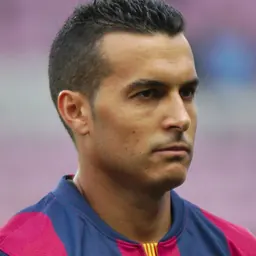


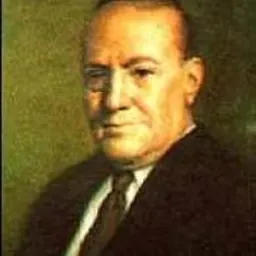


Related people
Same field, nearest in time


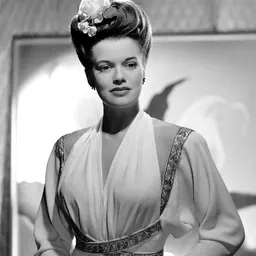


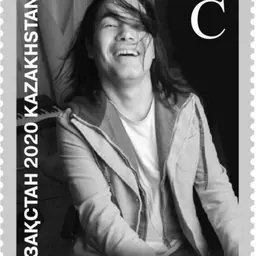
Contemporaries
People whose lives overlapped António Calvário's



Frequently asked questions
Who is António Calvário?
Portuguese singer
When was António Calvário born?
António Calvário was born on 17 October 1938 in Maputo.
What is António Calvário's occupation?
António Calvário is a singer, actor and musician.
What nationality is António Calvário?
António Calvário is Portuguese.
Sources & further reading
Cite this page
APA: Biography.guide. (2026). António Calvário. https://biography.guide/antonio-calvario/
MLA: "António Calvário." Biography.guide, https://biography.guide/antonio-calvario/.
Chicago: "António Calvário." Biography.guide. https://biography.guide/antonio-calvario/.
Data last updated: 2026-09-20 · Spot an error? Report a correction.
Page generated 2026-09-27 05:21 UTC