
About Anton Joachimsthaler
Born 1930. Anton Joachimsthaler is a German historian of technology, historian of Modern Age, author and electrotechnician.
Anton Joachimsthaler (born 1930 in Hohenelbe) is a German historian. He is particularly noted for his research on the early life of the German dictator Adolf Hitler, in his book Korrektur einer Biografie ("Correction of a Biography") and his last days in the book Hitlers Ende ("Hitler's End"), published in English as The Last Days of Hitler.
Life Anton Joachimsthaler was born in 1930 in Hohenelbe in the Sudetenland. He studied electrical engineering at the Oskar-von-Miller-Polytechnikum, a predecessor of the Munich University of Applied Sciences. Afterwards he worked in 1956 concurring with the later conclusion that Hitler shot himself through the temple. Joachimsthaler attributed conflicting accounts to poor memory formation during the turbulent event. Joachimsthaler concluded that the statements and court testimony of Otto Günsche should be held in higher regard than contrary claims.
On the alleged lack of discovery of a bullet in Hitler's study, Joachimsthaler theorizes that after Hitler fired his pistol at contact range, the bullet passed through one temple and became lodged inside the other, rupturing in a hematoma that looked like the temple exit wound reported by eyewitnesses. Joachimsthaler cites a 1925 study which supports such exit failures when not fired transversely at contact range (as later eyewitness accounts said Hitler did) and mentions that West Germany conducted ballistics tests.
Kershaw wrote that chapters 5–7 of Joachimsthaler's book were "the most reliable and detailed examination" of the burning of Hitler and Eva Braun's bodies. Contrary to the view held by some early historians of Hitler's death (supported by certain scientific studies) that bone withstands even indoor cremation, Joachimsthaler concluded that there would have been little more left of Hitler's body than "calcified bones that can easily disintegrate" subjected to intense artillery bombardment. On this basis, he argued (as U.S. jurist Michael Musmanno had done 45 years earlier) that the Soviets never found an intact body. Joachimsthaler dismissed an alleged Soviet autopsy report of Hitler's remains, correctly concluding that only his dental remains are known to have been found, positing that the Soviets sifted these from the soil. Joachim Fest also concluded that only Hitler or Braun's dental remains were confirmed to have been found by the Soviets. Kershaw supported Joachimsthaler's conclusions regarding Hitler's manner of death and the scantiness of the remains (owing to their lengthy burning and the heavy bombardment of the area). In his review of the forensic evidence and eyewitness statements, de Boer also supported Joachimsthaler's conclusions regarding the limited remains as well as the fabricated nature of the alleged autopsy report.
Subsequent to the book's release, the 1947 account of Hitler's secretary Traudl Junge was published. Supporting accounts from that time cited by British historian Hugh Trevor-Roper,
Publications
In German As author Entwicklungsgeschichte der elektrischen Lokomotiven ("History of development of electric locomotives") in 100 Jahre elektrische Eisenbahn ("100 years of electric railway"). Starnberg: Keller Verlag, 1980, , Page 22ff. Bundesbahn-Ausbesserungswerk München-Freimann. Geschichte, Menschen, Fahrzeuge 1925–1985 ("Munich-Freimann Federal Railroad Repair Center. History, people, vehicles 1925-1985"). Munchen: Bundesbahn-Ausbesserungswerk München-Freimann,1985. Die Breitspurbahn: Das Projekt zur Erschließung des groß-europäischen Raumes 1942–1945 ("The Broad railway: The project for the development of the Greater European region 1942-1945"). München: Verlag Herbig, 1985. . Korrektur einer Biografie. Adolf Hitler 1908–1920 ("Correction of a biography. Adolf Hitler 1908-1920"). München: Verlag Herbig, 1989. Hitlers Ende ("Hitler's end"). Augsburg: Bechtermünz Verl. 1995. Hitlers Weg begann in München. 1913–1923 ("Hitler's path began in Munich. 1913-1923"). München: Verlag Herbig, 2000, (überarbeitete Fassung von „Korrektur einer Biografie“; Foreword by Ian Kershaw). Hitlers Liste. Ein Dokument persönlicher Beziehungen ("Hitler's list. A document of personal relationships"). München, Verlag Harbig, 2003. München – Hauptstadt der Bewegung ("Munich - capital of the movement"). München Catalog of the Munich city museum
As publisher Christa Schroeder: Er war mein Chef ("He was my boss"). Munich 1985 Memoirs of one of Hitler's secretaries
In English
Don’t just read it —
keep it.
Full-length biographies made to live with: read them, listen on the way to work, watch them tonight.
- E-book
- Audio
- Video
Instant download · yours to keep · every purchase keeps this site free
Important facts
People in Anton Joachimsthaler's life
Named in this biography and alive at the same time





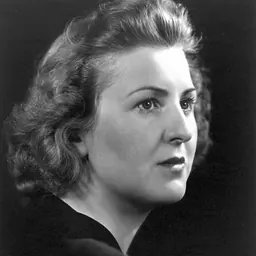
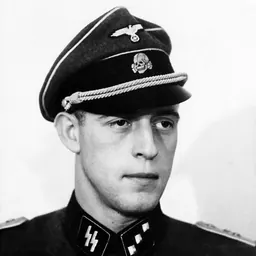
Related people
Same field, nearest in time




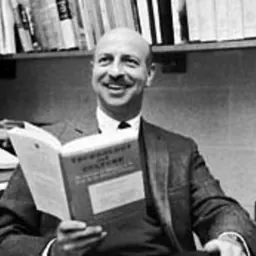
Contemporaries
People whose lives overlapped Anton Joachimsthaler's
Frequently asked questions
Who is Anton Joachimsthaler?
German historian
When was Anton Joachimsthaler born?
Anton Joachimsthaler was born in 1930 in Vrchlabí.
What is Anton Joachimsthaler's occupation?
Anton Joachimsthaler is a historian of technology, historian of Modern Age, author and electrotechnician.
What nationality is Anton Joachimsthaler?
Anton Joachimsthaler is German.
Sources & further reading
· Wikipedia: Anton Joachimsthaler
· DBpedia: Anton Joachimsthaler
Cite this page
APA: Biography.guide. (2026). Anton Joachimsthaler. https://biography.guide/anton-joachimsthaler/
MLA: "Anton Joachimsthaler." Biography.guide, https://biography.guide/anton-joachimsthaler/.
Chicago: "Anton Joachimsthaler." Biography.guide. https://biography.guide/anton-joachimsthaler/.
Data last updated: 2026-09-22 · Spot an error? Report a correction.
Page generated 2026-09-27 05:05 UTC