
About Antoine Blanc
Lived 1792 – 1860 (aged 67). Antoine Blanc was a French catholic priest and catholic bishop.
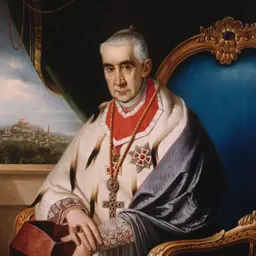
Antoine Blanc (11 October 1792 – 20 June 1860) was the fifth Bishop and first Archbishop of the Roman Catholic Archdiocese of New Orleans. His tenure, during which the diocese was elevated to an archdiocese, was at a time of growth in the city, which he matched with the most rapid church expansion in the history of New Orleans. More new parishes were established in New Orleans under his episcopacy than at any other time.
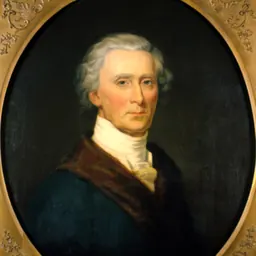
Early life and education Antoine Blanc was born in Sury, near Sury-le-Comtal, then in the Department of Rhône-et-Loire, France. He attended the seminary at Sury-le-Comtal and was ordained in 1816. On 1 July 1817 he embarked from Bordeaux with Louis William Valentine Dubourg Bishop of the Diocese of Louisiana and the Two Floridas, who had traveled to Europe to recruit clergy. They arrived in Annapolis, Maryland in September. Blanc and a number of seminarians stayed with Charles Carroll of Carrollton until the end of October when they joined Dubourg in Baltimore. From Baltimore, they travelled on foot to Pittsburgh, the stage proving too dangerous. From there, they took a flatboat to Louisville, Kentucky, arriving on 30 November. They reached Bardstown, Kentucky on 2 December.
Missioner The following April, Blanc and Father Jeanjean were assigned to the mission at Vincennes, Indiana. Father Jeanjean was soon recalled. Blanc proceeded to build a log chapel at a French settlement on the Illinois side of the Wabash, about twelve miles from Vincennes.
Bishop In December 1831, Bishop De Neckere appointed Blanc associate vicar-general of the diocese of New Orleans. Bishop De Neckere died in 1833, and Blanc was appointed administrator until October 1835 when he received the bulls naming him Bishop of New Orleans.
Blanc also supported the new congregations of English-speaking American migrants and Irish immigrants who had become established in New Orleans and the states since the Louisiana Purchase, as well as French- and English-speaking Blacks. By 1832 New Orleans had grown to be the fourth-largest city in the nation after New York, Philadelphia, and Boston.
The crisis of a yellow fever epidemic resulted in fatalities of 5% of the population of New Orleans.
Blanc died in 1860 in New Orleans while still in office.
Legacy and honors Blanc's institution building during the rapid growth of New Orleans and the states resulted in the number of churches increasing from 26 to 73, and of priests from 27 to 92. Under his leadership, many schools, academies, colleges, convents, and asylums were established.
The Archbishop Antoine Blanc Memorial at 1100 Chartres Street was named in his honor and holds the archives of the archdiocese. The Archbishop Antoine Blanc Assembly # 2047 of the Knights of Columbus, located in New Roads, LA is named in his honor.
Don’t just read it —
keep it.
Full-length biographies made to live with: read them, listen on the way to work, watch them tonight.
- E-book
- Audio
- Video
Instant download · yours to keep · every purchase keeps this site free
Important facts
People in Antoine Blanc's life
Named in this biography and alive at the same time

Related people
Same field, nearest in time

Contemporaries
People whose lives overlapped Antoine Blanc's



Frequently asked questions
Who was Antoine Blanc?
Catholic archbishop
When was Antoine Blanc born?
Antoine Blanc was born on 11 October 1792 in Sury-le-Comtal.
When did Antoine Blanc die?
Antoine Blanc died on 20 June 1860 in New Orleans.
What was Antoine Blanc's occupation?
Antoine Blanc was a catholic priest and catholic bishop.
What nationality was Antoine Blanc?
Antoine Blanc was French.
Sources & further reading
Cite this page
APA: Biography.guide. (2026). Antoine Blanc. https://biography.guide/antoine-blanc/
MLA: "Antoine Blanc." Biography.guide, https://biography.guide/antoine-blanc/.
Chicago: "Antoine Blanc." Biography.guide. https://biography.guide/antoine-blanc/.
Data last updated: 2026-09-20 · Spot an error? Report a correction.
Page generated 2026-09-27 05:28 UTC