
Anthony Siaguru
Papua New Guinea public servant and anti-corruption campaigner
About Anthony Siaguru
Lived 1946 – 2004 (aged 57). Anthony Siaguru was a rugby union player.
Sir Anthony Siaguru (4 November 1946 – 16 April 2004) was a Papua New Guinean civil servant, lawyer, international diplomat, politician, sportsman and anti-corruption campaigner.
Early life and education
Anthony Siaguru was born on 4 November 1946 in the East Sepik Province of what is now Papua New Guinea (PNG). After school in Wewak, capital of East Sepik Province, he studied at Marist College Ashgrove, a Roman Catholic day and boarding primary and secondary school for boys, located in the northern Brisbane suburb of Ashgrove, in Queensland, Australia. In 1971, he was among the first graduates in law from the University of Papua New Guinea. In 1972, he was attached to the Australian Foreign Service and spent a brief period at the Australian mission in Geneva. There were further studies from 1980, at the Harvard Institute for International Development at Harvard University in the United States, as an Edward S. Mason Fellow, with the benefit of a Fulbright Scholarship. Learning rugby union in Australia, Siaguru became captain and, later, coach, of the Papua New Guinea national rugby union team.
Career
Papua New Guinea became independent in late 1975. At the time Siaguru graduated, there was a strong demand for graduates who could play leading roles in the public service, as these positions were mainly occupied by Australians. By the time of independence, Siaguru had become the first Secretary for Foreign Affairs and Trade. In this position he played a significant role in negotiations between Pacific Island countries and Australia and New Zealand, leading ultimately to the establishment of the South Pacific Regional Trade and Economic Co-operation Agreement (SPARTECA) in 1981, which allowed smaller South Pacific Island countries tariff-free access for many of their exports into Australian and NZ markets. He negotiated PNG's associate membership of the European Union under the Lomé Agreement, as well as the Torres Strait Treaty with Australia and a border agreement with Indonesia. Siaguru played a major role in shaping PNG's foreign policy of "Friends to All, Enemies to None" and in persuading the prime minister, Michael Somare, to give diplomatic recognition to China.
Together with Mekere Morauta in the Ministry of Finance, Rabbie Namaliu in the Public Service Commission, and Charles Lepani of the National Planning Office, Siaguru became one of the so-called "Gang of Four" young Papua New Guinean senior public servants who coordinated policy development and government programmes.
Siaguru returned to PNG in 1996 and went back to working with Blake Dawson Waldron. He became a pioneering leader in the country's civil society. He was much in demand as a board member of private companies and was the founding chairman of the Port Moresby Stock Exchange; chairman of Pacific Reinsurance; deputy chairman of Lihir Gold, which provided a successful model for establishing community relations with extraction industries; a director of Steamships Trading Company; chairman of the oil palm producer Pacific Rim Plantations; chairman of PNG Water; chairman of an investment fund; and a director of the Papua New Guinea Post-Courier. He represented PNG on the Asia-Pacific Economic Cooperation Business Advisory Council and was a member of the Policy Advisory Council of the Australian Centre for International Agricultural Research (ACIAR). For the Post-Courier, he wrote a weekly column called In House, in which he condemned corruption in PNG, and made proposals for constitutional reform, in part to address the numerous political parties in the country.
Reflecting his concerns about corruption in the country, Siaguru became the founding chairman of the PNG chapter of Transparency International. He launched the Integrity Pact at the time of the 1997 national elections, requiring politicians to sign a Charter committing themselves to transparent governance. Transparency International established a fund known as the Siaguru Endowment Fund, to give the Port Moresby office an ongoing capacity to continue the anti-corruption work of Siaguru. An annual "Sir Anthony Siaguru Walk against Corruption" is held in Port Moresby.
Don’t just read it —
keep it.
Full-length biographies made to live with: read them, listen on the way to work, watch them tonight.
- E-book
- Audio
- Video
Instant download · yours to keep · every purchase keeps this site free
Important facts
People in Anthony Siaguru's life
Named in this biography and alive at the same time


Related people
Same field, nearest in time


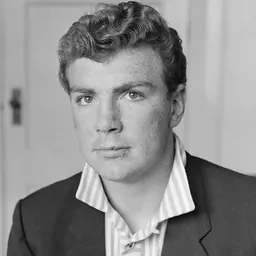
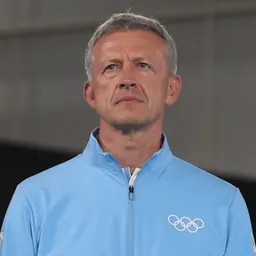
Contemporaries
People whose lives overlapped Anthony Siaguru's
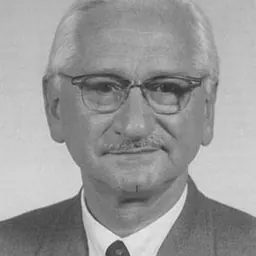
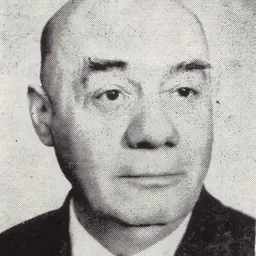


Frequently asked questions
Who was Anthony Siaguru?
Papua New Guinea public servant and anti-corruption campaigner
When was Anthony Siaguru born?
Anthony Siaguru was born on 4 November 1946 in East Sepik Province.
When did Anthony Siaguru die?
Anthony Siaguru died on 16 April 2004.
What was Anthony Siaguru's occupation?
Anthony Siaguru was a rugby union player.
What nationality was Anthony Siaguru?
Anthony Siaguru's recorded nationality: Papua New Guinea.
Sources & further reading
Cite this page
APA: Biography.guide. (2026). Anthony Siaguru. https://biography.guide/anthony-siaguru/
MLA: "Anthony Siaguru." Biography.guide, https://biography.guide/anthony-siaguru/.
Chicago: "Anthony Siaguru." Biography.guide. https://biography.guide/anthony-siaguru/.
Data last updated: 2026-09-20 · Spot an error? Report a correction.
Page generated 2026-09-27 05:07 UTC