
About Anthony Payne
Lived 1936 – 2021 (aged 84). Anthony Payne was a British composer, musicologist, music critic and music arranger.
Anthony Edward Payne (2 August 1936 – 30 April 2021) was an English composer, music critic and musicologist. He is best known for his acclaimed completion of Edward Elgar's third symphony, which gained wide acceptance into Elgar's oeuvre. Payne is particularly noted for his chamber music, much of which was written for his wife, the soprano Jane Manning, and the couple's new music ensemble Jane's Minstrels. Initially an unrelenting proponent of modernist music, by the 1980s his compositions had embraced aspects of the late English romanticism, described by his colleague Susan Bradshaw as "modernized nostalgia".
Born in London, Payne first seriously studied music at Durham University. His professional career began around 1969 with his first major work, the staunchly modernist Phoenix Mass for choir and brass band. He continued to write choral and vocal works, almost exclusively to British poets. From his 1981 chamber work A Day in the Life of a Mayfly on, he synthesised modernism with the English romanticism of Elgar, Delius and Vaughan Williams. Two orchestral commissions for The Proms, The Spirit's Harvest (1985) and Time's Arrow (1990) were well received. After his successful completion of Elgar's unfinished third symphony, Payne became unsure of his musical identity. He found difficulty in subsequent composition until a series of orchestral works for the Proms, Visions and Journeys (2002), The Period of Cosmographie (2010) and Of Land, Sea and Sky (2016).
Payne held academic posts at various institutions throughout his career, including Mills College, the London College of Music, the Sydney Conservatorium of Music, the University of Western Australia and the University of East Anglia. Despite regular commissions from a variety of English ensembles, he was not a particularly mainstream composer and was forced to supplement his income with writings. A noted critic, he wrote for The Daily Telegraph, The Independent and Country Life. Other writings include publications on a variety of musical topics, notably —a study on the composer Arnold Schoenberg—and numerous works on the music of Frank Bridge, to whom he was particularly devoted.
Life and career Youth and education (1936–1964)
Anthony Edward Payne was born in London on 2 August 1936 to Edward and Muriel (née Stroud) Payne; his father was a civil servant. Not from a particularly musical background, at the age of 10 Payne went to see relatives in Godalming and first experienced classical music from a radio broadcast of Brahms's Symphony No. 1. Recalling the significance of the moment in a 2013 interview with Time Out, he said he "was absolutely translated" and "hooked like a fish". A recording he was given the next year of Tchaikovsky's Piano Concerto No. 1 solidified his interest; he began composing at around age 11. From 1947 to 1955, Payne attended Dulwich College where he mainly studied the classics, though he still found time to engage in music. Besides private study with Stanley Wilson, he worked on an orchestral suite and piano sonata and regularly played clarinet with Alan Hacker. Payne began further exploration of Western Classical repertoire, particularly Mozart and Haydn of the classical period and the Romantics Dvořák and Sibelius. However, his principal compositional inspirations were the late English Romantics Elgar, Delius and Vaughan Williams, influences which are increasingly prominent in various early works: two—in addition to the earlier one—piano sonatas, a clarinet sonata, and the Polyphonic suite.
After a brief stint in the Royal Corps of Signals (1955–1957), Payne read music at the Durham University Department of Music in St Cuthbert's Society, Durham University (1958–1961). During this time, studying Palestrinian counterpoint and working with the musicologist Peter Evans assisted the growth of his musical maturity. Around his graduation, he had a nervous breakdown and largely stopped composing for four years.
Paraphrases and Cadenzas (1969), his next work, was a 14-minute piece for viola, clarinet and piano, that shared much of the harmonic language of the Phoenix Mass. Payne later revised both the Phoenix Mass and Paraphrases and Cadenzas in 1972 and 1978 respectively. The latter was his largest-scale work to date, featuring ritornellos and—like the Sonatas and Ricercars—rotating instrumental solos. Though now he planned to finish Liebestod, he was commissioned by the Grimethorpe Colliery Band and Elgar Howarth so instead wrote a tone poem-funeral ode inspired by Beowulf, Fire on Whaleness (1975–1976), for brass band. Throughout 1976 to 1979, Payne embarked on four more choral pieces, three of which were by British figures: The World's Winter (1976, text by Alfred, Lord Tennyson); The Sea of Glass (1977, text from the Book of Revelation); A Little Ascension Cant (1977, text attributed to Cynewulf); and A Little Whitsuntide Cant (1977, text by Emily Brontë). A Day in the Life of a Mayfly soon became Payne's best known work up to that point.
In 1988 he co-founded the new music ensemble Jane's Minstrels with Manning. were composed for Jane's Minstrels.
Elgar's Third Symphony (1993–1997)
As a part of his interest in modernistic music, each movement of the Phoenix Mass centres on a particular interval, such as whole tones in the Gloria and major thirds in the Sanctus. Reflecting on this, Payne said "Still, you do it for love, don't you?".
Payne made substantial contributions to both the orchestral and choral/vocal repertoires: his Time's Arrow (1990) and Visions and Journeys (2002) for orchestra were acclaimed, and he was a prolific composer of song cycles.
Selected recordings +Selected recordings of compositions by Anthony Payne Year Album Performers (conductor) Label 1990 Judith Hall, flute; Elinor Bennett, harp Nimbus Records NI5247 1995 Jane's Minstrels (Roger Montgomery) NMC D025 1996 BBC Symphony Orchestra (Sir Andrew Davis) NMC D037S 1996 Chroma Riverrun Records RVRCD56 1998 BBC Symphony Orchestra (Sir Andrew Davis) NMC D052 1998 Jane's Minstrels (Roger Montgomery) NMC D056 1999 Spectrum; Spectrum 2: 50 contemporary works for solo piano Thalia Myers, piano NMC D057 2001 Paul Silverthorne, viola; John Constable, piano Black Box BBM1058 2002 Purcell: Hail! Bright Cecilia: Plus Bright Cecilia Variations BBC Singers (Ronald Corp) Musicians Benevolent Fund MBF1 2005 In Flanders' Fields Fiona Kimm, mezzo soprano; Andrew Bell, piano Quartz Music QTZ2038 2007 Jane's Minstrels (Roger Montgomery) NMC D130 2008 Sapporo Symphony Orchestra (Tadaaki Otaka) Signum Classics SIGCD118 2009 BBC Symphony Orchestra (Sir Andrew Davis) Chandos CHAN10570 2010 The NMC Songbook Roderick Williams, baritone; Iain Burnside, piano NMC D150 2010 Endymion (Quentin Poole) NMC D160 2013 Various NMC D159 2024 BBC Symphony Orchestra (Martyn Brabbins) (Sir Andrew Davis) NMC D281
List of compositions + List of compositions by Anthony Payne Title Year GenreOrchestral Suite from a Forgotten Ballet 1955 1985 Orchestral Contrapuncti 1958 1979 Orchestralsolo string quartet; string orchestra Concerto for Orchestra 1974 Orchestral Song of the Clouds 1979–80 Orchestralsolo oboe, 2 horns, perc, string orchestra Spring's Shining Wake 1980–81 Orchestral Songs and Seascapes 1984 Orchestralstring orchestra The Spirit's Harvest 1985 Orchestral Half-Heard in the Stillness 1987 Orchestral Time's Arrow 1989–90 Orchestral Symphonies of Wind and Rain 1991 Orchestral Hidden Music 1992 Orchestral Orchestral Variations: The Seeds Long Hidden 1992–94 Orchestral Visions and Journeys 2001–02 OrchestralThe work set to variations was Purcell's Hail! Bright Cecilia. Brass Fire on Whaleness 1975–76 BrassBrass band, perc Fanfares and Processional 1986 Brasshn, 4 tpt, 4 trbn, tuba Echoes of Courtly Love 1987 Brasshn, tpt, flugel hn, trbn, tuba River-race 1990 Brass4 hn, 4 tpt, 4 trbn, tuba, percChamber Paraphrases and Cadenzas 1969 1978 Chambercl, va, pf Sonatas and Ricercars (Wind Quintet) 1970–71 Chamberfl, ob, cl, bn, hn String Quartet No. 1 1978 ChamberString quartet Footfalls Echo in the Memory 1978 Chambervn, pf The Stones and Lonely Places Sing 1978–79 Chamberfl + pic, cl + b cl, hn, pf, vn, va, vc A Day in the Life of a Mayfly 1981 Chamberfl + pic, cl, perc, pf, vn, vc The Song Streams in the Firmament 1986 Chambercl, 2 vn, va, vc, db Consort Music 1987–88 Chamber2 vn, 2 va, vc A 1940s Childhood 1986–87 Chamberfl, gui 1989 Chamberfl, hp Sea-Change 1988 Chamberfl, cl, hp, 2 vn, va, vc The Enchantress Plays 1990 Chamberbn, pf Empty Landscape – Heart's Ease 1994–95 Chamberob, cl, hn, vn, va, vc Engines and Islands 1996 Chamberfl, cl, perc, pf, vn, va, vc Piano Trio 1988 ChamberPiano trio Of Knots and Skeins 2000 Chambervn, pf Horn Trio 2005–06 ChamberHorn trio Piano Quintet 2007 ChamberPiano quintet Out of the Depths Comes Song 2008 Chambervc, pf From a Mouthful of Air 2009 Chambertpt, hp, vn, va, vc String Quartet No. 2 2010 ChamberString quartet Instrumental solos Paean 1971 SoloPiano Miniature Variations on a Theme of E.L. 1980 SoloPiano Reflections in the Sea of Glass 1983 SoloOrgan Amid the Winds of Evening 1987 SoloViola Song Without End 1995 SoloPiano Micro-Sonata 1997 SoloPiano Hommage to Debussy 1998 SoloPiano Storm Chorale 2003 SoloViolin Conundrum 2004 SoloCelloChoral and vocal Phoenix Mass 1969 1972 Choral and vocal, 3 trumpet, 3 trombone Two Songs without Words 1970 Choral and vocal5 male voices A Little Passiontide Cant(Text from 14th-century England) 1974 1984 Choral and vocal First Sight of Her and After(Text by Thomas Hardy) 1975 Choral and vocal16 solo voices 1988 Choral and vocal, ob, cl, bn, hn, perc, vn, va, vc, db The World's Winter(Text by Alfred, Lord Tennyson) 1976 Choral and vocalSoprano, flute + piccolo, oboe, clarinet The Sea of Glass(Text from the Book of Revelation) 1977 Choral and vocal, organ A Little Ascension Cant(Text attributed to Cynewulf) 1977 1984 Choral and vocal A Little Whitsuntide Cant(Text by Emily Brontë) 1977 1984 Choral and vocal Evening Land(Text by Pär Lagerkvist) 1980–81 Choral and vocalSoprano, piano A Little Christmas Cant(Text from traditional carol texts) 1983 Choral and vocal Alleluias and Hockets(after Machaut) 1987 Choral and vocal, 2 ob, eng hn, 2 bn, 2 tpt, 3 trbn Adlestrop(Text by Edward Thomas) 1989 Choral and vocalSoprano, piano First Sight of Her and After(Text by Thomas Hardy) 1989 Choral and vocal, ob, cl, bn, hn, perc, vn, va, vc, dbAspects of Love and Contentment(8 Songs of Peter Warlock) 1991 Choral and vocalS, fl, ob, cl, hn, hp, str qt Break, break, break(Text by Alfred, Lord Tennyson) 1996 Choral and vocal From the Woodlanders(Text by Thomas Hardy) 1999 Choral and vocalSoprano, 2 clarinets, violin, cello Betwixt Heaven and Charing Cross(Text by Francis Thompson) 2001 Choral and vocal Poems of Edward Thomas(Text by Edward Thomas) 2002–03 Choral and vocalSoprano, piano, violin, vila, cello Ghost Train(Text by Payne, after Pär Lagerkvist) 2008 Choral and vocalBaritone, pf The Headland(Text by Ursula Vaughan Williams) 2008 Choral and vocalMezzo soprano, piano
Other + List of completions, arrangements and orchestrations by Anthony Payne
Selected publications Alongside his career as a composer, Payne simultaneously built up a reputation as a writer on music, writing books about Arnold Schoenberg and Frank Bridge. Honorary Doctor of Music, Kingston University Honorary Doctor of Music, University of Birmingham Fellow of the Royal College of Music; arts research fellow for two years
Don’t just read it —
keep it.
Full-length biographies made to live with: read them, listen on the way to work, watch them tonight.
- E-book
- Audio
- Video
Instant download · yours to keep · every purchase keeps this site free
Important facts
People in Anthony Payne's life
Named in this biography and alive at the same time
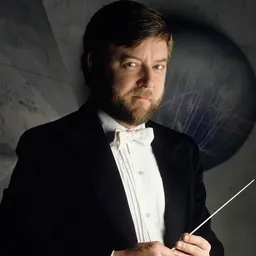




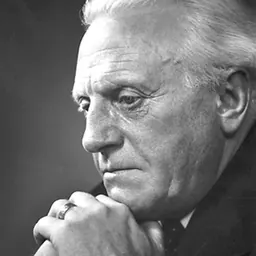
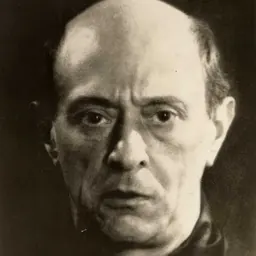

Related people
Same field, nearest in time
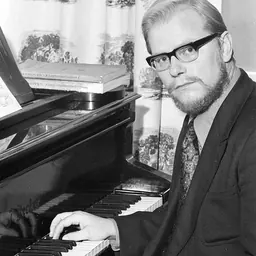


Contemporaries
People whose lives overlapped Anthony Payne's


Frequently asked questions
Who was Anthony Payne?
British composer (1936-2021)
When was Anthony Payne born?
Anthony Payne was born on 2 August 1936 in Greater London.
When did Anthony Payne die?
Anthony Payne died on 30 April 2021 in Islington.
What was Anthony Payne's occupation?
Anthony Payne was a composer, musicologist, music critic and music arranger.
What nationality was Anthony Payne?
Anthony Payne was British.
Sources & further reading
Cite this page
APA: Biography.guide. (2026). Anthony Payne. https://biography.guide/anthony-payne/
MLA: "Anthony Payne." Biography.guide, https://biography.guide/anthony-payne/.
Chicago: "Anthony Payne." Biography.guide. https://biography.guide/anthony-payne/.
Data last updated: 2026-09-20 · Spot an error? Report a correction.
Page generated 2026-09-27 05:17 UTC