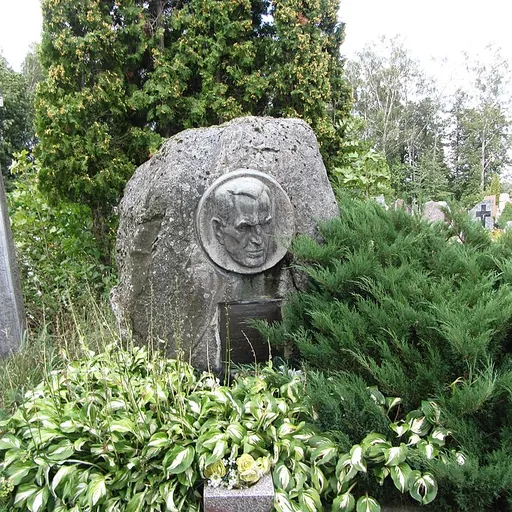
About Anthony Bimba
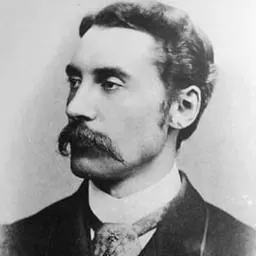
Lived 1894 – 1982 (aged 88). Anthony Bimba was a newspaper editor, editor, historian and newspaper proprietor.
Antanas "Anthony" Bimba Jr. (1894–1982) was a Lithuanian-born American newspaper editor, historian, and radical political activist. An editor of a number of Lithuanian Marxist periodicals published in the United States, Bimba is best remembered as the defendant in a 1926 legal case in which he was charged with sedition and violation of a 229-year-old law against blasphemy in the state of Massachusetts.
Bimba was once again in the news in 1963 when the United States Department of Justice began deportation proceedings against him, charging that he committed perjury during the course of his 1927 naturalization as an American citizen. The effort was contested and ultimately dropped by the government in the summer of 1967.
Biography
Early years Antanas Bimba, most commonly known by the Americanized first name "Anthony," was born on January 22, 1894, in the village of , located near the Latvian border in the Rokiškis District of Lithuania, then part of the Russian Empire. Bimba's father Anthony Bimba Sr. was a blacksmith and a peasant farmer. Anthony Jr. was one of six surviving children of his father's second wife. He arrived on July 3, 1913, at Burlington, New Jersey, and was at once employed working in a steel mill next to his brother at the rate of $7.00 for a 60-hour week. He also for the first time came into contact with the Lithuanian socialist movement, and soon came to abandon the Catholicism of his youth for religious freethinking as he himself became a socialist. He would remain there through the 1918–19 academic year. It is unclear whether Bimba was arrested for pro-trade union and socialist or anti-war utterances, with late Lithuanian political encyclopedias offering either explanation. The case against him was ultimately dropped. Bimba sought to produce original content and found the adaptation work at Darbas to be mundane, so he quit the editor's job in the summer of 1920. Along with the majority of the United Toilers, Bimba would rejoin the mainline CPA due to Comintern insistence later that same year.
Making use of the pseudonym "J. Mason," Bimba was a delegate to the ill-fated 1922 Bridgman Convention of the Communist Party of America representing the party's Chicago district. The conclave was raided by local and federal law enforcement authorities, resulting in high-profile trials of Communist trade union chief William Z. Foster and CPA Executive Secretary C. E. Ruthenberg. Writing nearly two decades after the event, repentant former Communist Benjamin Gitlow recalled that a crisis had resulted during the convention when Bimba was discovered mailing convention reports to Workers' Challenge, the weekly newspaper of the rival United Toilers of America in violation of the convention's secrecy rules. According to Gitlow, a special meeting of the convention delegates was held about the matter and Bimba's convention rights were terminated and his party membership placed on probation. An anti-communist Lithuanian-American named Anthony Eudaco went to the local police prior to the event to express his concerns and to alert them to a potentially illegal situation. Eudaco then joined the crowd of about 100 Lithuanian-speaking men and women who attended Bimba's presentation, baiting the speaker with questions about violence and revolution. In the aftermath of Bimba's speech, authorities decided to charge him with criminal sedition and violation of a 229-year old state law against blasphemy, passed at the time of the Salem witch trials. The trial was depicted by the Communists as a "second Scopes case," pitting enlightenment against "the forces of darkness and viciousness." With respect to the allegation of sedition, Hoffman again based his defense upon the notion of constitutionally-protected individual liberty, denying any act of incitement in Bimba's actual words and stating that even if Bimba did say the words ascribed to him, he was merely expressing personal beliefs. A modest fine of $100 was levied against him and Bimba was released from custody to return to his journalistic endeavors in Brooklyn. In his commentary to the press, Wilbar noted "The interests of public justice do not require further prosecution of this case. This issue is dead now and the offense is so trivial that I do not think it worth the time and heavy expense to prosecute." The government charged that Bimba had committed perjury during his 1927 hearings to become a naturalized citizen of the United States for failing to make mention of his 1926 prosecution for sedition and blasphemy.
Death and legacy
Anthony Bimba died on September 30, 1982, in New York City. He was 88 years old at the time of his death.
Bimba's papers are housed at the Immigration History Research Center Archives, located in the Archives and Special Collections at the University of Minnesota in Minneapolis. A detailed on-line finding aid is not yet available.
Works Krikščionybē ir darbininkai (Christianity and the Workers). Chicago, IL: n.p., n.d. [1920s?]. Amerikos darbininkė (The American Worker). Brooklyn, NY: "Laisves" spauda, 1923. "Letter to C.E. Ruthenberg, Executive Secretary, Workers Party of America in Chicago, from Anthony Bimba, Editor of Laisve, Brooklyn, NY, Oct. 8, 1924." Corvallis, OR: 1000 Flowers Publishing, 2013. Religija ir piktadarystes (Religion and Evil). Chicago, IL: "Vilnies" leidinys, 1925. Istorija klasių kovos Amerikoje (History of the Class Struggle in America). Brooklyn, NY: "Laisves" spauda, 1925. Lietuvos Respublika ir jos ateitis: A. Bimbos prakalba pasakyta Montello, Mass., Sausio 26 d., 1926 m. (The Lithuanian Republic and the Future: Speech of A. Bimba, Montello, Mass., January 26, 1926). Introduction by Rojas Mizara. Brooklyn, NY: "Laisves" spauda, 1926. —Brockton speech. The History of the American Working Class. New York: International Publishers, 1927. Kas tie fasistai? (Who Are the Fascists?) Brooklyn, NY: "Laisves" spauda, 1927. Kas tai yra trockizmas (What Is Trotskyism?) Brooklyn, NY: "Laisves" spauda, 1929. Darbininkė ir bedarbė arba kova prieš badą ir išnaudojimą (Workers and the Unemployed, or, The Fight Against Hunger and Exhaustion). 1931. The Molly Maguires: The True Story of Labor's Martyred Pioneers in the Coalfields. New York: International Publishers, 1932. Mirtis kovotoju už laisve Bartolomeo Vanzetti ir Nicola Sacco (The Death of Freedom Fighters Bartolomeo Vanzetti ir Nicola Sacco). n.c.: Tarptautinio Darbininku Apsigynimo Lietuviu Sekcija, n.d. [early 1930s?]. Kelias i nauja gyvenima (The Path to a New Life). Chicago, IL: "Vilnies" leidinys, 1937. Naujoji Lietuva: Faktu ir dokumentu sviesoje (New Lithuanian: In Light of Facts and Documents). n.c.: Isleido Lietuvos Draugu Komitetas, 1940. Prisikėlusi Lietuva: Tarybu Lietuvos liaudies ir vyriausybes zygiai ekonominiam ir kulturiniam salies gyvenimui atstatyti. (Resurrected Lithuania: The Soviet Lithuanian People and Government and Rebuilding the Economic and Cultural Life of the Country). Brooklyn, NY: "Laisves" spauda, 1946. JAV darbininku̜ judėjimo istorija (History of the USA Labor Movement). Vilnius, Lithuania: Valstybinė politinės ir mokslinės literatūros leidykla, 1963. Klesti Nemuno kraštas: Lietuva, 1945-1967 (The Booming Neumis Region: Lithuania 1945-1967). Brooklyn, NY: n.p., 1967.
Don’t just read it —
keep it.
Full-length biographies made to live with: read them, listen on the way to work, watch them tonight.
- E-book
- Audio
- Video
Instant download · yours to keep · every purchase keeps this site free
Important facts
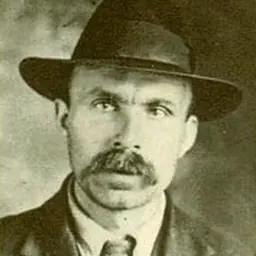
People in Anthony Bimba's life
Named in this biography and alive at the same time

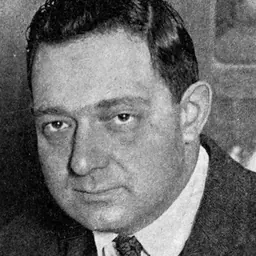
Related people
Same field, nearest in time

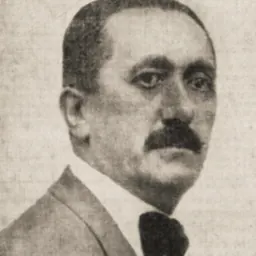



Contemporaries
People whose lives overlapped Anthony Bimba's


Frequently asked questions
Who was Anthony Bimba?
Lithuanian-American political activist
When was Anthony Bimba born?
Anthony Bimba was born on 22 January 1894 in Valaitiškis.
When did Anthony Bimba die?
Anthony Bimba died on 30 September 1982 in New York City.
What was Anthony Bimba's occupation?
Anthony Bimba was a newspaper editor, editor, historian and newspaper proprietor.
Sources & further reading
Cite this page
APA: Biography.guide. (2026). Anthony Bimba. https://biography.guide/anthony-bimba/
MLA: "Anthony Bimba." Biography.guide, https://biography.guide/anthony-bimba/.
Chicago: "Anthony Bimba." Biography.guide. https://biography.guide/anthony-bimba/.
Data last updated: 2026-09-20 · Spot an error? Report a correction.
Portrait: Wikimedia Commons · author & licence
Page generated 2026-09-27 04:58 UTC