
About Anne Braden
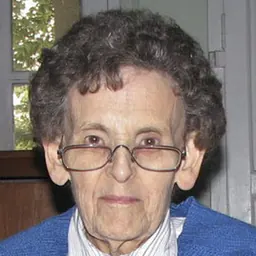
Lived 1924 – 2006 (aged 81). Anne Braden was an American journalist.
Anne McCarty Braden (July 28, 1924 – March 6, 2006) was an American civil rights activist, journalist, and educator dedicated to the cause of racial equality. She and her husband Carl bought a suburban house for an African American couple during Jim Crow. White neighbors burned crosses and bombed the house. During McCarthyism, Anne was charged with sedition. She wrote and organized for the southern civil rights movement before violations became national news. Anne was among the nation's most outspoken white anti-racist activists, organizing across racial divides in environmental, women's, and anti-nuclear movements.
Background Born in Louisville, Kentucky, on July 28, 1924, to Gambrell N. McCarty and Anita D. (Crabbe) McCarty and raised in rigidly segregated Anniston, Alabama, Braden grew up in a white, middle-class family that accepted southern racial mores wholeheartedly. A devout Episcopalian, Braden was bothered by racial segregation, but never questioned it until her college years at Randolph-Macon Woman's College in Lynchburg, Virginia. As she grew older she experienced what has been framed as a "racial conversion narrative", "a conversion of almost religious intensity" "turning myself inside out and upside down". The experience that so affected her, in 1946, was witnessing a march of black veterans to the Birmingham courthouse, led by Louis Burnham of the Southern Negro Youth Congress, demanding the right to vote; with Braden covering the story as a reporter for the Birmingham News.
After working on newspapers in Anniston and Birmingham, Alabama, Anne Braden returned to Kentucky as a young adult to write for The Louisville Times. She became a supporter of the Civil Rights Movement at a time when it was unpopular among southern whites.
Either you find a way to oppose the evil, or the evil becomes part of you and you are a part of it, and it winds itself around your soul like the arms of an octopus... If I did not oppose it, I was... responsible for its sins. — Anne Braden
Even as the postwar labor movement splintered and grew less militant, civil rights causes heated up. In 1950, Anne Braden spearheaded a hospital desegregation drive in Kentucky. She endured her first arrest in 1951 when she led a delegation of southern white women organized by the Civil Rights Congress to Mississippi to protest the execution of Willie McGee, an African American man controversially convicted of the rape of a white woman, Willette Hawkins.
Southern Conference Educational Fund Blacklisted from local employment, the Bradens took jobs as field organizers for the Southern Conference Educational Fund (SCEF), a small, New Orleans–based civil rights organization whose mission was to solicit white southern support for the beleaguered southern civil rights movement. helped place the Bradens among the civil rights movement's most dedicated white allies.
Carl Braden died suddenly of a heart attack on February 18, 1975. After Carl's death, Anne Braden remained among the nation's most outspoken white anti-racist activists. She instigated the formation of a new regional multiracial organization, the Southern Organizing Committee for Economic and Social Justice (SOC), which initiated battles against environmental racism. She became an instrumental voice in the Rainbow/PUSH Coalition of the 1980s and in the two Jesse Jackson presidential campaigns, as well as organizing across racial divides in the new environmental, women's, and anti-nuclear movements that sprang up in that decade.
In 1977, Braden became an associate of the Women's Institute for Freedom of the Press (WIFP). WIFP is an American nonprofit publishing organization. The organization works to increase communication between women and connect the public with forms of women-based media.
In 2005, she joined Louisville antiwar demonstrations in a wheelchair. She cofounded the Kentucky Alliance Against Racist and Political Repression and continued involvement in local activism addressing modern concerns of police brutality, environmental racism, and LGBT rights.
The Bradens had three children: James, a Rhodes Scholar and a 1980 graduate of Harvard Law School where he was editor of the Harvard Law Review; Anita, born in 1953, who died of a pulmonary disorder at age 11, and Elizabeth, born in 1960, who has worked as a teacher in many countries around the world, serving as of 2006 in that capacity in rural Ethiopia.
Anne Braden died on March 6, 2006, at Jewish Hospital in Louisville and was buried at Eminence Cemetery in Eminence, Kentucky. Only three days earlier, she had completed a proposal for a local activist summer camp.
Awards
Braden received the American Civil Liberties Union's first Roger Baldwin Medal of Liberty in 1990 for her contributions to civil liberties. As she aged, her activism focused more on Louisville, where she remained a leader in anti-racist drives and taught social justice history classes at University of Louisville and Northern Kentucky University.
Legacy
After her death, the Anne Braden Institute for Social Justice Research was established at the University of Louisville in November 2006 and was officially opened on April 4, 2007. The institute focuses on social justice globally, but concentrates on the southern United States and the Louisville area.
The alternative hip hop group Flobots paid tribute with the song "Anne Braden" on their 2007 album Fight With Tools. The track includes several audio samples of Anne Braden, describing her life and thoughts on race in her own words.
Works
In 1958 Anne wrote The Wall Between, a memoir of their sedition case.
Anne Braden : Southern Patriot (1924-2006) Directed by Anne Lewis and Mimi Pickering; Peter Pearce - camera; Dirk Powell - score; Appalshop Film & Video; California Newsreel (Firm). San Francisco, Calif. : California Newsreel.
Archives Anne Braden papers, 1920s–2006, University of Louisville Libraries Braden (Anne McCarty) papers, 1920s–2006 1970s–2006 at the University of Kentucky Special Collections Research Center Carl and Anne Braden papers at the University of Kentucky Special Collections Research Center Anne Braden Oral History Project, Louie B. Nunn Center for Oral History, University of Kentucky Libraries, Lexington, Kentucky Anne Braden papers, The Civil Rights History Project: Survey of Collections and Repositories, Library of Congress Southern Conference Educational Fund Records, L1991-13, Southern Labor Archives. Special Collections and Archives, Georgia State University, Atlanta, Georgia SNCC Digital Gateway: Anne Braden, Documentary website created by the SNCC Legacy Project and Duke University, telling the story of the Student Nonviolent Coordinating Committee & grassroots organizing from the inside-out
Don’t just read it —
keep it.
Full-length biographies made to live with: read them, listen on the way to work, watch them tonight.
- E-book
- Audio
- Video
Instant download · yours to keep · every purchase keeps this site free
Important facts
Family & relationships
People in Anne Braden's life
Named in this biography and alive at the same time



Related people
Same field, nearest in time




Contemporaries
People whose lives overlapped Anne Braden's


Frequently asked questions
Who was Anne Braden?
American activist (1924–2006)
When was Anne Braden born?
Anne Braden was born on 28 July 1924 in Louisville.
When did Anne Braden die?
Anne Braden died on 6 March 2006 in Louisville.
What was Anne Braden's occupation?
Anne Braden was a journalist.
What nationality was Anne Braden?
Anne Braden was American.
Sources & further reading
Cite this page
APA: Biography.guide. (2026). Anne Braden. https://biography.guide/anne-braden/
MLA: "Anne Braden." Biography.guide, https://biography.guide/anne-braden/.
Chicago: "Anne Braden." Biography.guide. https://biography.guide/anne-braden/.
Data last updated: 2026-09-22 · Spot an error? Report a correction.
Page generated 2026-09-27 05:23 UTC