
About Anna Haava
Lived 1864 – 1957 (aged 92). Anna Haava was an Estonian and Russian writer, poet, translator, teacher, nurse and librettist.
Anna Haava (born Anna Rosalie Haavakivi; 15 October 1864 – 13 March 1957) was an Estonian poet, writer and translator in the late 19th and 20th centuries. She was one of the founding members of the Estonian Writers' Union in 1922. She was honoured with the 3rd Class of the Order of the Cross of the Eagle, 1930; 2nd Class Order of the Estonian Red Cross, 1935; People's Writer of the Estonian SSR, 1954; and the Order of the Badge of Honour.
Biography Anna Rosalie Haavakivi was born 15 October 1864 in rural Kodavere Parish, which is now part of Peipsiääre Parish, in eastern Estonia. It's said that as her father played the violin, Anna would sing along; her musicality would later influence her poetry and writings greatly.
While Haava attended the German-language school, she was given a "more German-sounding" name, Anna Rosalie Espenstein, and taught how to be a good German. But, on graduation, Anna insisted on restoring her birth name, Haavakivi, and resuming her life as a patriotic Estonian. Haava infused many of her poems with a remarkable musicality that facilitated their adaptation as lyrics for music composed by then-contemporary artists. As early as 1887, Miina Härma, a young organist studying in St. Petersburg, set her first songs to Haava's poems and more than 200 of Haava's poems have since been set to music by other composers. Some Haava-inspired songs went on to become familiar at regional festivals or transformed into folksy songs.
Translations As a translator, Haava was able to earn income by making important foreign language literature available to Estonian readers, including J.W. Goethe's Egmont, F. Schiller's Wilhelm Tell, H. Hofmannstahl's King Oedipus, W. Shakespeare's A Midsummer Night's Dream and Hans Christian Andersen's fairy tales, among others. Haava also translated some ancient mythology such as I. C. Andrä's and R. Schneider's Greeka muinaskangelased (Ancient Greek Heroes) and G. Schalk's Rooma muinaskangelased (Ancient Roman Heroes).
Difficulties As a young woman, Anna started singing in a folk choir and fell in love with a student of the theological faculty of the University of Tartu. but she was only 25 when, one after another, both of her parents and the young student died. Two years later, her only sister, Liisa, passed on as well. 2nd Class Order of the Estonian Red Cross, 1935 Order of the Badge of Honour
Selected works Some collections.
Poems I (Luuletused I) 1888 Poems II (Luuletused II) 1890 Poems III (Luuletused III) 1897 Waves (Lained) 1906 With a Sword and a Cross (Ristlained) 1910 Children of the Nordic Countries (Põhjamaa lapsed) 1913 From Our Days (Meie päevist) 1920 Still, Life is Good (Siiski on elu ilus) 1930 I Sing an Estonian Song (Laulan oma eestilaulu) 1935
Don’t just read it —
keep it.
Full-length biographies made to live with: read them, listen on the way to work, watch them tonight.
- E-book
- Audio
- Video
Instant download · yours to keep · every purchase keeps this site free
Important facts
People in Anna Haava's life
Named in this biography and alive at the same time
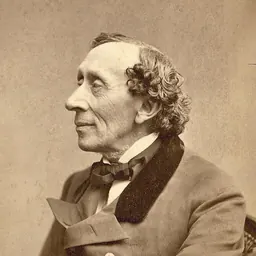
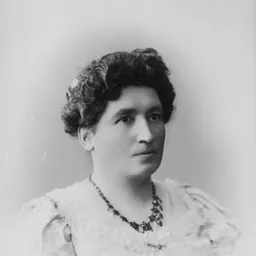

Related people
Same field, nearest in time
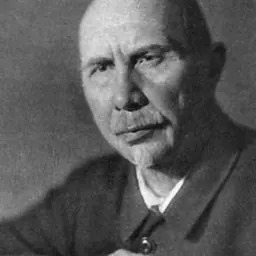

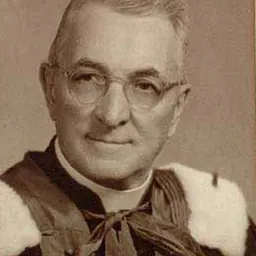

Contemporaries
People whose lives overlapped Anna Haava's



Frequently asked questions
Who was Anna Haava?
Estonian poet and translator (1864-1957)
When was Anna Haava born?
Anna Haava was born on 15 October 1864 in Kodavere.
When did Anna Haava die?
Anna Haava died on 13 March 1957 in Tartu.
What was Anna Haava's occupation?
Anna Haava was a writer, poet, translator, teacher, nurse and librettist.
What nationality was Anna Haava?
Anna Haava was Estonian and Russian.
Sources & further reading
Cite this page
APA: Biography.guide. (2026). Anna Haava. https://biography.guide/anna-haava/
MLA: "Anna Haava." Biography.guide, https://biography.guide/anna-haava/.
Chicago: "Anna Haava." Biography.guide. https://biography.guide/anna-haava/.
Data last updated: 2026-09-25 · Spot an error? Report a correction.
Page generated 2026-09-27 05:12 UTC