
About Anna Gurney
Lived 1795 – 1857 (aged 61–62). Anna Gurney was a British academic and abolitionist.
Anna Gurney (31 December 1795–6 June 1857) was an Old English scholar, philologist, philanthropist, geologist, archaeologist, botanist, abolition campaigner, and member of the Gurney family of Norfolk.
A daughter to Richard and Rachel Gurney, Anna was brought up a Quaker. She learnt Latin, Greek, Hebrew, and Anglo-Saxon from an early age, in 1819 anonymously publishing for private circulation A Literal Translation of the Saxon Chronicle, the first translation of this text. She lived in a cottage at Northrepps from 1825 with Sarah-Maria Buxton, the pair becoming known as the "Cottage Ladies". Here, the pair worked with Thomas Fowell Buxton from 1834 on a campaign over the treatment of indigenous peoples in the British Empire which resulted in the Parliamentary Select Committee on Aboriginal Tribes, for which Gurney wrote the bulk of its final report. Gurney lived at the Northrepps cottage for the remainder of her life after Sarah Buxton's death in 1839, though continued to travel the world and study new languages. She was the first woman to be elected as a member of both the British Archaeological Association and the Philological Society, in 1845 and 1847 respectively. Following her death in 1857 at the house of her half-brother Hudson Gurney in Keswick near Norwich, she was buried in St Martin's Church in Overstrand.
Early life and education Anna lived at Keswick Hall, the seat of the Gurney family, from childhood. Anna Gurney was born on 31 December 1795, Anna lived at Keswick Hall from childhood, alongside Sarah-Maria Buxton, sister of Thomas Fowell Buxton. Thomas was the husband of Anna's cousin, Hannah Gurney. The Gurney family were prominent Quakers. after which Anna stayed with her mother at Northrepps Cottage, and was brought up a Quaker. As adults, she and Hudson Gurney would share scholarly interests, as well as a campaign highlighting the injustices committed by the British Empire on its indigenous peoples. Anna and Sarah worked to sift and cull evidence from missionary and government sources in preparation for Thomas's second parliamentary speech on aborigines in July 1835, selecting the most compelling pieces of evidence for Thomas's use in private and parliamentary lobbying. Gurney wrote the bulk of this 86-page humanitarian report, The report originally had parts which assigned blame for the war of 1834 in South Africa; these were removed by Thomas under political pressure. A letter he wrote to her says that it was "some little consolation that you will save half a dozen nations from extermination".
10 days prior to Anna Gurney's death, she made a suggestion to the BAA that they should begin to publish short reports on worldwide archaeological discoveries. She offered to oversee such reports on northern antiquities. She had been developing "a compilation of derivations from the Hebrew into Greek, English, and German, to show the common origin of languages" at the time of her death. After a short illness, Anna Gurney died at the residence of her half-brother Hudson at Keswick, near Norwich, on 6 June 1857. Gurney and Buxton's tablet inscription reads in part:
To the beloved memory of Sarah Maria Buxton of Northrepps Cottage sister to Sir T. Powell Buxton Bart. who died (whilst on a journey) at Clifton August 18th 1839, aged 50 years and was buried in the adjacent vault. This tablet was inscribed by her sorrowing relative and partner Anna Gurney. Also of Anna Gurney. They were partners and chosen sisters knit together in the love of God and heirs together of eternal life through Christ Jesus.
Don’t just read it —
keep it.
Full-length biographies made to live with: read them, listen on the way to work, watch them tonight.
- E-book
- Audio
- Video
Instant download · yours to keep · every purchase keeps this site free
Important facts
People in Anna Gurney's life
Named in this biography and alive at the same time
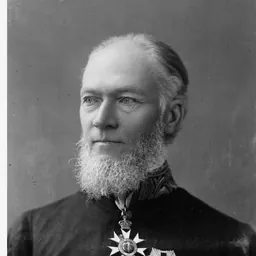

Related people
Same field, nearest in time
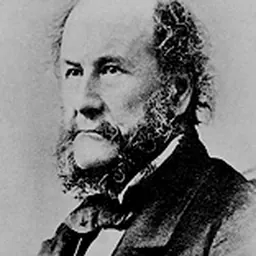

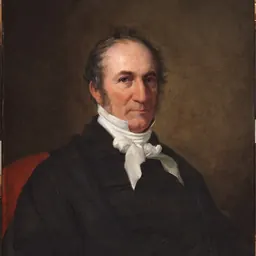

Contemporaries
People whose lives overlapped Anna Gurney's





Frequently asked questions
Who was Anna Gurney?
British academic
When was Anna Gurney born?
Anna Gurney was born on 31 December 1795 in Keswick.
When did Anna Gurney die?
Anna Gurney died in 1857 in Keswick.
What was Anna Gurney's occupation?
Anna Gurney was an academic and abolitionist.
What nationality was Anna Gurney?
Anna Gurney was British.
Sources & further reading
Cite this page
APA: Biography.guide. (2026). Anna Gurney. https://biography.guide/anna-gurney/
MLA: "Anna Gurney." Biography.guide, https://biography.guide/anna-gurney/.
Chicago: "Anna Gurney." Biography.guide. https://biography.guide/anna-gurney/.
Data last updated: 2026-09-26 · Spot an error? Report a correction.
Page generated 2026-09-27 05:15 UTC