
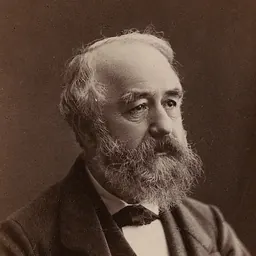
Ángel Rivero Méndez
Puerto Rican soldier, journalist and businessman
About Ángel Rivero Méndez
Lived 1856 – 1930 (aged 73). Ángel Rivero Méndez was an American journalist, writer, engineer and military personnel.
Ángel Rivero Méndez (October 2, 1856 He is also credited with inventing a carbonated drink called Kola Champagne which is still sold today.
Early years Rivero Méndez was born in Trujillo Bajo a barrio of Carolina, Puerto Rico, to Rosa Méndez and Juan Rivero, who had immigrated to Puerto Rico from the Canary Islands. He was baptized into the Catholic religion at the Church of Saint Francis of Assisi, San Juan on October 2, 1856. Rivero received his education at the "Colegio de Jesuitas" in Santurce (a section of San Juan, the capital of Puerto Rico). After graduation, he enlisted in the Spanish Army and entered the Infantry Academy of Puerto Rico. He was given an officer's commission upon graduation from the academy on August 2, 1882.
On October 16, 1882, Rivero Méndez married Manuela Boneta y Babel from San Juan. In 1885, he was accepted into the General Military Academy of Toledo in Spain. There he wrote Toledo, a book about the city of Toledo, Spain. In 1886, Rivero Méndez was transferred to the Academy of Artillery in Segovia and, on February 28, 1889, he earned a degree in Industrial Engineering.
Military career USS Yale in Cuban waters in 1898, after leaving Puerto Rico.
On January 1, 1890, Rivero Méndez returned to Puerto Rico and was assigned to the 12th Battalion of Plaza. He taught at the Military Preparatory Academy in San Juan and, in 1896, was promoted to the rank of captain. He was active in politics in the ranks of the Unconditional Spanish Party.
As a captain, he was assigned to teach math and chemistry at the Civil Institution of Secondary Education. During this time in his life, he became active in politics as member of the Unconditional Spanish Party. Rivero Méndez also founded a newspaper called La Integridad Nacional (The National Integrity), a political paper which represented the views of the party. Rivero Méndez, along with some others was expelled from the party and together they formed another political party. An article criticizing the government, written by Rivero Méndez, was published and as a consequence, he was arrested and sent to jail. Due to the rumors of war, he was pardoned by Governor Macias and, on March 1, 1898, was assigned the command of the 3rd Company of the 12th Artillery Battalion at Fort San Cristóbal in San Juan.
Spanish–American War
When the United States declared war against Spain, the U.S. Navy sent to form a blockade in San Juan Bay. On May 10, 1898, Captain Rivero Méndez ordered his men to fire upon Yale, thus becoming the first attack against the Americans in Puerto Rico of Spanish–American War. For his actions, he was awarded the "Cruz de la Orden del Mérito Militar 1ra Clase con Distintivo Rojo" (The Cross of the Order of the Military Merit first class). The residents of San Juan were furious with Rivero Méndez and blamed him for the destruction caused to their city by the responding bombardments, however nothing came of those accusations.
Battle of Fajardo On August 1, under the command of Captain Frederic W. Rodgers, was sailing by the coastline of the city of Fajardo, when Rogers noticed the "Faro de Las Cabezas de San Juan" (Cape San Juan lighthouse) which was supposed to be the landing site for the US Army in Puerto Rico. Rodgers ordered some of his men ashore, which included Puerto Rican volunteers, with the mission of posting the American Flag atop the lighthouse. Faro de Las Cabezas de San Juan (Cape San Juan lighthouse), c. 1898. On August 2, three more ships, , , and arrived and joined Puritan. The 25-man Spanish garrison stationed in the city became aware of the American presence and, after notifying their superiors in San Juan, were told to withdraw. When Dr. Santiago Veve Calzada, the mayor of the city, realized that the garrison was gone and that the city was defenseless against the invading Americans, he implored the Spanish authorities in San Juan to dispatch troops to defend his city.
On August 4, Governor General Macías sent Colonel Pedro del Pino and 200 men to recapture the city. When Colonel Pino entered Fajardo he found it nearly deserted because the residents, fearing a battle, had fled to the Fajardo lighthouse. Pino waited until darkness fell and then ordered his men to attack the lighthouse. The Marines signaled the ships that they were under attack and the ships began to bombard the shore in a protective pattern. The Spanish forces retreated back to the city.
Later years
Kola Champagne
In 1902, a few years after the end of the Spanish-American War, Rivero Méndez founded (The North Pole soda factory) under Sres. Rivero & Co. where he created Kola Champagne, which became a popular soft drink in Puerto Rico. While developing the drink he worked on his book, Chronicle of the Spanish-American War in Puerto Rico. Now, Kola Champagne is manufactured and sold in the United States and Mexico by Goya Foods, Inc. Other countries that have also produced the drink are Colombia and Jamaica.
Author Rivero Méndez dedicated much of his later years to obtaining records and information for a book he wrote on the Spanish–American War in Puerto Rico. He also wrote articles for the newspapers El Imparcial, El Mundo and La Correspondencia de Puerto Rico, where he defended Puerto Rican nationalism and the ideal of Puerto Rican independence. In 1922, Rivero Méndez published his book Crónica de la Guerra Hispano Americana en Puerto Rico (Chronicles of the Spanish–American War in Puerto Rico), which is considered to be one of the most complete works written in regard to that military action.
Rivero Méndez and his wife were devotees of the Virgin of Lourdes. In 1924, he built a shrine dedicated to the Virgin of Lourdes, on his land in Trujillo Alto. The shrine, which still stands today and is considered an important landmark of the area, was blessed by San Juan's Bishop Jorge Caruana on January 6, 1925.
Death Rivero Méndez died of a self-inflicted gunshot wound on February 23, 1930, while at his country home in Cuevas barrio, in Trujillo Alto. He was 68 years old. His remains are buried in the Santa María Magdalena de Pazzis Cemetery, in San Juan, Puerto Rico.
Military decoration Military decoration awarded to Rivero Méndez:
Don’t just read it —
keep it.
Full-length biographies made to live with: read them, listen on the way to work, watch them tonight.
- E-book
- Audio
- Video
Instant download · yours to keep · every purchase keeps this site free
Important facts
Related people
Same field, nearest in time

Contemporaries
People whose lives overlapped Ángel Rivero Méndez's





Frequently asked questions
Who was Ángel Rivero Méndez?
Puerto Rican soldier, journalist and businessman
When was Ángel Rivero Méndez born?
Ángel Rivero Méndez was born on 2 October 1856 in Trujillo Alto.
When did Ángel Rivero Méndez die?
Ángel Rivero Méndez died on 23 February 1930 in Trujillo Alto.
What was Ángel Rivero Méndez's occupation?
Ángel Rivero Méndez was a journalist, writer, engineer and military personnel.
What nationality was Ángel Rivero Méndez?
Ángel Rivero Méndez was American.
Sources & further reading
· Wikipedia: Ángel Rivero Méndez
· DBpedia: Ángel Rivero Méndez
Cite this page
APA: Biography.guide. (2026). Ángel Rivero Méndez. https://biography.guide/angel-rivero-mendez/
MLA: "Ángel Rivero Méndez." Biography.guide, https://biography.guide/angel-rivero-mendez/.
Chicago: "Ángel Rivero Méndez." Biography.guide. https://biography.guide/angel-rivero-mendez/.
Data last updated: 2026-09-20 · Spot an error? Report a correction.
Page generated 2026-09-27 05:29 UTC