
About Andy Haldane
Born 1967. Andy Haldane is a British economist.
Education Born in Sunderland, Haldane was educated at Guiseley School in north Leeds. He received a Bachelor of Arts (BA) degree in economics from the University of Sheffield in 1988 and a Master of Arts (MA) degree in economics from the University of Warwick in 1989.
Career Haldane joined the Bank of England in 1989. He worked in monetary analysis, on various issues regarding monetary policy strategy, inflation targeting, and central bank independence. He had a secondment to work at the International Monetary Fund. Haldane's senior experience back in the Bank of England includes heading up the International Finance Division and the Market Infrastructure Division. In 2005 Haldane assumed responsibility for the Systemic Risk Assessment Division within the Financial Stability department. In 2009 he became the Bank of England's executive director of financial stability.
Haldane has been widely cited as a leading Bank of England expert on financial stability and is a co-author with Adair Turner and others of the London School of Economics The Future of Finance report. His 2012 speech, called "The Dog and the Frisbee" —delivered to the Federal Reserve Bank of Kansas City's annual Jackson Hole, Wyoming meeting—received widespread attention in the financial media and prompted Forbes to describe him as a "rising star central banker". In the speech, Haldane drew on behavioural economics to argue that complex financial systems cannot be controlled with complex regulations.
In October 2012 Haldane said the Occupy movement protesters had been right to criticise the financial sector and had persuaded bankers and politicians "to behave in a more moral way".
Interviewed on the BBC's The World at One radio programme, ahead of the chancellor's 2012 Autumn Statement, Haldane said the financial effect of the bank crisis, i.e., the loss of income and damage to output was as severe as a world war. He feared the cost would fall on the next generation or even the generation afterwards. Public anger was justified as banks had made loans which could never be repaid and these loans were sold on around the world creating the subprime mortgage crisis. The banks still had undeclared risky assets. In the meantime, bankers' pay, which in 1980 was comparable with a doctor or lawyer, had risen to four times that value by 2006 and Haldane said it needs to fall to that of other professions. He introduced the "non-bank, non-insurer globally systemically important financial institution" (NBNI G-SIFIs) into the lexicon at this event, and detailed the thrust of regulators as "modulating the price of risk, when this is materially mispriced, could be every bit as important as controlling its quantity".
Haldane said in March 2017 that "Bad managers stand accused of holding back economic growth in the UK by undermining productivity, preventing pay and living standards rising."
Haldane said in 2017 the rise in self-employment and drop in union membership mirrors weak workforces of the pre-1750 era. He also said a period of "divide and conquer" had left workers less able to bargain for higher wages. "There is power in numbers. A workforce that is more easily divided than in the past may find itself more easily conquered."
In April 2021, he announced that he was resigning from the Bank of England in June and becoming chief executive of the Royal Society for Arts in September, replacing Matthew Taylor. In September 2023, RSA workers voted to strike for the first time in the organisation's history, saying management had entered into pay negotiations in "bad faith". Haldane's tenure was later described by the IWGB as "reflect(ing) a style of leadership that concentrates power, disregards collective voices and deepens division rather than overcoming it."
In September 2021, Haldane was appointed as the head of the Levelling Up Taskforce in the newly renamed Department for Levelling Up, Housing and Communities, under Secretary of State Michael Gove.
In April 2023, Haldane was appointed to HM Treasury's Economic Advisory Council.
In January 2026, he became the Chancellor of the University of Sheffield, replacing Anne Rafferty.
Pro Bono Economics Haldane and Martin Brookes co-founded a charity called Pro Bono Economics, which aims to persuade economists to donate their time and expertise to help charities on a pro bono basis. It has partnered with charities such as St Giles Trust and Barnardo's. They tapped Gus O'Donnell to help promote the initiative.
It is also backed by Gavyn Davies, former BBC head; Howard Davies, London School of Economics director; Rachel Lomax, former Bank of England deputy director on the Monetary Policy Committee; Adair Turner, who chaired the now-defunct Financial Services Authority; and Jim O'Neill, the Goldman Sachs economist who came up with the term BRIC: Brazil, Russia, India and China.
Honours and awards In 2016, Haldane was elected a Fellow of the Academy of Social Sciences (FAcSS). In 2019, he was awarded an honorary doctorate from the University of Warwick. In 2021, he was elected a Fellow of the Royal Society (FRS).
Haldane was appointed Commander of the Order of the British Empire (CBE) in the 2023 Birthday Honours for services to the economy and public policy.
In 2014 he was named by Time magazine as amongst the world's 100 most influential people.
In 2023, Haldane was named as the UK's forty-fourth most powerful left-wing figure by the New Statesman.
Publications Haldane has authored (or co-authored) more than 70 articles His published books include:
The Future of Payment Systems Fixing Financial Crises in the 21st Century
Personal life Haldane lives in south London with his wife, Emma Hardaker-Jones, who is human resources director at Legal & General. They have three children.
Haldane became a trustee of the independent charity National Numeracy in 2016. He is also an ambassador for the volunteering network REACH.
Don’t just read it —
keep it.
Full-length biographies made to live with: read them, listen on the way to work, watch them tonight.
- E-book
- Audio
- Video
Instant download · yours to keep · every purchase keeps this site free
Important facts
People in Andy Haldane's life
Named in this biography and alive at the same time
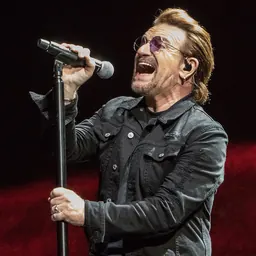


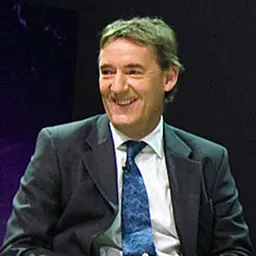
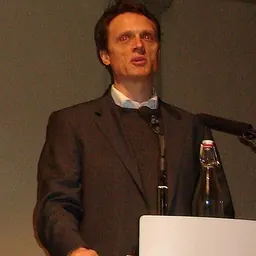



Related people
Same field, nearest in time

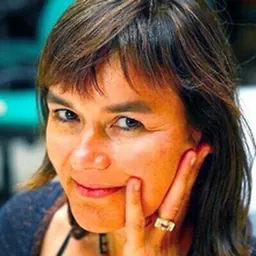

Contemporaries
People whose lives overlapped Andy Haldane's


Frequently asked questions
Who is Andy Haldane?
British economist
When was Andy Haldane born?
Andy Haldane was born on 18 August 1967 in Yorkshire.
What is Andy Haldane's occupation?
Andy Haldane is an economist.
What nationality is Andy Haldane?
Andy Haldane is British.
Sources & further reading
Cite this page
APA: Biography.guide. (2026). Andy Haldane. https://biography.guide/andy-haldane/
MLA: "Andy Haldane." Biography.guide, https://biography.guide/andy-haldane/.
Chicago: "Andy Haldane." Biography.guide. https://biography.guide/andy-haldane/.
Data last updated: 2026-09-22 · Spot an error? Report a correction.
Page generated 2026-09-27 05:26 UTC