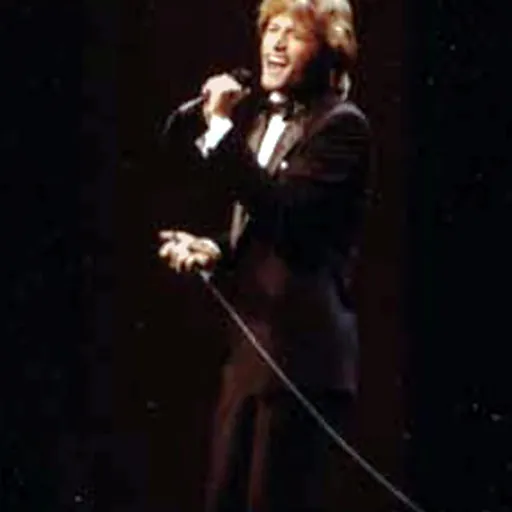
About Andy Gibb
Lived 1958 – 1988 (aged 30). Andy Gibb was a British singer, songwriter, television presenter, singer-songwriter, stage actor and television actor.
Life and career 1958–1975: Early life and first recordings Andy Gibb was born on 5 March 1958 at Stretford Memorial Hospital, Stretford, Lancashire. He was the youngest of the five children born to Barbara and Hugh Gibb. His mother was of English and Irish descent, and his father was of Scottish and English descent. He had four siblings: his sister, Lesley; and three brothers—Barry and fraternal twins Robin and Maurice.
At the age of six months, Gibb immigrated with his family to Queensland, Australia. The family shared three different homes at Redcliffe, Queensland, north of Brisbane, before settling on Cribb Island, a former suburb of Brisbane, in January 1960. After moving several times between Brisbane and Sydney, Gibb returned to the United Kingdom in January 1967 as his three older brothers began to gain international fame as the Bee Gees.
In his childhood, his mother, Barbara, described Gibb as "A little devil, a little monster. I'd send him off to school, but he'd sneak off to the stable and sleep with his two horses all day. He'd wander back home around lunchtime smelling of horse manure, yet he'd swear he had been at school. Oh, he was a little monkey!" Producer and film director Tom Kennedy described Gibb's personality in his childhood:
The first release from the album, and Gibb's first single released outside Australia, was "I Just Want to Be Your Everything" which was written by Barry, who also provided backup vocals. It reached No. 1 on the Billboard Hot 100 for three weeks, starting on the week ending 30 July 1977, and again for the week ending 17 September 1977. "I Just Want to be Your Everything" was Gibb's longest-running chart single on Billboard, Record World, and Cashbox and was nominated for the Grammy Award for Best Pop Vocal Performance, Male at the 20th Grammy Awards. The song was later ranked No. 26 on Billboards 55th anniversary All Time Top 100. Gibb later recalled Barry's writing style:
So, once we discussed it all and got the deal together, me and Barry locked ourselves in a bedroom and Barry just started writing. When Barry writes, it is very hard to collaborate with him, because he is so quick. And before I knew it he was starting to do the chorus of 'I Just Want to Be Your Everything', and I thought, 'Wow what a hook!'. He's an expert at his craft. Within about 20 minutes, he'd written a number one record; and then we went right into another one, '(Love Is) Thicker than Water'.
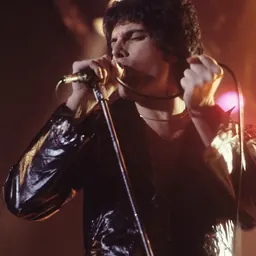
Despite being certified Gold, the album's disappointing performance, coupled with Gibb's mounting drug problems, would lead to RSO Records dropping Gibb from its roster. Later in the year, Andy Gibb's Greatest Hits was released as a finale to his contract with RSO Records, with two new songs: "Time Is Time" (No. 15 in January 1981) and "Me (Without You)" (Gibb's last Top 40 chart entry) shipped as singles, before RSO founder Robert Stigwood let him go due to his cocaine addiction and behavioural problems. "After Dark" and "Will You Still Love Me Tomorrow" were non-single songs added to the album, the latter of which was a duet with P. P. Arnold, who had previously worked with Barry Gibb, including singing uncredited backups on "Bury Me Down by the River" from Cucumber Castle. Around the same time, Gibb was invited to sing the first verse on Queen's "Play the Game", and lead singer Freddie Mercury apparently was amazed by Gibb's abilities. According to some sources, the tape was found in 1990 in a search of Queen archives for bonus tracks for a CD but was not used. Since it has not been heard by any Queen collectors, its existence is somewhat doubtful, although record producer Mack has also confirmed that the version does exist.
1981–1986: Decline and live performances
While taping The John Davidson Show in January 1981, Gibb met actress Victoria Principal. During their high-profile relationship, Gibb began working on several projects outside the recording studio. He co-hosted the television music show Solid Gold from 1981 to 1982 with Marilyn McCoo. Gibb was ultimately fired from both Joseph and Solid Gold because of absenteeism caused by cocaine binges.
He also said after Gibb's death, "We'd lose him over long weekends. He'd come back on Tuesday, and he'd look beat. He was like a little puppy—so ashamed when he did something wrong. He was all heart, but he didn't have enough muscle to carry through." This would be Gibb's last official single, and his last US chart entry, peaking at No. 51. Principal recalled after that, "Well, it became very apparent to me that his behavior was becoming erratic and that he was very, very thin. And Andy was a very kind person and a very gentle person, and some of his behavior seemed the antithesis of who I knew him to be. And over a period of ... deduction, I finally realized that it had to be drugs". Their romance ended shortly thereafter when she gave him an ultimatum to choose between her or drugs. After this, Gibb began dating actress Kari Michaelsen of the NBC television sitcom Gimme a Break!; Gibb met Michaelsen when he had guest starred on the series for one episode.
In 1984 and 1985, Gibb finished two successful contracts at the Riviera hotel in Las Vegas. His family convinced him to seek treatment for his drug addiction, which included a stay at the Betty Ford Center in 1985. It was during this time that Gibb began touring small venues with a stage show featuring his hits as well as covers. He also appeared in guest-starring roles on the television sitcoms Punky Brewster and Gimme a Break! Following an extensive tour of East Asia, he regularly performed shows in Las Vegas and Lake Tahoe. In 1984, he was the headline performer at the Viña del Mar Festival in Chile, performing two nights in a row. He also held a two-week engagement at San Francisco's historic Fairmont Hotel in March 1986.
1987–1988: Attempted comeback and final days In early 1987, Gibb went through another drug rehabilitation program and thought he had finally beaten his habits. He now aimed to get a recording contract for release of a new album in 1988. He returned to the studio in June 1987 recording four songs; one of them, "Man on Fire", was released posthumously in 1991 on a Polydor Records anthology. Another track, "Arrow Through the Heart", was the final song Gibb would record and was featured on an episode of VH1's series, Behind the Music and released on the Bee Gees' Mythology 4-disc box set in November 2010. The songs were co-written by Gibb with Barry and Maurice. Their demo recordings with engineer Scott Glasel were heard by Clive Banks from the English branch of Island Records. Gibb never formally signed a contract, but the record label planned to release a single in Europe that spring, followed by another single that summer with the album to follow. In this same year, Gibb filed a personal bankruptcy petition. In March 1988, Barry arranged for Island Records to sign Gibb, but when he arrived in England in January 1988, he panicked. Gibb missed meetings with the record company and blamed himself for his trouble writing songs; the deal was never signed.
Death By late January to early February in 1988, Gibb had seemingly beaten his drug addiction, regained his health, and was ready to begin recording a new album; however, he still suffered depression over his break-up with Victoria Principal. According to Robin Gibb, his brother "just went downhill so fast... he was in a terrible state of depression". On 5 March 1988, Gibb celebrated his 30th birthday in London while working on the new album. Two days later, he entered John Radcliffe Hospital in Oxford complaining of chest pains.
At around 8:30 am on 10 March 1988, Gibb's doctor informed him more tests were needed to determine the cause of his chest pains. Shortly afterward, Gibb slumped into unconsciousness and died five days after his 30th birthday as a result of myocarditis, an inflammation of the heart muscle most likely caused by a virus. Years of cocaine use also weakened his heart. This diagnosis was supported by William Shell, a cardiologist who previously treated Gibb.
Upon the announcement of Gibb's death, his ex-wife, Kim Reeder, was not surprised. "I always knew that one day I'd get a call with news like this. It was only a matter of time."
Legacy The Andy Gibb Memorial Foundation contributes to charities that Gibb supported, such as the American Heart Association, the American Cancer Society, and the Diabetes Research Institute. The song "Wish You Were Here", which was a track on the Bee Gees 1989 album One, was dedicated by his brothers to Gibb.
Awards and nominations Gibb was nominated for two Grammy Awards at the 20th Annual Grammy Awards. He was also nominated for two American Music Awards.
Grammy Awards 1978 Andy Gibb Best New Artist 1978 "I Just Want to Be Your Everything" Best Pop Vocal Performance, Male American Music Awards 1978 "I Just Want To Be Your Everything" Favorite Pop/Rock Song 1979 Andy Gibb Favorite Pop/Rock Male Artist Discography Studio albums Year Album details Peak chart positions Certifications UK AUS CAN NZ US USR&B RIAA: Platinum 1978 Shadow Dancing Second studio album Release date: June 1978 Label: RSO Records 15 28 1 15 7 18 BPI: Silver MC: Platinum NZ US US A/C US R&B 1975 "Words and Music" — 78 — — — — — — "Westfield Mansions" Non-album song 1977 "I Just Want to Be Your Everything" 26 1 1 — 2 1 8 19 MC: Gold RIAA: Gold "In the End" Flowing Rivers "(Love Is) Thicker Than Water" — 13 2 — 25 1 18 — MC: Gold RIAA: Gold "Words and Music" 1978 "Shadow Dancing" 42 11 1 — 5 1 8 11 MC: Platinum RIAA: Platinum "Let It Be Me" Shadow Dancing "An Everlasting Love" 10 57 3 4 28 5 8 — RIAA: Gold "Flowing Rivers" "(Our Love) Don't Throw It All Away" 32 61 8 21 27 9 2 — RIAA: Gold "One More Look at the Night" "Why" — — — — — — — — 1980 "Desire" — 90 10 — 38 4 9 49 "Waiting for You" After Dark "I Can't Help It" (with Olivia Newton-John) — 62 32 — — 12 8 — "Someone I Ain't" "Rest Your Love on Me" (with Olivia Newton-John) — — — — — — — — "Boats Against the Current" "Time Is Time" — — — — — 15 29 — "I Go for You" Andy Gibb's Greatest Hits 1981 "Me (Without You)" — — — — — 40 45 — "Melody" "All I Have to Do Is Dream" (with Victoria Principal) — — 39 — — 51 25 — "Good Feeling" Non-album song "—" denotes a recording that did not chart or was not released in that territory.
Filmography Television Year Title Role 1983 Gimme a Break! Himself 1984 Something's Afoot Geoffrey 1985 Punky Brewster Tony Glenn
Don’t just read it —
keep it.
Full-length biographies made to live with: read them, listen on the way to work, watch them tonight.
- E-book
- Audio
- Video
Instant download · yours to keep · every purchase keeps this site free
Important facts
People in Andy Gibb's life
Named in this biography and alive at the same time




Related people
Same field, nearest in time




Contemporaries
People whose lives overlapped Andy Gibb's


Frequently asked questions
Who was Andy Gibb?
British singer (1958–1988)
When was Andy Gibb born?
Andy Gibb was born on 5 March 1958 in Manchester.
When did Andy Gibb die?
Andy Gibb died on 10 March 1988 in Oxford.
What was Andy Gibb's occupation?
Andy Gibb was a singer, songwriter, television presenter, singer-songwriter, stage actor and television actor.
What nationality was Andy Gibb?
Andy Gibb was British.
Sources & further reading
Cite this page
APA: Biography.guide. (2026). Andy Gibb. https://biography.guide/andy-gibb/
MLA: "Andy Gibb." Biography.guide, https://biography.guide/andy-gibb/.
Chicago: "Andy Gibb." Biography.guide. https://biography.guide/andy-gibb/.
Data last updated: 2026-09-23 · Spot an error? Report a correction.
Portrait: Wikimedia Commons · author & licence
Page generated 2026-09-27 05:07 UTC