
About Andrew Schneider
Lived 1942 – 2017 (aged 74). Andrew Schneider was an American journalist and investigative reporter, known for Pulitzer Prize.
Andrew Jay Schneider (November 13, 1942 – February 17, 2017) was an American journalist and investigative reporter who worked for the Pittsburgh Press and Seattle Post-Intelligencer as a public-health reporter. He received back-to-back Pulitzer Prizes while working for the Press: one in Specialized Reporting in 1986 with Mary Pat Flaherty, and another for Public Service with Matthew Brelis and the Press in 1987. Schneider also co-authored a book about an asbestos contamination incident in Libby, Montana, entitled An Air That Kills.
Personal life and family Schneider was born to Jack and Fran Schneider in New York City on November 13, 1942. His parents were employed at the Fontainebleau Hotel in Miami Beach, Florida, where father Jack worked as a chef and maître d'hôtel and mother Fran worked as a waitress; Schneider would spend most of his childhood in Miami.
Schneider married his first wife Carol, whom he later divorced. Schneider had a passion for cooking and was known to cook meals for colleagues and throw dinner parties at his home while working in Washington, D.C.
He arrived at the Pittsburgh Press in 1984, as the paper's medical science writer. During his seven years at the Press, Schneider would be the recipient of two Pulitzer Prizes, shared with his colleagues, in back-to-back years.
The following year, the Presss investigation into the Federal Aviation Administration (FAA) and its pilot health screening practices, written by Schneider and Matthew Brelis, won the Pulitzer Prize for Public Service. The investigation led to "significant reforms" by the FAA, including the firing and replacement of Austin.
In 1990, he and Lee Bowman of the Press won the Raymond Clapper Memorial Award for a series on Red Cross disaster aid.
Scripps-Howard and Seattle Post-Intelligencer
Schneider left the Press in 1991, shortly before the newspaper was bought by the rival Pittsburgh Post-Gazette and ceased publication. He spent several years at the Scripps-Howard Newspapers bureau in Washington D.C. as a reporter and assistant managing editor for investigations. While assigned to a medical story in Haiti in 1994, Schneider elected to stay behind during a U.S. military intervention to cover the overthrow of the Haitian military government.
In 1997, Schneider left Scripps-Howard to join The Oregonian in Portland, Oregon. The following year, he moved to the Seattle Post-Intelligencer (P-I), beginning the first of two stints at the paper that would last six years in total. His first major assignment at the P-I was a five-month investigation of child abuse prosecutions in Wenatchee, Washington, with Mike Barber in 1998. it also convinced U.S. Attorney General Janet Reno to say she might reconsider her decision that "there was no evidence of prosecutable federal civil rights violations." Nat Hentoff of The Village Voice argued that the investigation "deserve to win the Pulitzer Prize."
In 1999, Schneider began investigating asbestos-related deaths in Libby, Montana, for the P-I. His investigation found asbestos particles had been released by a closed vermiculite mine, causing contamination of workers' clothing. The release of the story, entitled "Uncivil Action: A Town Left to Die", gained national attention and led to litigation against W.R. Grace and the indictment of executives on federal charges of knowing endangerment, obstruction of justice, and wire fraud after the company declared bankruptcy and illegally transferred funds and assets to new companies. The Environmental Protection Agency launched an investigation into the Libby mine after the release of the story, and later established a Superfund cleanup site in Libby, declaring in 2009 that the town was under a public health emergency.
St. Louis and Baltimore
Schneider continued his reporting on asbestos after leaving the P-I for the St. Louis Post-Dispatch in 2001, uncovering asbestos-related hazards from the September 11, 2001 attacks on the World Trade Center in New York City. Schneider, along with P-I editor David McCumber, published a book of their findings entitled An Air That Kills: How the Asbestos Poisoning of Libby, Montana, Uncovered a National Scandal. The book, compiled from Schneider's previous investigations, also revealed that harmful asbestos-related material was in continual use in new construction and household products, and alleged that the federal government withheld the risk of asbestos-related disease after the September 11 attacks. The Libby story was later adapted in 2007 into a documentary film by PBS's P.O.V. program. Schneider and McCumber released an e-book in 2016, An Air That Still Kills, updating their findings on Libby after the EPA declared the city "safe to live in".
Schneider left the St. Louis Post-Dispatch in 2005, arriving at The Baltimore Sun. While at the Sun, he began an investigative series into the use of diacetyl as a food flavoring for consumer products like microwave popcorn.
Online media and Montana
Schneider returned to the P-I in 2007, where he stayed on as a health and food reporter with the "Secret Ingredients" column, continuing to cover the Libby asbestos case until the newspaper ceased publication in 2009. He then moved on to AOL News to cover the health risks of nanotechnology in consumer products, as well as seafood safety in the midst of the Deepwater Horizon oil spill. Schneider later wrote an investigative series on tainted honey shipments from China for Food Safety News and founded the blog Coldtruth.com. At the time of his death in 2017, Schneider worked part-time for Lee Montana Newspapers as a public health reporter.
Don’t just read it —
keep it.
Full-length biographies made to live with: read them, listen on the way to work, watch them tonight.
- E-book
- Audio
- Video
Instant download · yours to keep · every purchase keeps this site free
Important facts
Family & relationships
People in Andrew Schneider's life
Named in this biography and alive at the same time
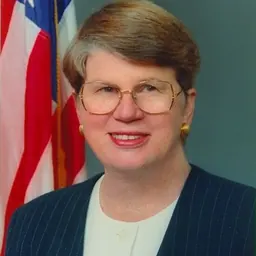

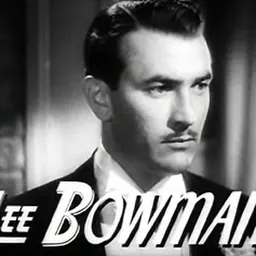




Related people
Same field, nearest in time



Contemporaries
People whose lives overlapped Andrew Schneider's


Frequently asked questions
Who was Andrew Schneider?
American journalist
When was Andrew Schneider born?
Andrew Schneider was born on 13 November 1942 in The Bronx.
When did Andrew Schneider die?
Andrew Schneider died on 17 February 2017 in Salt Lake City.
What was Andrew Schneider's occupation?
Andrew Schneider was a journalist and investigative reporter.
What was Andrew Schneider known for?
Andrew Schneider was known for Pulitzer Prize.
What nationality was Andrew Schneider?
Andrew Schneider was American.
Sources & further reading
· DBpedia: Andrew Schneider (journalist)
Cite this page
APA: Biography.guide. (2026). Andrew Schneider. https://biography.guide/andrew-schneider/
MLA: "Andrew Schneider." Biography.guide, https://biography.guide/andrew-schneider/.
Chicago: "Andrew Schneider." Biography.guide. https://biography.guide/andrew-schneider/.
Data last updated: 2026-09-22 · Spot an error? Report a correction.
Page generated 2026-09-27 05:11 UTC