
About Andrew Kishore
Lived 1955 – 2020 (aged 64–65). Andrew Kishore was a Bangladeshi singer.
Andrew Kishore Kumar Baroi (4 November 1955 – 6 July 2020) , widely known as Andrew Kishore, was a Bangladeshi playback singer. Often referred to as the "Playback King" of Bangladesh for his extensive contributions to the classic era of Dhalywood cinema , he was the lead playback singer for more than 100 films and recorded over 15,000 songs.
Kishore made his playback debut in the film Mail Train (1977) with the song "Ochinpurer Rajkumari Nei Je Tar Keu". He achieved his career breakthrough shortly after with the critically acclaimed track "Ek Chor Jay Chole" from Protigga (1979). He is widely remembered for his iconic tracks, including "Jiboner Golpo, Achhe Baki Olpo", "Amar Buker Moddhe Khane", "Daak Diyachhen Doyal Amare", "Amar Shara Deho Kheyo Go Mati", and "Shobai To Bhalobasha Chae". Later in his career, he served as a judge on the reality television show Bangladeshi Idol.
One of the most decorated artists in the industry, Kishore won the Bangladesh National Film Award for Best Male Playback Singer a record eight times. He also received numerous other accolades throughout his career, including five Bachsas Awards and three Meril-Prothom Alo Awards.
Early life and career At the age of six, Andrew Kishore started acquiring formal singing training from Ustad Abdul Aziz Bachchu, the then chief music director of Rajshahi Betar. He was a student of Ustad Abdul Aziz Bachchu's 'Surbani Music School' in Rajshahi. In 1962, he was listed on Rajshahi Betar as a child artist. And then the famous lyricist Mohammad Rafiquzzaman used to watch the children's section as the producer of Rajshahi Betar.
Kishore has contributed to the national movement in his early life. During the 1969 Mass uprising in East Pakistan, he and other contemporary artists used to visit different places of Rajshahi city and sing protest songs. During the Bangladesh Liberation War, Kishore took refuge in India with his family. He used to inspire the freedom fighters by singing in the refugee camps. After the war ended, he was enlisted in the radio in Nazrul, Tagore, modern, folk and patriotic song categories.
title = Of course, my parents have inspired me since my childhood. They are my idols. My mother never blamed others for anything, rather she always tried to cope with the difficult situations with dignity and poise, and my father's caring, steadfast and disciplined lifestyle has always inspired me to perfect my craft, even at this point of my life. I have also been inspired by the late great Ustad Abdul Aziz Bachchu. He was always a very talented and skilled artist, who was never afraid to let his voice be heard, even in times of crisis, to show his support of the arts. He was also a great teacher, and had incredible eye for identifying not only the hidden talent a student possessed, but how that potential could be tapped into. Last, but certainly not least, I have always been inspired by the great music director, Alam Khan. He has been a great teacher and a great friend all these years, and even after all these years of working with him, I am still in awe of his genius. Later in memory of his late teacher, in 2011, he also established a cultural organisation "Ustad Abdul Aziz Bachchu Sriti Shongshod" in Rajshahi.
Andrew Kishore had dominated the Bangla film industry over the last 40 to 42 years. He also earned acclaim for Hindi and Urdu playbacks. He is the only Bangladeshi artist to sing to the tune of R. D. Burman in an Indo-Bangladeshi venture film, Shatru (1986).
TV and stage appearance Andrew Kishore sang on Bangladesh Television in the pre-1985 years of his career. But for more than a decade, he played behind the scenes in numerous Bengali film playbacks, but did not appear on the TV screen. After a long 15 years, this talented artist came back to the TV screen in 1999 with the song "Poddo Patar Pani". Since then, he has been a regular artist at Ityadi aired on Bangladesh Television.
In addition, he has been seen singing or giving interviews at various times on various channels whose videos exist on YouTube. In the Wind of Change (Bangladeshi TV program) aired on Gaan Bangla music channel, Kishore sang his famous "Haire Manush Rongin Fanush" and "Beder Meye Josna Amay Kotha Diyeche" in a re-composition by music director Kaushik Hossain Taposh, which was once again widely acclaimed by the new generation of listeners.
He has also done numerous concerts at different times in the country and abroad. Andrew Kishore's last musical TV show was "Koto Rongo Jano Re Manush" aired on Channel i.
Personal life Andrew Kishore was born on November 4, 1955, in Rajshahi, Bangladesh. His parents are Khitish Chandra Baroi (1919-1993) and Minu Baroi (d. 2006). Andrew's father was from Kotalipara Upazila and worked in Rajshahi. He was involved in the medical profession in Rajshahi, where Andrew was born and raised. Andrew's mother, Minu Baroi, was a teacher at Bolanpur Mission Girl's High School, Rajshahi and was a music devoted person. Her favorite singer was Kishore Kumar. That is why Andrew was named Andrew Kishore Kumar Baroi. He started his first lesson in music with Ustad Abdul Aziz Bachchu of Rajshahi at the behest of his mother. Since a young age, Kishore had a passion for media, which led him to stardom eventually.
They had two children. His sons name is Jay Andrew Saptok and his daughters name is Minim Andrew Songa. Songa got married in 2017. Kishore has two siblings. He was the youngest among them. His chemotherapy treatment started under Lim Soon Thye at the Singapore General Hospital. He died on 6 July. Andrew's brother-in-law, Patrick Bipul Biswas, and nephew, Ian Richie Paulson, confirmed the news to the press. His coffin was later brought from City Church to the Christian Cemetery of the Church of Bangladesh in Srirampur area of Rajshahi city on 15 July 2020 at 11am. He was buried at 11:30 am. He was buried in front of the cemetery. This cemetery contains the graves of his parents.
List of background music in the movie
List of some of his popular Bengali songs
Pipra Khabe Boroloker DhonPriyojonO Sathire Tumi Chara Valo Lage Na E Jibone Jare CheyechiSneher ProtidanAmi Je Ek Ganer PakhiTomake ChaiTomake Chai Amar Bhitor Bahire Ontore OntoreJibon Songsar KobulEsho Ekbar Dujoney Abar Tumi Acho Hridoyer AanginayWinner: National Film Award Best Male VocalistHridoyer AynaTumi Chander Jochona Nou Keno Akhi Chhol Chhol Sotyer Mrityu NeiHridoyer Kache ThekoDurjoy Bashira 1997Ananda OsruTumi Mor Joiboner BhabonaPrem Piyashi Shesh ThikanaAsha Amar Bhalobasha
Tomar Oi Mishti HashiLathi 2000Aaj Gaye HoludChokh Je Moner Kotha BoleWinner: National Film Award Best Male VocalistJhor Gunda Number One Biyer PhoolTomay Dekhle Mone Hoy
Icche Kore Valobashi
List of songs in other languages
Awards and nominations
Don’t just read it —
keep it.
Full-length biographies made to live with: read them, listen on the way to work, watch them tonight.
- E-book
- Audio
- Video
Instant download · yours to keep · every purchase keeps this site free
Important facts
People in Andrew Kishore's life
Named in this biography and alive at the same time
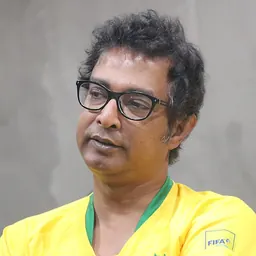




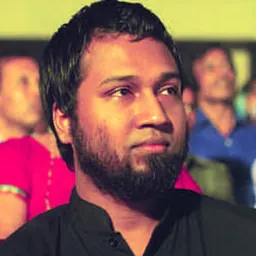

Related people
Same field, nearest in time






Contemporaries
People whose lives overlapped Andrew Kishore's

Frequently asked questions
Who was Andrew Kishore?
Bangladeshi singer
When was Andrew Kishore born?
Andrew Kishore was born in 1955 in Rajshahi.
When did Andrew Kishore die?
Andrew Kishore died on 6 July 2020 in Rajshahi.
What was Andrew Kishore's occupation?
Andrew Kishore was a singer.
What nationality was Andrew Kishore?
Andrew Kishore was Bangladeshi.
Sources & further reading
Cite this page
APA: Biography.guide. (2026). Andrew Kishore. https://biography.guide/andrew-kishore/
MLA: "Andrew Kishore." Biography.guide, https://biography.guide/andrew-kishore/.
Chicago: "Andrew Kishore." Biography.guide. https://biography.guide/andrew-kishore/.
Data last updated: 2026-09-23 · Spot an error? Report a correction.
Portrait: Wikimedia Commons · author & licence
Page generated 2026-09-27 05:05 UTC