
Andrew J. Young
Medal of Honor recipient
About Andrew J. Young
Lived 1837 – 1910 (aged 72). Andrew J. Young was an American.
Andrew Jackson Young (December 28, 1837 – January 27, 1910) was a United States soldier who fought with the Union Army during the American Civil War as a member of Company F of the 1st Pennsylvania Cavalry (also known as the 44th Pennsylvania Volunteers). He received his nation's highest award for valor, the U.S. Medal of Honor, for capturing a Confederate flag at Paines Crossroads, Virginia, on April 5, 1865. That award was conferred on May 3, 1865.
Formative years Born in Morgan Township, Pennsylvania, Andrew Jackson Young was a son of Christopher and Rachel Young ( – 1880). He and his siblings, Permelia (1825-1890), Mary (born ), James (born ), Elizabeth Jane (1834-1878), Rachel C. (1841-1918), and John (born ) were reared and educated in Greene County.
Civil War During the summer of 1861, Young became one of Pennsylvania's early responders to President Abraham Lincoln's call for volunteers to defend Washington, D.C. following the mid-April 1861 fall of Fort Sumter to Confederate States Army troops. After enrolling for Civil War military service in Greene County, Pennsylvania on August 15, he then officially mustered in for duty at Camp Curtin in Harrisburg on August 24 as a private with Company F of the 1st Pennsylvania Cavalry (also known as the 44th Pennsylvania Volunteers). Military records at the time described him as being a 28-year-old farmer and resident of Brown Township in Mifflin County, Pennsylvania, who was 5'11" tall with light hair, light eyes and a light complexion. At least one of his records noted that his first name was "Anderson".
Edwin Forbes' illustration of a cavalry charge near Brandy Station, Virginia on June 9, 1863. Transported with his regiment to Camp Jones near Washington, D.C., in August 1861, Young and his fellow 1st Pennsylvania Cavalrymen were assigned to defensive duties there. Attached with his regiment to the Union's Army of the Potomac through April 1862 (McCall's Division through March and McDowell's I Corps through April), he and his regiment's first major engagement came in the Expedition to Dranesville beginning in late November 1861. He was then stationed with the 1st Pennsylvania Cavalry at Camp Pierpont through March 1862. Participating with his regiment in the Advance on Manassas from March 10 to 15, he then engaged in McDowell's operations in and around Falmouth from April 9 to 19 of that year. Reassigned with his regiment to Bayard's Cavalry Brigade, which was attached to the Department of the Rappahannock (until June 1862), the Army of Virginia's III Corps (to September 1862) and the Army of the Potomac to June 1863, he fought with his regiment in the battles of Cross Keys, Virginia (June 8, 1862) and Cedar Mountain (August 9); Second Battle of Bull Run (August 28–30); battles of Antietam (September 17) and Fredericksburg (August 12–15); Stoneman's 1863 Raid (April 13 to May 10, 1863); and the Battle of Brandy Station (June 9). According to historian Samuel P. Bates:
Marching two days later across the former battlefield of Bull Run, his regiment clashed again with Confederates — this time at Aldie on June 22. Assigned to guard the rear of the Union Army as it marched for Pennsylvania, the 1st Pennsylvania Cavalrymen reached the battlefield at Gettysburg during the morning of July 2, and were immediately assigned to duties at the headquarters of General George Meade for the remainder of the engagement before guarding the Union's reserve artillery as it made its way back from Pennsylvania into Maryland beginning July 5, 1863. Rejoining their brigade by mid-month, they next engaged the enemy near Shepardstown before withdrawing to Bolivar Heights. Encamped near Warrenton beginning July 27, they were assigned to guard, picket and scouting duties through mid-September when they joined other Union forces in re-engaging intensely with the enemy for three hours from Muddy Run to Culpepper on September 13, after which the 1st Pennsylvanians were sent out on skirmish assignments. Their next major engagements came in the Bristoe Campaign from October through November 1863, including the Battle of Bristoe Station (October 14), and the Mine Run Campaign in late November and early December.
Having been promoted to the rank of corporal sometime earlier in his service tenure, Young re-enlisted for another tour of duty on February 4, 1864, while his regiment was stationed at Warrenton, Virginia. Next assigned to the Overland Campaign led by Union General Ulysses S. Grant, Young and his fellow 1st Pennsylvania Cavalrymen fought in the battles of Haw's Shop (May 28), Cold Harbor (May 13 to June 12) and Trevilian Station (June 11–12) before engaging in the Siege of Petersburg through March 1865, which included the battles of First Battle of Deep Bottom/Gravel Hill (July 27–29, 1864). It was sometime during this phase of service that Young was promoted to the rank of sergeant before being transferred to the 1st Pennsylvania Battery (on September 4, 1864). A farmer in 1880, Young resided with his wife and two children in Greene County's borough of Jefferson. According to historian William Hanna, the Young's home was situated on "the identical place where the old stockade was erected about the year 1770." According to Bates, that former stockade was known as "Fort Swan and Vanmeter," and it was located "near the border of Cumberland Township" at "a noted rallying point ... for the venturesome pioneers and their families." Young's home in the 1880s, per Bates, had been built on the same grounds where the home of his wife's great-grandfather had stood during the early 1770s. Historian Thomas Lynch Montgomery narrowed down the location of Swan's home at the fort further in 1916, stating that it had been situated "near the present town of Carmichaels."
Suffering from rheumatism by 1890, he was awarded a U.S. Civil War Pension in 1897. By 1900, he had moved with his wife and children into the Jefferson home of his mother-in-law, Sarah Neel. Employed as a U.S. Postmaster that year, his daughter, Millie, was employed as the Assistant U.S. Postmaster while his son, John, worked as a farmer.
Death and interment Young died in Jefferson, Pennsylvania, on January 27, 1910, and was buried at the Jefferson Cemetery in Greene County.
Medal of Honor citation Rank and organization: Sergeant, Company F, 1st Pennsylvania Cavalry. Place and date: At Paines Crossroads, Va., April 5, 1865. Entered service at: Carmichaelstown, Pa. Date of issue: May 3, 1865. Citation:
Don’t just read it —
keep it.
Full-length biographies made to live with: read them, listen on the way to work, watch them tonight.
- E-book
- Audio
- Video
Instant download · yours to keep · every purchase keeps this site free
Important facts
People in Andrew J. Young's life
Named in this biography and alive at the same time

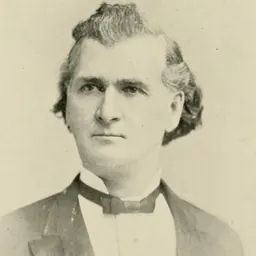

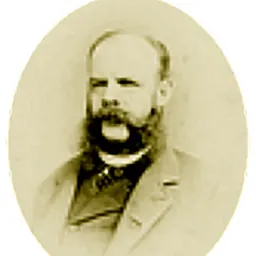
Contemporaries
People whose lives overlapped Andrew J. Young's




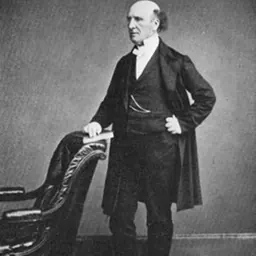
Frequently asked questions
Who was Andrew J. Young?
Medal of Honor recipient
When was Andrew J. Young born?
Andrew J. Young was born on 28 December 1837 in Greene County.
When did Andrew J. Young die?
Andrew J. Young died on 27 January 1910 in Jefferson.
What nationality was Andrew J. Young?
Andrew J. Young was American.
Sources & further reading
· DBpedia: Andrew J. Young (Medal of Honor)
Cite this page
APA: Biography.guide. (2026). Andrew J. Young. https://biography.guide/andrew-j-young/
MLA: "Andrew J. Young." Biography.guide, https://biography.guide/andrew-j-young/.
Chicago: "Andrew J. Young." Biography.guide. https://biography.guide/andrew-j-young/.
Data last updated: 2026-09-20 · Spot an error? Report a correction.
Page generated 2026-09-27 05:33 UTC