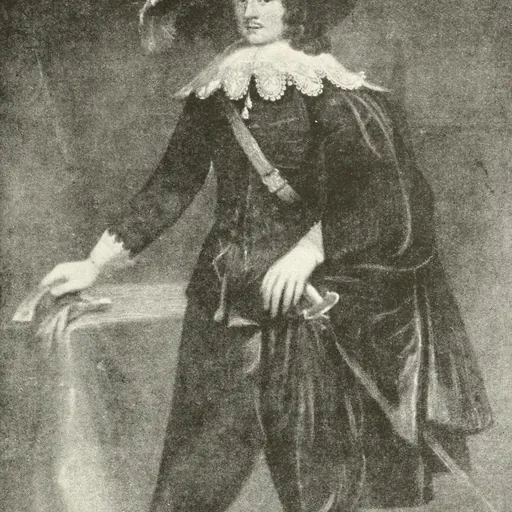
About Andrew Corbet
Lived 1580 – 1637 (aged 56–57). Andrew Corbet was a politician.
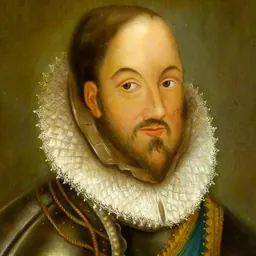
Sir Andrew Corbet (1580–1637) of Moreton Corbet, Shropshire, was an English politician who sat in the House of Commons at various times between 1624 and 1629. A Puritan sympathiser, he at first supported the government but became an increasingly vocal opponent of King Charles I's policies and ministers.
Background and education He was the son of Sir Vincent Corbet (d.1623), of Moreton Corbet, by his wife Frances Humfreston, a daughter of William Humfreston of Humfreston in the parish of Albrighton, near Bridgnorth, in Shropshire.
Sir Vincent was the son of Sir Andrew Corbet (1522-1578) of Moreton Corbet. The Corbets traced their lineage and connection with Shropshire back to the Norman Conquest, and were important marcher lords in the Middle Ages. They emerged in the 16th century as Shropshire's leading gentry family in a county without resident aristocracy, but were never ennobled.
The Corbets had reached the height of their power and influence under the first Sir Andrew, who died in 1578. He and his wife had six sons, apparently assuring the succession and the continuing power of the dynasty. However, their eldest son, Robert Corbet, died of bubonic plague after less than five years as head of the family, leaving two daughters but no sons to succeed him. His heir, his brother, Richard Corbet was a spendthrift who left debts of about £6000 but no children. Vincent Corbet, the youngest and last surviving son inherited a difficult situation, which he strove to stabilise.
The second Andrew Corbet was baptised at Moreton Corbet on 28 August 1580, which involved extensive use of drama. His was the second generation of Corbets to attend the school, and his great-uncle Reginald Corbet, as recorder of Shrewsbury had played an important part in the agitation which led to its establishment, funded by property from the Dissolution of the Monasteries.
Corbet then attended Oxford University. However, his college was not St John's, which had a particularly close link with his school, but Queen's, from which he matriculated on 20 June 1602. He was then given a legal education for two years at Lincoln's Inn.
Landowner Andrew's father, Vincent Corbet, had inherited vast estates when his brother Richard died in 1606: 12,600 acres in Shropshire, held large estates as her jointure. Worse still, Judith had potential claims on more, as the improvident Richard had made up her jointure in questionable ways, acknowledging as much in his rambling will.
Vincent came to an agreement with Wallop on Elizabeth's marriage settlement. The problem of Judith's future claims was neutralised by arranging the marriage of Andrew to Judith's eldest daughter, Elizabeth Boothby. and went on to complete the new house at Moreton Corbet, although he had little public presence and was never a knight of the shire. Andrew was knighted on 25 August 1617.
Both Sir Vincent and Sir Andrew were broadly sympathetic to Puritanism, essentially a continuation of the Protestant creed the Corbets had long upheld during a period of increasing High Church dominance. A legend tells how Sir Vincent was unjustly cursed by Paul Holmyard, a Puritan preacher and one of his tenants, whom he had protected but who was finally arrested by the authorities. Sir Andrew gave a Latin oration at the reburial of Edward Burton of Longner Hall, near Emstrey, to the east of Shrewsbury. Burton had been denied burial in consecrated ground at St Chad's Church, Shrewsbury because of his Protestant beliefs – according to John Foxe, on the very day of Elizabeth I's coronation. He was buried by his friends in his garden and his tomb required restoration by the early 17th century. (It is unclear when the reburial occurred. Augusta Corbet says it was when Andrew was a young man. Barbara Coulton dates it to about 1614, when Corbet was lord lieutenant of the county, although he became deputy lieutenant only in 1624.)
Sir Vincent died in 1623 and was buried at Moreton Corbet on 9 March. Sir Andrew was his recognised heir and was able to take over a fairly consolidated group of estates, with little fear of legal challenge. An inquisition post mortem, held in 1624, listed the Shropshire properties passed on by Sir Vincent to Sir Andrew. Sir Vincent had been
The inquisition also revealed that Sir Vincent had taken the precaution of getting Judith Austin to recognise in writing that the reversion of her jointure properties in Buckinghamshire would be to his descendants. In practice, Sir Andrew was never to enjoy the rents of these lands, as Judith outlived him by three years. Sir Vincent still had considerable debts but he had taken steps to control them. His will explained that he had placed a tract of Shropshire lands centred on Acton Reynald in trust for 41 years so that the rents could be devoted to debt repayments. Sir Andrew was appointed his executor.
Sir Andrew had already been appointed to posts considered appropriate to reliable members of the gentry. He was a justice of the Peace for Shropshire from 1618 until his death. There was apparently an informal agreement not to return the same members twice consecutively.
The parliament of 1624–1625 The parliament called in 1624, the fourth of James I's reign, was known as the Happy Parliament because it appeared initially that king and his parliament had at last found a degree of common ground in hostility to Spain. However, it soon fell to the mutual suspicion and hostility that had characterised relations between king and parliament throughout the reign. There were two sessions: the first from 19 February 1624 to 24 May 1624, the other from 2 November 1624 to 16 February 1625. The king died on 27 March 1625 and the parliament was immediately dissolved.
Corbet's contribution to the parliament was not great. However, the registration of newly recognised armorial bearings was much more costly – about £20. Shropshire was a gentry dominated county and the number of families wishing to present themselves as gentlefolk was increasing rapidly. Those registered as "of Shrewsbury" had risen from 4 in 1569 to 10 in 1584 and 44 in 1623. The government was invariably insolvent and there was a widespread fear that it was manipulating the honours system to generate funds. Corbet was also sent to a conference with the Lords on a bill to limit legal actions.
Although his contributions were limited, Corbet was enthralled to be at the centre of politics. He wrote to his steward detailing an important debate on war with Spain that took place in February. had never shown any predilection for denouncing Catholic recusants. The parliament was dissolved later in the month, having refused to grant Charles the financial independence he demanded.
The Forced Loan Corbet was not returned to parliament again until 1628. He spent much of the interim period involved with the aftermath of the refusal to finance the king's war plans. The war against Spain was poorly managed and Buckingham's inept handling of relations with France led to a war against two great powers simultaneously. Charles imposed the Forced Loan—a tax levied without parliamentary consent. Corbet was one of the commissioners charged with its collection in Shropshire, under the direction of William Compton, 1st Earl of Northampton, the president of the council in the Marches.
Marriage and family
Andrew Corbet married Elizabeth Boothby, a daughter of William Boothby of Delphouse, near Cheadle, Staffordshire by his wife Judith Austin. Elizabeth was the step-daughter of his uncle Richard Corbet (d.1606), who in his later years married (as her third husband) Judith Austin. By Elizabeth he had at least seven sons and nine daughters as follows: Anna Corbet married her cousin, Pelham Corbet, of Leigh and Albright-Hussie. Frances Corbet, married Edmund Taylor of Wigmore, Herefordshire, a parliamentarian captain in the Civil War. Margaret Corbet, married Thomas Harley of Brampton Bryan Castle and had issue, Sir Robert Harley Mary Corbet married John Pearce. Alice Corbet married William Onslowe, a Shrewsbury merchant. Jane Corbet married a member of the Tibbatt's family. Judith Corbet Elizabeth Corbet died in infancy
Don’t just read it —
keep it.
Full-length biographies made to live with: read them, listen on the way to work, watch them tonight.
- E-book
- Audio
- Video
Instant download · yours to keep · every purchase keeps this site free
Important facts
People in Andrew Corbet's life
Named in this biography and alive at the same time


Related people
Same field, nearest in time

Contemporaries
People whose lives overlapped Andrew Corbet's



Frequently asked questions
Who was Andrew Corbet?
English politician; (1580-1637)
When was Andrew Corbet born?
Andrew Corbet was born in 1580.
When did Andrew Corbet die?
Andrew Corbet died in 1637.
What was Andrew Corbet's occupation?
Andrew Corbet was a politician.
Sources & further reading
Cite this page
APA: Biography.guide. (2026). Andrew Corbet. https://biography.guide/andrew-corbet/
MLA: "Andrew Corbet." Biography.guide, https://biography.guide/andrew-corbet/.
Chicago: "Andrew Corbet." Biography.guide. https://biography.guide/andrew-corbet/.
Data last updated: 2026-09-23 · Spot an error? Report a correction.
Portrait: Wikimedia Commons · author & licence
Page generated 2026-09-27 05:08 UTC