
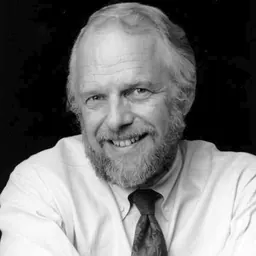
Andrew Copson
British humanist leader
About Andrew Copson
Born 1980. Andrew Copson is a British humanist, humanists International and humanists UK.
Early life Copson was born on 19 November 1980 in Nuneaton, Warwickshire, England, to David Copson and Julia Heather Cunningham. Coming from a working-class background, he went to the school as part of the government Assisted Places Scheme. He was brought up entirely without religion; as well as having non-religious parents, neither his grandparents nor his great-grandparents were religious and never had been. At secondary school, he first encountered Christianity, but rejected it when he did not see any truth in it.
He attended Balliol College, University of Oxford, initially studying Classics, then graduating in 2004 with a first-class Bachelor of Arts degree in Ancient and Modern History. after graduating from Oxford.
Humanists UK (2005- ) Copson first joined Humanists UK, known at the time as the British Humanist Association (BHA), in 2002 while at university: his mother had already been a member for some time.
In 2005, Copson started working at Humanists UK as director of education and public affairs. In December of the same year he won an award at the 2005 UK Young Education Programme, an organisation that promotes communication skills and rewards open debate on issues affecting society. In his role at the BHA he was responsible for campaigning for a secular state and promoting awareness of Humanism in schools and colleges and to the wider public. a position that he described at the time as "obviously a daunting one", saying that he felt "a huge responsibility to build on the BHA's many successes."
He is a former director of the European Humanist Federation, and has acted as representative of Humanist organisations to the United Nations, and the Organization for Security and Co-operation in Europe. taking over from the award-winning Belgian Humanist Sonja Eggerickx and served in that role for a decade, stepping down at the organization's General Assembly in Luxembourg in July 2025. He was succeeded as president by the American humanist Maggie Ardiente.
Copson's presidency was described as a "transformational era" for Humanists International during which Copson "led sweeping changes to Humanists International, making the General Assembly more democratic and the Board more globally diverse". During his tenure, the organization's global reach expanded considerably. Membership grew, and the diversity of the board and general membership increased, with greater representation from humanist groups in Africa, Asia, and South America. The organization underwent significant professionalization, moving from a largely volunteer-run body to a professional non-governmental organization with a Chief Executive and expert staff. Copson chaired the group that produced the revised Amsterdam Declaration of 2022. Humanists International launched several major initiatives during this period, including the annual Freedom of Thought Report, which documents global discrimination against the non-religious, and the international "End Blasphemy Laws" campaign. was chair of the Gay and Lesbian Humanist Association
He is also a fellow of the Chartered Management Institute and the Royal Society of Arts and a member of the Chartered Institute of Public Relations, European Humanist Professionals and the Association of Chief Executives of Voluntary Organisations. has written for The Guardian, New Statesman, The Times and The Independent, and has been interviewed on BBC News, ITV, Channel 4 and Sky for non-religious opinions on topics such as religious symbols in the workplace and euthanasia. He was one of the editors of The Wiley Blackwell Handbook of Humanism, a collection of essays that explore Humanism as the way of life. He also contributed a foreword to Filling the Void: A Selection of Humanist and Atheist Poetry, edited by Jonathan M.S. Pearce in 2016, and contributed to The Case for Secularism: A neutral state in an open society, a collection of essays from the Humanist Philosophers Group in 2014.
When asked whether his attitude to Humanism included scientific skepticism, he said: "A Humanist is someone who puts human welfare and the welfare of other sentient beings at the centre of their morality. Humanism is characterised by skepticism and the scientific method." civil ceremonies such as marriages and funerals, Human Rights law, against the automatic right of unelected Anglican bishops to sit in the House of Lords and the provision of religious chaplains in institutions such as the prison system and hospitals and hospices. He states his opinion as freedom of belief, that people should be free to believe whichever religion they choose and the law should not discriminate against a person because of those beliefs.
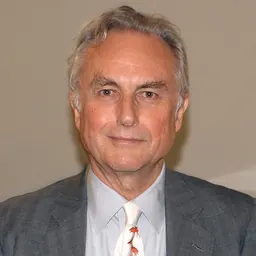
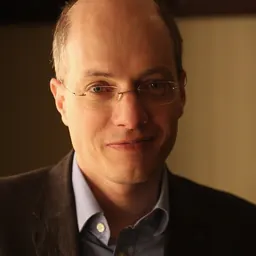
Along with biologist and author Richard Dawkins, Copson has questioned the need for "atheist churches", an idea posited by Alain de Botton in response to a Humanist debate over the idea of creating an atheist temple, and has expressed doubt in regards to future success of The Sunday Assembly. He has also spoken frequently in regard to state education in England and the provision of non-religious schools and evidence-based teaching, both in his capacity as Chief Executive of the BHA and as a lifelong Humanist. Copson commented: He considers collective worship and the teaching of religion in schools "one of the biggest education debates of our time."
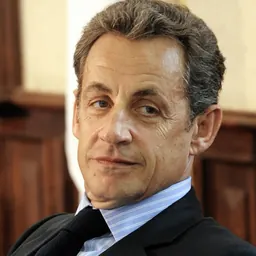
He has also criticised the attempts of Nicolas Sarkozy in France to ban the burkini from French public beaches on the grounds that it disproportionately attacks women, demonises Muslim women specifically and is incompatible with religious freedom of choice. and in 2016 said:
In a 2025 interview, Copson described his own humanism as having been formed by a combination of his secular working class upbringing, representing "the idea that ethics arise from human needs and social living, and that community solidarity is part of the good life", and his academic education in history and Classics, which involved "critical thinking, imaginative sympathy, understanding context and tracing the development of ideas." He said "what the classicist and humanist Gilbert Murray called 'Hellenic humanism' still provides many of my cultural reference points"
Don’t just read it —
keep it.
Full-length biographies made to live with: read them, listen on the way to work, watch them tonight.
- E-book
- Audio
- Video
Instant download · yours to keep · every purchase keeps this site free
Important facts
People in Andrew Copson's life
Named in this biography and alive at the same time

Related people
Same field, nearest in time


Contemporaries
People whose lives overlapped Andrew Copson's



Frequently asked questions
Who is Andrew Copson?
British humanist leader
When was Andrew Copson born?
Andrew Copson was born on 19 November 1980 in Nuneaton.
What is Andrew Copson's occupation?
Andrew Copson is a humanist, humanists International and humanists UK.
What nationality is Andrew Copson?
Andrew Copson is British.
Sources & further reading
Cite this page
APA: Biography.guide. (2026). Andrew Copson. https://biography.guide/andrew-copson/
MLA: "Andrew Copson." Biography.guide, https://biography.guide/andrew-copson/.
Chicago: "Andrew Copson." Biography.guide. https://biography.guide/andrew-copson/.
Data last updated: 2026-09-26 · Spot an error? Report a correction.
Page generated 2026-09-27 05:15 UTC