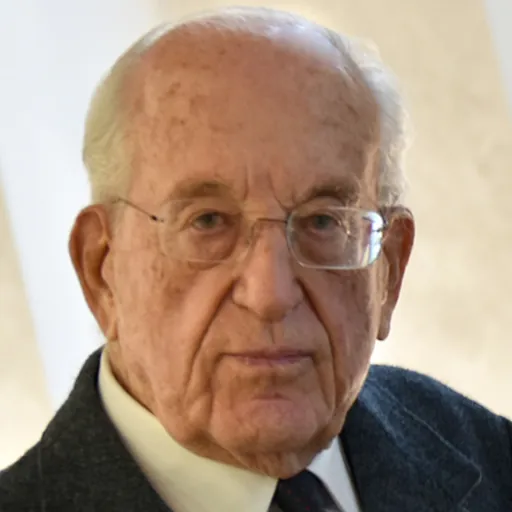
Andrea Carandini
Italian archaeologist (born 1937)
About Andrea Carandini
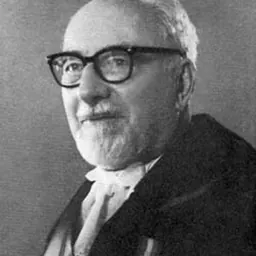
Born 1937. Andrea Carandini is an Italian archaeologist, university teacher and art historian.
Andrea Carandini (born 3 November 1937) is an Italian professor of archaeology specialising in ancient Rome. Among his many excavations is the villa of Settefinestre.
Biography The son of Italian diplomat Count Nicolò Carandini (1896–1972), Andrea was born in Rome and became a member of the faculty of the University of Rome La Sapienza beginning in 1963. Carandini was a student of Ranuccio Bianchi Bandinelli, completing his laurea in 1962 with a thesis on the Roman villa of Piazza Armerina. His research is focused on the topography of ancient Rome, Etruria in the Roman period, and the analysis of monumental complexes in various cities in Italy including Volterra, Grumentum, Pompeii, and Veii. Since 1993 he has coordinated a project in Rome's suburbium and the Tiber Valley in conjunction with the Soprintendenza Archeologica and the Sovrintendenza Comunale di Roma. He continues to direct the excavations of the north slope of the Palatine Hill in Rome where important discoveries relating to the earliest city of Rome have been made, including the discovery of the famous Palatine Wall in 1988.
Carandini is the third cousin of actor Christopher Lee.
In the 1990s Carandini was also involved in the excavation of the Auditorium site in Rome, a substantial domestic structure dating to the fifth century B.C.; it is most likely to have been the monumental residence of an important clan (gens). Some of his views on the historicity of Romulus are controversial.
Carandini's Atlas of Ancient Rome appeared in English in 2017.
Excavations 1964–1982: Piazza Armerina. 1966–1977: Ostia Antica. 1974–1985: Villa Settefinestre. 1985: Carthage. 1987–1992: Volterra. 1989: Tipasa. 1985: Palatine Hill, Rome. 1990–1993: Basilicata. 1993: Pompeii. 1996: Veii. 1996–1997: Parco della Musica, Rome.
Publications Ricerche sullo stile e la cronologia dei mosaici della Villa di Piazza Armerina (1964) La secchia Doria: una "storia di Achille" tardo-antica. Contributo al problema dell'industria artistica di tradizione ellenistica in Egitto. (1965) Vibia Sabina : funzione politica, iconografia e il problema del classicismo adrianeo (1969) Schiavi e padroni nell'Etruria romana : la Villa di Settefinestre dallo scavo alla mostra (1979) Archeologia e cultura materiale: dai lavori senza gloria nell'antichità a una politica dei beni culturali (1979) Esclaves et maîtres en Etrurie romaine : les fouilles de la villa de Settefinestre : catalogue de l'exposition (1981) Filosofiana, la villa di Piazza Armerina : immagine di un aristocratico romano al tempo di Costantino (1982) La Romanizzazione dell'Etruria : il territorio di Vulci (1985) Settefinestre : una villa schiavistica nell'Etruria romana (1985) Schiavi in Italia : gli strumenti pensanti dei Romani fra tarda Repubblica e medio Impero (1988) Storie dalla terra. Manuale di scavo (1981) Roma: Romolo, Remo e la fondazione della città (2000) Archeologia del mito. Emozione e ragione fra primitivi e moderni (2002) Paesaggi d’Etruria. La Valle dell’Albegna, la valle d’Oro e la Valle del Chiarore (2002, with Franco Cambi, Mariagrazia Celuzza, Elizabeth Fentress, Ida Attolini) "Variations sur le thème de Romulus. Réflexions après la parution de l’ouvrage “La nascita di Roma”" (in De Boccard, La naissance de la ville dans l’Antiquité, 2003) "Il mito romuleo e le origini di Roma" (in M. Citroni, Memoria e identità. La cultura romana costruisce la sua immagine, 2003) La nascità di Roma. Dei, Lari, eroi e uomini all'alba di una civiltà (2003) Palatino, Velia e Sacra Via: Paesaggi urbani attraverso il tempo (2004) Remo e Romolo. Dai rioni dei Quiriti alla città dei Romani (775/750 - 700/675 a.C. circa) (2006) La leggenda di Roma (Lorenzo Argentieri, Paolo Carafa) 4 volumes. (Fondazione Lorenzo Valla; Mondadori,, 2006) "The Blessing of the Palatine and the Founding of Roma Quadrata," in Rome: Day One (2011), Princeton: Princeton University Press. with Paolo Carafa, Atlante di Roma antica : biografia e ritratti della città 2 v. (Milan: Electa, 2013) with Paola Carafa, The Atlas of Ancient Rome. Biography and Portraits of the City, in 2 volumes, (Princeton University Press, Princeton, New Jersey, 2017) Io, Agrippina Editore Laterza, 2020. Io, Nerone Editore Laterza, 2023.
Don’t just read it —
keep it.
Full-length biographies made to live with: read them, listen on the way to work, watch them tonight.
- E-book
- Audio
- Video
Instant download · yours to keep · every purchase keeps this site free
Important facts
People in Andrea Carandini's life
Named in this biography and alive at the same time




Related people
Same field, nearest in time

Contemporaries
People whose lives overlapped Andrea Carandini's



Frequently asked questions
Who is Andrea Carandini?
Italian archaeologist (born 1937)
When was Andrea Carandini born?
Andrea Carandini was born on 3 November 1937 in Rome.
What is Andrea Carandini's occupation?
Andrea Carandini is an archaeologist, university teacher and art historian.
What nationality is Andrea Carandini?
Andrea Carandini is Italian.
Sources & further reading
Cite this page
APA: Biography.guide. (2026). Andrea Carandini. https://biography.guide/andrea-carandini/
MLA: "Andrea Carandini." Biography.guide, https://biography.guide/andrea-carandini/.
Chicago: "Andrea Carandini." Biography.guide. https://biography.guide/andrea-carandini/.
Data last updated: 2026-09-20 · Spot an error? Report a correction.
Portrait: Wikimedia Commons · author & licence
Page generated 2026-09-27 04:58 UTC