
André Desjardins
Canadian loan shark and drug smuggler
About André Desjardins
Lived 1930 – 2000 (aged 69). André Desjardins was a Canadian.
André "Dédé" Desjardins (4 July 1930 – 27 April 2000) was a Canadian union official noted for his involvement with organized crime. Desjardins served as the president of the Conseil des métiers de la construction and vice-president of the Fédération des travailleurs du Québec (Quebec Federation of Labour, FTQ) union between 1970 and 1974, becoming known as Le roi de la construction ("the king of construction"). During this time, Desjardins was involved in the scandal that led to the Cliche commission of 1974–75 headed by Judge Robert Cliche to examine corruption in Quebec construction unions. Afterwards, Desjardins enjoyed much success as one of the leading loan sharks in Montreal until his murder. Despite sharing the same surname, Desjardins is not related to Raynald Desjardins, a notorious mobster related to the Rizzuto crime family.
Rise to power Desjardins was born in the Centre-Sud of Montreal, the son of a plumber, and grew up in poverty.
The Canadian journalist Michel Auger described Desjardins as a "strong man" who frequently beat anyone who displeased him, and who was much feared in the construction industry in Montreal in the 1960s. Henri Masse, the president of the Quebec Federation of Labor, told the journalist Jerry Langton about Desjardins: "He was a tough guy. But at the same time, you have to remember labor relations back then were tough as well. During strikes, employers would use dogs and thugs and other means". Though capable of being charming and a professed friend of journalists, Desjardins was known for his ruthless methods, at one point leading a delegation of construction workers to storm the National Assembly in Quebec City while the assembly was in session to shut down a meeting of a parliamentary committee that was proposing a bill he disapproved of. Desjardins's tactics paid off and the bill was killed.
Le roi de la construction A man with an engaging manner and immense powers of leadership noted for his walrus mustache, Desjardins quickly rose up the ranks of the union, becoming the general manager of the Construction Trades Council union affiliated with the FTQ and in September 1970 become the vice-president of the FTQ. Desjardins was well known for his lavish lifestyle, which went beyond a union official's salary, wearing a large diamond ring, owning a white Cadillac and frequently taking vacations in Haiti and the Dominican Republic. Desjardins's lifestyle and his domination of a union of 70,000 members gave him the moniker the "King of Construction" (Le roi de la construction). The French architect Roger Taillibert and the Montreal mayor Jean Drapeau discovered that various "delays" on building the Olympic stadium were caused by the Conseil des métiers de la construction, and the two tried hard to win over Desjardins, buying him a lunch at the exclusive Ritz-Carlton hotel in a vain attempt to end the "anarchic disorder" on the Olympic stadium construction site. In his 2000 book Notre Cher Stade Olympique, Taillibert wrote "If the Olympic Games took place, it was thanks to Dede Desjardins. What irony!". Desjardins was charged with incitement to violence as a result of the riot, but was never brought to trial. In response to the violence at the LG-2 site, which confirmed long-standing rumors about thuggish practices on the part of construction unions, the Premier of Quebec, Robert Bourassa, appointed a commission consisting of well-respected judge Robert Cliche, prominent Montreal labor lawyer Brian Mulroney and vice-president of the Centrale de l'enseignement du Québec Guy Chevrette to investigate corruption in the construction industry in Quebec. The exchanges between Cournoyer and Cliche grew increasingly heated as Cournoyer disclaimed responsibility for his portfolio under that the grounds that he was too busy to look into allegations of union corruption, leading Cliche to scold him: "“Responsibility, and I’m talking on a much higher plane, responsibility for a ministry and its faults cannot be explained by saying: 'I don’t have time' or 'I’ve got too much work'". After defeating the tax evasion charges, Desjardins was tried for trafficking in stolen tires and for ordering an illegal strike in the early 1980s, but was acquitted of these charges. Together with his business partner Robert Savard, Desjardins was reported to have made "millions" in loans to the Hells Angels and in laundering the profits of drug dealing for the Angels in the 1990s.
Murder On 26 April 2000, Desjardins had lunch with Boucher at a popular Montreal restaurant, Shawn's, to discuss business matters. Shawn's was well known in Montreal for its buxom waitresses whose "uniforms" were string bikinis, giving the restaurant a disreputable image. Over breakfast, Boucher asked Desjardins to forgive a $400,000 loan with 52% interest that a friend of his had taken out and was struggling to repay, and was told by Desjardins "fuck you!" as he never forgave loans. Desjardins, who was 23 years older than Boucher, told him that he did not take orders from the Hells Angels and reminded him that he had powerful friends in the Mafia, the police and in Quebec politics, saying he was not afraid of Boucher at all. Boucher replied: "You are going to calm down and you are going to forget about it. Get the fuck back there [Puerto Plata] and have some fun, OK?" Desjardins in turn informed Boucher: "Over my dead fucking body! If you think that prick's going to get way with some $400,000". Desjardins was interrupted by Boucher who told him: "I'm telling ya, okay, knock it off". Boucher asked Desjardins to meet him again for breakfast at Shawn's the next day to further discuss the matter, a request that Desjardins agreed to. However, Boucher did not appear at Shawn's as he had promised.
After having breakfast at Shawn's on the morning of 27 April, while getting into his automobile, Desjardins was shot in the back 11 times by an unknown gunman who used a semi-automatic handgun equipped with a silencer. The assassin left the weapon at the crime scene and was picked up by a van in the Shawn's parking lot immediately after he killed Desjardins. The police described the assassination as a highly professional killing, saying this was not the work of an amateur assassin, which supports the theory that the assassin was either a member of the Rock Machine or the Hells Angels.
Supporting the theory that the Hells Angels had killed Desjardins, was the fact that twenty minutes after his murder, a Hells Angel in Montreal phoned another Hells Angel vacationing in the Dominican Republic. Unaware that his phone had been tapped by the police, the caller in Montreal said in French "Okay, go ahead" and then hung up. At about 10:30 am on the same day as Desjardins's assassination, a group of men broke into Desjardins's condo in Puerto Plata, where they reportedly found some $5 million in cash stored in the safe. Later the same day, Commander André Bouchard of the Montreal police arrived at the Au Bon Pain Café to personally arrest Boucher and ask him what he knew about the murder of Desjardins, in particular why he did not have breakfast with Desjardins that day as he had promised to do the previous day. Boucher refused to speak without his lawyer present. Later the same afternoon, Boucher gave a statement at the Montreal police station in the presence of his lawyer Gilbert Frigon, claiming that he did not meet Desjardins at Shawn's that day because he was so bored with talking to him the previous day. With a noticeable lack of emotion, Boucher told Commander Bouchard that it was a "sad thing" that his friend Desjardins had been murdered and would call him at once "if he heard anything".
Stéphane "Godasse" Gagné, the Hells Angel assassin who later turned Crown's evidence, testified at Boucher's trial in 2002 that Boucher resented the power of the Mafia and was planning to drive them out of Montreal altogether, but was waiting until he won the Quebec biker war with the Rock Machine before taking on the Mafia. However, Gagné testified that Boucher wanted to eliminate people like Desjardins and the French-Canadian criminals willing to work with the Mafia, as an interim measure as a way of weakening the power of the Mafia before taking them on outright. Boucher's friend who was struggling with the loan was a man who had associations with the Rizzuto crime family, the most powerful Mafia family in Canada and was not a Hells Angel. Langton argued that Boucher had chosen to use a case of an Italo-Canadian struggling with an unpayable loan as an excuse to eliminate Desjardins without arousing the suspicions of his nominal ally, Vito Rizzuto.
The journalists Julian Sher and William Marsden wrote that Desjardins's murder was not "an isolated killing", but rather "the beginning of a new era of consolidation of the Hells' now massive drug empire, which extended throughout Quebec and the Maritimes and was fast spreading into Ontario and western Canada". Desjardins's business partner Savard was killed on 7 July 2000 after having breakfast with Boucher on the previous day and by October 2000, there had been 11 murders of "independent" gangsters not with the Rizzuto family who had previously been allies of the Hells Angels. In June 2000, Sandra Craig, the daughter of a Bolivian gangster, was almost killed by the Hells Angels and on 29 August 2000, her Canadian husband Raymond Craig was killed by the Angels. The Craigs had previously been the main link between the Colombian gangsters, the Rizzuto family and the Hells Angels in Montreal. Auger, the crime correspondent with Le Journal de Montréal who was investigating Desjardins's murder in the summer of 2000, reported in a series of articles that summer in Le Journal de Montréal that Boucher was systematically killing off his allies. Auger was shot in the back by a Hells Angel on 13 September 2000 in the parking lot of Le Journal de Montréal, an attack that Auger noted was very similar to the "hit" on Desjardins with the only difference being that he survived the five bullets that were pumped into his back. Auger noted it was the same type of gun used in both the Desjardins murder and the attempted murder of himself, namely a .22 Ruger handgun modified with a silencer. Commander Bouchard arrested Charles Michel Vézina, a gunsmith for the Montreal underworld for supplying the guns used for the murder of Desjardins and the attempted murder of Auger, and he was sentenced to four years in prison for violating Canada's gun laws. Commander Bouchard has stated there it was the same Hells Angel who attempted to kill Auger that killed Desjardins, but given the unwillingness of Vézina to testify, there was insufficient evidence to charge him.
Legacy The reforms that the Cliche commission had recommended were supposed to have ended the influence of organized crime and corruption within Quebec construction unions. But after a number of buildings collapsed in 2010–2011 due to poor construction, in 2011 Quebec premier Jean Charest appointed the Charbonneau Commission headed by Madame France Charbonneau, which discovered the same sort of rampant corruption and Mafia influences in Quebec construction unions that the Cliche commission of 1974–75 had discovered, suggesting that the reforms had failed to achieve their purpose.
Don’t just read it —
keep it.
Full-length biographies made to live with: read them, listen on the way to work, watch them tonight.
- E-book
- Audio
- Video
Instant download · yours to keep · every purchase keeps this site free
Important facts
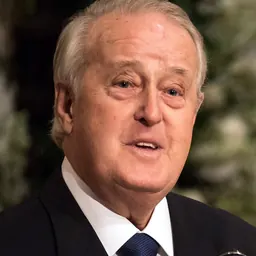
People in André Desjardins's life
Named in this biography and alive at the same time





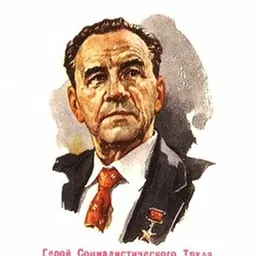
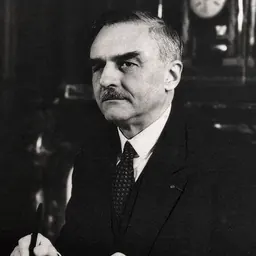
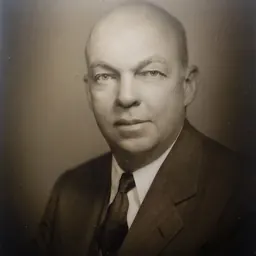
Contemporaries
People whose lives overlapped André Desjardins's
Frequently asked questions
Who was André Desjardins?
Canadian loan shark and drug smuggler
When was André Desjardins born?
André Desjardins was born on 4 July 1930 in Montreal.
When did André Desjardins die?
André Desjardins died on 27 April 2000 in Montreal.
What nationality was André Desjardins?
André Desjardins was Canadian.
Sources & further reading
Cite this page
APA: Biography.guide. (2026). André Desjardins. https://biography.guide/andre-desjardins/
MLA: "André Desjardins." Biography.guide, https://biography.guide/andre-desjardins/.
Chicago: "André Desjardins." Biography.guide. https://biography.guide/andre-desjardins/.
Data last updated: 2026-09-22 · Spot an error? Report a correction.
Page generated 2026-09-27 05:08 UTC