
About Anaximenes of Lampsacus
Lived 380 BC – 320 BC (aged 59–60). Anaximenes of Lampsacus was a historian, rhetorician, poet and orator.
Anaximenes of Lampsacus (; ; 320 BC) was a Greek rhetorician and historian. He was one of the teachers of Alexander the Great and accompanied him on his campaigns.
Rhetorical works Anaximenes was a pupil of Diogenes the Cynic and Zoilus and, like his teacher, wrote a work on Homer. As a rhetorician, he was a determined opponent of Isocrates and his school. He is generally regarded as the author of the Rhetoric to Alexander, an Art of Rhetoric included in the traditional corpus of Aristotle's works. Quintilian seems to refer to this work under Anaximenes' name in Institutio Oratoria 3.4.9, as the Italian Renaissance philologist Piero Vettori first recognized. This attribution has, however, been disputed by some scholars.
The hypothesis to Isocrates' Helen mentions that Anaximenes, too, had written a Helen, "though it is more a defense speech (apologia) than an encomium," and concludes that he was "the man who has written about Helen" to whom Isocrates refers (Isoc. Helen 14). Jebb entertained the possibility that this work survives in the form of the Encomium of Helen ascribed to Gorgias: "It appears not improbable that Anaximenes may have been the real author of the work ascribed to Gorgias."
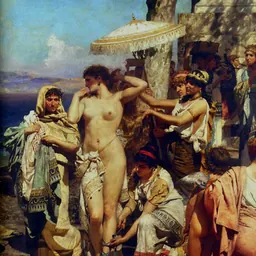
According to Pausanias (6.18.6), Anaximenes was "the first who practised the art of speaking extemporaneously." He also worked as a logographer, having written the speech prosecuting Phryne according to Diodorus Periegetes (quoted by Athenaeus XIII.591e). The "ethical" fragments preserved in Stobaeus' Florilegium may represent "some philosophical book." The Letter of Philip (speech 12) to which speech 11 seems to respond may also be by Anaximenes, or it may be an authentic letter by Philip, perhaps written with the aid of his advisers.
Anaximenes was hostile to Theopompus, whom he sought to discredit with a libelous parody, Trikaranos, published in Theopompus' style and under his name, attacking Athens, Sparta, and Thebes. Pausanias wrote: "He imitated the style of Theopompus with perfect accuracy, inscribed his name upon the book and sent it round to the cities. Though Anaximenes was the author of the treatise, hatred of Theopompus grew throughout the length of Greece."
Plutarch criticizes Anaximenes, together with Theopompus and Ephorus, for the "rhetorical effects and grand periods" these historians implausibly gave to men in the midst of urgent battlefield circumstances (Praecepta gerendae reipublicae 803b).
Saving Lampsacus
The people of Lampsacus were pro-Persian, or were suspected of doing so and Alexander was furiously angry, and threatened to do them massive harm. They sent Anaximenes to intercede for them. Alexander knew why he had come, and swore by the gods that he would do the opposite of what he would ask, so Anaximenes said, 'Please do this for me, your majesty: enslave the women and children of Lampsacus, burn their temples, and raze the city to the ground.' Alexander had no way round this clever trick, and since he was bound by his oath he reluctantly pardoned the people of Lampsacus.
Statue at Olympia The people of Lampsacus dedicated a statue of him at Olympia, Greece.
Editions and translations Art of Rhetoric edited by Immanuel Bekker, Oxford 1837 (online) Anaximenis ars rhetorica, L. Spengel (ed.), Leipzig, Vergsbureau, 1847. Rhetores Graeci, L. Spengel (ed.), Lipsiae, sumptibus et typis B. G. Teubneri, 1853, vol. 1 pp. 169-242. edited by Manfred Fuhrmann, Bibliotheca Teubneriana, Leipzig, 1966, 2nd ed. 2000, edited by Pierre Chiron, Collection Budé, with French translation, Paris, 2002, anonymous translation, London, 1686 (online) translated by E.S. Forster, Oxford, 1924 (online, beginning on p. 231) Fragments Karl Müller, appendix to 1846 Didot edition of Arrian, Anabasis et Indica (online) Felix Jacoby, Die Fragmente der griechischen Historiker, no. 72, with commentary in German Ludwig Radermacher, Artium Scriptores, Vienna, 1951, pp. 200–202 (rhetorical fragments only, adding Philodemus' Rhetorica, which accounts for three of the nine fragments printed)
Don’t just read it —
keep it.
Full-length biographies made to live with: read them, listen on the way to work, watch them tonight.
- E-book
- Audio
- Video
Instant download · yours to keep · every purchase keeps this site free
Important facts
People in Anaximenes of Lampsacus's life
Named in this biography and alive at the same time



Related people
Same field, nearest in time



Contemporaries
People whose lives overlapped Anaximenes of Lampsacus's

Frequently asked questions
Who was Anaximenes of Lampsacus?
4th-century BC Greek rhetorician and historian
When was Anaximenes of Lampsacus born?
Anaximenes of Lampsacus was born in 380 BC in Çanakkale Province, Lampsacus.
When did Anaximenes of Lampsacus die?
Anaximenes of Lampsacus died in 320 BC.
What was Anaximenes of Lampsacus's occupation?
Anaximenes of Lampsacus was a historian, rhetorician, poet and orator.
Sources & further reading
· Wikipedia: Anaximenes of Lampsacus
· DBpedia: Anaximenes of Lampsacus
Cite this page
APA: Biography.guide. (2026). Anaximenes of Lampsacus. https://biography.guide/anaximenes-of-lampsacus/
MLA: "Anaximenes of Lampsacus." Biography.guide, https://biography.guide/anaximenes-of-lampsacus/.
Chicago: "Anaximenes of Lampsacus." Biography.guide. https://biography.guide/anaximenes-of-lampsacus/.
Data last updated: 2026-09-20 · Spot an error? Report a correction.
Page generated 2026-09-27 05:22 UTC