
About Amoako Atta I
Lived 1853 – 1887 (aged 33–34). Amoako Atta I was a paramount chief and soldier.
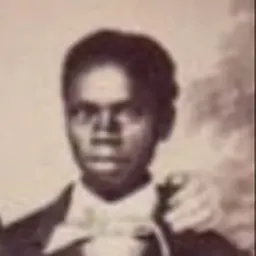
Nana Amoako Atta I (born Kwasi Panin; 1853– 2 February 1887) was the paramount chief of Akyem Abuakwa in nineteenth century southern Ghana. Locally, his position is known as the Okyehene or Omanhene. He ruled the traditional kingdom from July 1866 to 1880 and from 1885 to 1887. After the Sagrenti War of 1874, the British declared Akyem Abuakwa a colonial possession, legally called a ‘protectorate’, as part of the Gold Coast. This development led to a clash between the old traditional Akan culture and the imposition of the new Western Christian political order.
Biography Born in Akyem Abuakwa capital, Kyebi in 1853, the young royal had his early education at the Kyebi Basel Mission Primary School. Kwasi Panin succeeded his uncle, Atta Obuom, popularly called Obiwom, as a teenager in 1867. He was an allied soldier in the Sagrenti Anglo-Ashanti War in 1874, fighting for the interests of British, led by Major-General Garnet Wolseley. He partnered with colonial officials to remediate the refugee crisis. They feared the socio-cultural change that the new learning centres and Christian proselytism had wrought in their culture. He disagreed vehemently with his relations and preached the egalitarian ideals of freedom and justice which diluted the social hierarchy of African traditional authority. He encouraged the enslaved to defy their owners. By mid-1875, this anti-slavery campaign had led to the liberation of 100 to 200 slaves by David Asante and other Basel missionaries. As tensions escalated, British authorities requested the transfer of David Asante to a different mission station far from Kyebi. The departure of Asante did not repair deteriorated relations between the Basel Mission and the Akyem monarchy.
On 14 May 1880, Amoako Atta was convicted of arson, by an Accra court. As punishment, he was exiled to Lagos, Nigeria for a half-a-decade. The exiled Okyehene returned to the Gold Coast on 8 January 1885 and was re-enstooled as chief by popular acclaim of his subjects. At the end of 1886, the king's money, jewellery, and cloths were stolen from the palace. The natives blamed the catechist of the Kyebi Basel Mission Church, Joseph Bosompem for the pilfering, which culminated in clashes between traditionalists and Christians. In January 1887, the colonial government summoned Amoako Atta to a commission of enquiry set up in Accra to investigate the skirmishes.
Death He died from exhaustion and pneumonia on 2 February, 1887, before the commission hearings began.
Don’t just read it —
keep it.
Full-length biographies made to live with: read them, listen on the way to work, watch them tonight.
- E-book
- Audio
- Video
Instant download · yours to keep · every purchase keeps this site free
Important facts
People in Amoako Atta I's life
Named in this biography and alive at the same time
Related people
Same field, nearest in time




Contemporaries
People whose lives overlapped Amoako Atta I's


Frequently asked questions
Who was Amoako Atta I?
Ghanaian paramount chief
When was Amoako Atta I born?
Amoako Atta I was born in 1853.
When did Amoako Atta I die?
Amoako Atta I died on 2 February 1887.
What was Amoako Atta I's occupation?
Amoako Atta I was a paramount chief and soldier.
Sources & further reading
Cite this page
APA: Biography.guide. (2026). Amoako Atta I. https://biography.guide/amoako-atta-i/
MLA: "Amoako Atta I." Biography.guide, https://biography.guide/amoako-atta-i/.
Chicago: "Amoako Atta I." Biography.guide. https://biography.guide/amoako-atta-i/.
Data last updated: 2026-09-20 · Spot an error? Report a correction.
Page generated 2026-09-27 05:32 UTC