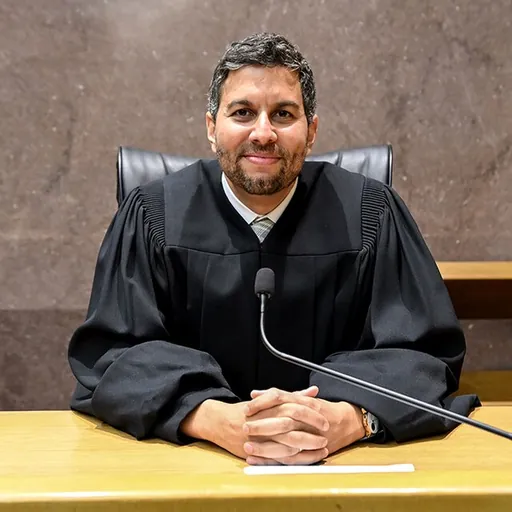
About Amir Ali
Born 1985. Amir Ali is a judge and lawyer.
Amir Hatem Mahdy Ali (born 1985) is a Canadian-American lawyer and academic who is a United States district judge of the United States District Court for the District of Columbia.
Before becoming a judge, Ali was a civil rights lawyer and a professor of U.S. constitutional law at Harvard Law School. He received a Bachelor of Software Engineering from the University of Waterloo in Ontario, Canada, in 2008 and a Juris Doctor, magna cum laude, from Harvard Law School in 2011.
Early career
After graduating, Ali served as a law clerk for Judge Raymond C. Fisher of the United States Court of Appeals for the Ninth Circuit from 2011 to 2012 and for Justice Marshall Rothstein of the Supreme Court of Canada from 2012 to 2013. From 2013 to 2017, Ali practiced at the law firm Jenner & Block, where he argued and won a case before the U.S. Supreme Court as a fifth-year associate.
In 2017, Ali left Jenner & Block to found the Washington, D.C. office of the MacArthur Justice Center. Ali's office became a regular participant before the U.S. Supreme Court in civil rights cases, with Ali recruiting several former U.S. Supreme Court law clerks and sending multiple public interest fellows to clerk for Supreme Court justices. From 2021 to 2024, Ali served as the MacArthur Justice Center's executive director.
From 2018 to 2024, Ali was a professor at Harvard Law School, where he directed the school's criminal justice appellate clinic. He served on the Appellate Project's board of directors.
Notable cases as an attorney
In 2016, as a 30-year-old junior associate, Ali argued his first case before the Supreme Court, for the petitioner in Welch v. United States. He obtained an 7–1 majority opinion that the Supreme Court's determination in Johnson v. United States, which found the Residual Clause of the Armed Career Criminal Act was unconstitutionally vague, constituted a substantive rule change and was therefore retroactive. Welch had a dramatic impact on access to habeas corpus in federal court, increasing cases against the United States by 55%, according to the Chief Justice of the United States's end-year report.
In 2017, Ali moved to the MacArthur Justice Center, a civil rights litigation firm. The next year, he represented Louisiana prisoner Corey Williams before the U.S. Supreme Court in Williams v. Louisiana. Williams had been wrongfully convicted of capital murder in 1998 at age 16 and spent over 20 years at Angola Penitentiary. In response, the district attorney agreed to immediately release Williams.
In 2019, Ali argued before the U.S. Supreme Court for the petitioner in Garza v. Idaho, and obtained a 6–3 majority opinion that expanded the right to a lawyer.
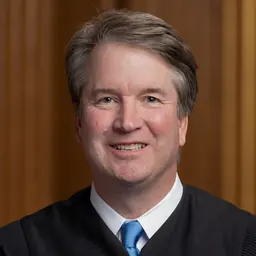
In 2022, Ali argued before the U.S. Supreme Court for the petitioner in Thompson v. Clark, and obtained a 6–3 majority opinion by Justice Brett Kavanaugh recognizing a federal cause of action against police officers who pursue false charges.
Federal judicial service
On January 10, 2024, President Joe Biden announced his intent to nominate Ali to serve as a United States district judge for the United States District Court for the District of Columbia.
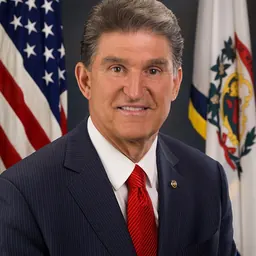
On February 8, a hearing on his nomination was held before the Senate Judiciary Committee. In advance of the hearing, Ali received letters of support from prosecutors, the Cato Institute, and civil rights and law enforcement organizations. During his hearing, Senator Lindsey Graham questioned Ali about his leadership of the MacArthur Center and comments that another staff member made on a podcast about "making police departments obsolete". On March 7, Ali's nomination was reported out of committee by an 11–10 party-line vote. On November 20, the United States Senate invoked cloture on his nomination by a 50–48 vote. Later that day, his nomination was confirmed by a 50–49 vote, with all Democratic senators and Independent senator Joe Manchin voting yes. Ali received his judicial commission on November 22, 2024. He is the first Muslim and Arab American federal judge to serve in D.C.
Notable rulings
In AIDS Vaccine Advocacy Coalition v. Department of State (2025), Ali issued a temporary restraining order restricting implementation of Executive Order 14169, which would have ordered cuts in funding for foreign assistance programs governed by USAID and the U.S. Department of State. The order issued halted the government from restricting foreign aid and assistance that was already in place before President Donald Trump took office, without fully enjoining the executive order itself. According to Ali's judicial opinion, agency officials violated the Administrative Procedure Act because no explanation had been given for the blanket suspension of all congressionally appropriated foreign aid that "set off a shock wave" for business and aid organizations across the country. Ali issued a deadline of February 18 for the Government to inform the court of its "status of compliance". After such payments failed to resume and an appropriate response was not provided, the plaintiffs "asked Ali for an emergency order holding the government in contempt" and for "immediate payment of all the money they and other foreign-aid partners were owed." Ali ordered all aid issued before the temporary restraining order to be paid by February 26. He rejected the Trump administration's requests to extend the deadline. The administration appealed Ali's court order to both the D.C. Circuit Court of Appeals and the U.S. Supreme Court, asking for it to be put on hold. The Circuit Court upheld Ali's order. The Supreme Court issued a temporary administrative stay, placing Ali's order on hold while it considered the case and allowing Trump's executive order to remain in effect. But on March 5, 2025, the Supreme Court vacated the stay and left Ali's order in effect. Because Ali's earlier deadline had expired while the Supreme Court considered the case, the Supreme Court left it to Ali to "clarify what obligations the Government must fulfill to ensure compliance with the temporary restraining order."
On March 6, Ali ruled that USAID must pay for nonprofits' and businesses' completed work by March 10, following the Supreme Court's instructions to further clarify what actions the government must take to provide for the release of funds.
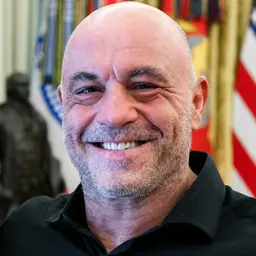
In November 2025, in National Association of the Deaf v. Trump, Ali issued a preliminary injunction requiring the White House to restore live American Sign Language (ASL) interpretation during presidential and press‑secretary briefings. He concluded that the refusal to offer ASL access likely violated the Rehabilitation Act of 1973. Ali stressed that ASL and written English are distinct languages and that captions alone do not furnish meaningful access for many deaf Americans. The administration has appealed the decision to the D.C. Circuit, arguing that requiring the president to appear alongside ASL interpretation "would severely intrude on the President's prerogative to control the image he presents to the public". Ali had rejected this argument, writing: "To the extent the defendants argue that they prefer to act free from association with accessibility for people with disabilities, their gripe is with Congress and federal anti-discrimination laws." The administration's position to remove ASL has also been criticized, including by Joe Rogan, who called it "crazy". Since Ali's order, the White House has maintained a YouTube channel that provides live ASL for all presidential and press-secretary briefings. The administration's appeal remains pending.
In December 2025, in Zaid v. Trump, Ali rendered a preliminary injunction reinstating attorney Mark Zaid's security clearance after the administration revoked it as retaliation. The order held that the summary revocation violated the First Amendment right to free expression and the Fifth Amendment rights to due process and the right of counsel, because it was made in retribution for Zaid's legal representation of government whistleblowers.
Personal life Ali became a naturalized U.S. citizen in a special ceremony at the National Archives in front of the original U.S. Constitution and Declaration of Independence.
Don’t just read it —
keep it.
Full-length biographies made to live with: read them, listen on the way to work, watch them tonight.
- E-book
- Audio
- Video
Instant download · yours to keep · every purchase keeps this site free
Important facts
People in Amir Ali's life
Named in this biography and alive at the same time





Related people
Same field, nearest in time


Contemporaries
People whose lives overlapped Amir Ali's


Frequently asked questions
Who is Amir Ali?
American judge (born 1985)
When was Amir Ali born?
Amir Ali was born in 1985 in Kingston.
What is Amir Ali's occupation?
Amir Ali is a judge and lawyer.
Sources & further reading
Cite this page
APA: Biography.guide. (2026). Amir Ali. https://biography.guide/amir-ali/
MLA: "Amir Ali." Biography.guide, https://biography.guide/amir-ali/.
Chicago: "Amir Ali." Biography.guide. https://biography.guide/amir-ali/.
Data last updated: 2026-09-21 · Spot an error? Report a correction.
Portrait: Wikimedia Commons · author & licence
Page generated 2026-09-27 05:00 UTC