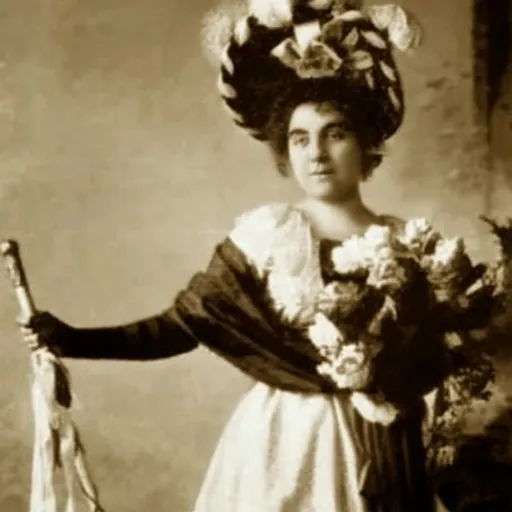
About Amelia Pinto
Lived 1876 – 1946 (aged 70). Amelia Pinto was an Italian opera singer, singer and musician.
Amelia Pinto (1876–1946) was an Italian operatic soprano who first performed at the Teatro Grande in Brescia in December 1899 in La Gioconda. She developed a particular liking for Wagner, excelling in Tristan and Isolda at La Scala. She is also remembered for her interpretation of Tosca, appreciated by Puccini himself.
Biography Born in Palermo on 21 January 1876, Amelia Pinto was the daughter of Giuseppe Mancuso, a fencing master, and his wife Francesca. Thanks to her father who was interested in music, she took piano lessons as a child. In 1897, when she was 21, she began studying at the Conservatorio di San Pietro a Majella in Naples but the following year, her family sent her to the Santa Cecilia music school in Rome where she studied mezzosoprano singing under Zaira Cortini Falchi.
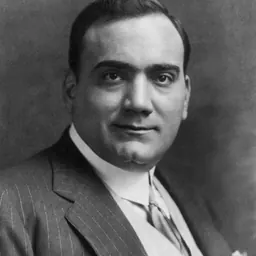
In February 1901, at a commemorative concert for Verdi, together with Enrico Caruso, she sang in the Act II finale of La forza del destino. After a period in Argentina, that December she played Brünnhilde in Wagner's Die Walküre. On 11th March 1902, she sang in the premiere of Alberto Franchetti's Germania with Enrico Caruso and Mario Sammarco. Later that year she performed in Tristan and Isolde in Ravenna before travelling to the United States with Pietro Mascagni's opera company to perform in Cavalleria rusticana and Zanetto. In 1903 she sang Desdemona in Francesco Tamagno’s farewell performance of Otello at the Teatro Argentina in Rome. After performing in Palermo in 1904, she went on tour to Egypt, singing in Gabriel Dupont's La Cabrera. The following year she sang in the Paris premiere of Umberto Giordano's Siberia, then in Madrid in L'Africaine and La Gioconda. In 1906, in Santiago de Chile, she performed in Otello, Il trovatore and Les Huguenots.
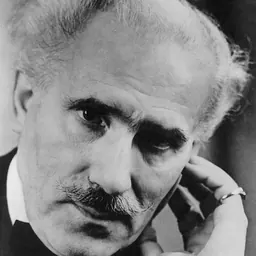
She sang at the Teatro Colón, Buenos Aires, in 1908 and then at the end of the season married a Sicilian doctor and retired from the stage. She returned to the stage at La Scala in 1914 to sing Tristan und Isolde under Arturo Toscanini, and accepted a season in Madrid in 1916, appearing in La Gioconda, Tristan and Isolde and Die Walküre. Following the death of her daughter Rosa Isotta in 1917, she retired definitively.
Amelia Pinto died in Palermo on 21 June 1946 after a serious illness.
Recordings Pinto made 18 published records over the period 1902-1914. She recorded 6 sides for G&T in 1902, including an aria from Germania, and 2 versions of Vissi d'arte from Tosca. 4 sessions for Fonotipia in 1908 produced only 3 published sides, including one from Siberia. She returned to the Fonotipia studios in 1914 when she recorded 9 more published records, including souvenirs of her Isolde and Eva (from Die Meistersinger von Nürnberg).
Don’t just read it —
keep it.
Full-length biographies made to live with: read them, listen on the way to work, watch them tonight.
- E-book
- Audio
- Video
Instant download · yours to keep · every purchase keeps this site free
Important facts
People in Amelia Pinto's life
Named in this biography and alive at the same time




Related people
Same field, nearest in time

Contemporaries
People whose lives overlapped Amelia Pinto's

Frequently asked questions
Who was Amelia Pinto?
Italian operatic soprano (1876-1946)
When was Amelia Pinto born?
Amelia Pinto was born on 21 January 1876 in Palermo.
When did Amelia Pinto die?
Amelia Pinto died on 21 June 1946 in Palermo.
What was Amelia Pinto's occupation?
Amelia Pinto was an opera singer, singer and musician.
What nationality was Amelia Pinto?
Amelia Pinto was Italian.
Sources & further reading
Cite this page
APA: Biography.guide. (2026). Amelia Pinto. https://biography.guide/amelia-pinto/
MLA: "Amelia Pinto." Biography.guide, https://biography.guide/amelia-pinto/.
Chicago: "Amelia Pinto." Biography.guide. https://biography.guide/amelia-pinto/.
Data last updated: 2026-09-22 · Spot an error? Report a correction.
Portrait: Wikimedia Commons · author & licence
Page generated 2026-09-27 05:04 UTC