
About Amédée Forestier
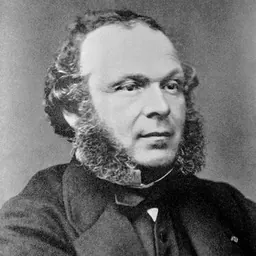
Lived 1854 – 1930 (aged 75–76). Amédée Forestier was a French and British painter, artist and illustrator.
Charles Amédée Forestier (1854 – 18 November 1930) was an Anglo-French artist and illustrator who specialised in historical and prehistoric scenes, and landscapes.
Life and work
Forestier was born in Paris, France, and studied art under Henri Lehmann at the École des Beaux-arts. In 1882 he began working for the Illustrated London News, producing illustrations for news items and fictional stories. He also produced illustrations for the Windsor Magazine, for the novels of several authors including Walter Besant, and for various travel books by A & C Black.
Forestier became known for his historical illustrations, especially his carefully researched drawings of archaeological finds such as prehistoric man. His drawings are notable for their attention to detail, a consequence of the need to convey a lot of visual information, with little accompanying text, in the popular illustrated magazines of the day.
In December 1911, a series of his drawings (accompanying text by Arthur Bulleid) was published in the Illustrated London News, depicting scenes of everyday life in an Iron Age village near present-day Glastonbury – "Glastonbury Lake Village". These scenes were widely reproduced and seen as influential in shaping public perceptions of prehistory at the time.
Forestier also worked for the Royal Ontario Museum and the London Museum, producing illustrations of Roman Life, and later had an illustrated book published on the subject – The Roman Soldier (A & C Black, 1928).
In 1922 his "Nebraska Man" drawings appeared in the Illustrated London News. These reconstructions, in collaboration with scientist Grafton Elliot Smith, were of a possible ape-like ancestor of present-day man, based on a fossil tooth found in Nebraska. However this drawing owed more to artistic imagination than scientific fact, and the find itself was scientifically insignificant, since the tooth was actually that of a peccary.
Apart from his drawing, Forestier also painted in oils and watercolour. In 1914, he painted a depiction of the signing of the Treaty of Ghent, which was given to the American government in 1922 by Barron Collier and the Sulgrave Institution. He died in Dulwich, London, on 18 November 1930.
Books (selected) Illustrated by Forestier Besant, Walter. The World Went Very Well Then: Volume 1, Volume 2, Volume 3 (London: Chatto & Windus, 1887) Cobb, James Francis (adp. from Hendrik Conscience). Off to California: a tale of the gold country (London: Wells Gardner, Darton, & Co., 1887) Collins, Wilkie. Blind Love (London: Chatto & Windus, 1890) Stockton, Frank R. Mrs Cliff's Yacht (Charles Scribner's sons, 1896) Moore, Frank F. The Jessamy Bride (Hutchinson, 1897) Pain, Barry E. O. The Romantic History of Robin Hood (Harper, 1898) Drummond, Hamilton. The Seven Houses: a romance (New York: F.A. Stokes, 1901) – frontispiece Pemberton, Sir Max. I Crown Thee a King: a romance (Methuen & Co., 1902) Omond, George W. T. Bruges and West Flanders (A & C Black, 1906) Omond, George W. T. Belgium (A & C Black, 1908) Omond, George W. T. Liége and the Ardennes (A & C Black, 1908) Omond, George W. T. Belgium (Peeps at many lands) (A & C Black, 1909) Ambler, Benjamin George. Alfred, Lord Tennyson: his homes and haunts (T.C. & E.C. Jack, 1911) Bensusan, Samuel Levy. William Shakespeare, his homes and haunts (Dodge, 1912) Bensusan, Samuel Levy. William Wordsworth, his homes and haunts (Dodge, 1912) Baddeley, John F. Russia, Mongolia, China .... (Macmillan and Company, 1919)
Written and illustrated by Forestier The Roman Soldier: some illustrations representative of Roman military life with special reference to Britain (A & C Black, 1928)
Don’t just read it —
keep it.
Full-length biographies made to live with: read them, listen on the way to work, watch them tonight.
- E-book
- Audio
- Video
Instant download · yours to keep · every purchase keeps this site free
Important facts
People in Amédée Forestier's life
Named in this biography and alive at the same time



Related people
Same field, nearest in time

Contemporaries
People whose lives overlapped Amédée Forestier's


Frequently asked questions
Who was Amédée Forestier?
British artist (1854-1930)
When was Amédée Forestier born?
Amédée Forestier was born in 1854 in Paris.
When did Amédée Forestier die?
Amédée Forestier died on 18 November 1930 in Dulwich.
What was Amédée Forestier's occupation?
Amédée Forestier was a painter, artist and illustrator.
What nationality was Amédée Forestier?
Amédée Forestier was French and British.
Sources & further reading
Cite this page
APA: Biography.guide. (2026). Amédée Forestier. https://biography.guide/amedee-forestier/
MLA: "Amédée Forestier." Biography.guide, https://biography.guide/amedee-forestier/.
Chicago: "Amédée Forestier." Biography.guide. https://biography.guide/amedee-forestier/.
Data last updated: 2026-09-20 · Spot an error? Report a correction.
Page generated 2026-09-27 05:31 UTC