
About Amandus Adamson
Lived 1855 – 1929 (aged 73). Amandus Adamson was a Russian and Estonian sculptor, painter and artist.
Amandus Heinrich Adamson (12 November 1855 near Paldiski, Governorate of Estonia, Russian Empire – 26 June 1929 in Paldiski, Estonia) was an Estonian sculptor and painter.
Life Adamson was born in 1855 into an Estonian-speaking seafaring family at Uuga-Rätsepa, near Paldiski by the Gulf of Finland. His father, of local partially Swedish descent and a merchant vessel captain by profession, sailed to the United States in 1860, participated in the American Civil War, but never returned to Estonia and lost contact with his family after 1869.
Adamson excelled in wood carving as a child. In 1875, aged 19, he moved to Saint Petersburg (then capital of the Russian Empire) to study at the Imperial Academy of Arts under Alexander von Bock. After graduation he continued to work as a sculptor and teacher in Saint Petersburg, with an interruption from 1887 through 1891 to study in Paris and Italy, influenced by the French sculptors Jules Dalou and Jean-Baptiste Carpeaux.
Adamson produced his best-known work in 1902: His Russalka Memorial in Tallinn, dedicated to the 177 lost sailors of the Russian warship Rusalka, features a bronze angel on a slender column. Some of his other work is architectural, e.g., his four allegorical bronzes for the Elisseeff department store in Saint Petersburg, and the French-style caryatids and finial figures for the Singer House are major components of the Art Nouveau architecture visible along Nevsky Prospekt.
He was named an academician of the Imperial Academy in 1907. In 1911, Adamson, as a result of a competition arranged by the Imperial Academy, received the commission for the monument to the Tricentennial of the House of Romanov. It was to be erected in Kostroma. Adamson invested all of his money into the project, which was never finished due to the 1917 Russian Revolution. In 1918, during the Estonian War of Independence, Adamson returned to his home town of Paldiski in northwest Estonia, where he would spend most of the rest of his life, except for the larger part of 1922, when he worked in Italy.
In independent Estonia, Adamson was commissioned to sculpt multiple monuments dedicated to the recent 1918—1920 War of Independence, including one in Pärnu at the Alevi cemetery, where he himself was ultimately buried. In the aftermath of the Soviet invasion of Estonia in World War II, almost all of these monuments were destroyed by the Soviet authorities, and since Estonia regained independence in 1991, most of them have been restored.
In addition to war memorials, Adamson also created a monument to Friedrich Reinhold Kreutzwald, author of the Estonian national epic Kalevipoeg. His last work was a monument in Pärnu dedicated to Lydia Jannsen (Koidula), the national poet of Estonia.
Selected works The work of Adamson varies in style and material. He sculpted monuments in Estonia, Saint Petersburg and the Crimea, as well as architectural sculpture, allegorical figures, and portraits. Fisherman from the Island of Muhu (plaster, 1892) In Anxious Expectation (bronze, 1897) allegorical sculptures of Commerce, Industry, Science and Arts on the façade of Elisseeff Emporium in Saint Petersburg (bronze, 1902) The Russalka Memorial, Tallinn, (1902) allegorical sculpture for the Singer House, Saint Petersburg (1902–1904) Tšempion (English: Champion), bronze sculpture of Estonian strongman Georg Lurich (1903) Monument to the Sunken Ships, Sevastopol (1904) Memorial to Johann Köler, Suure-Jaani cemetery (1912) Monument to the Estonian War of Independence in Kuressaare (1928, destroyed 1941, restored 1941, destroyed 1945, restored 1990) Monument to Lydia Jannsen (Koidula), Pärnu (1929) Kalevipoeg (1927), part of the War of Independence monument (opened 1933, destroyed 1950, copy reopened 2003) in Tartu Sculpture "The Birth of Venus"
Gallery
Don’t just read it —
keep it.
Full-length biographies made to live with: read them, listen on the way to work, watch them tonight.
- E-book
- Audio
- Video
Instant download · yours to keep · every purchase keeps this site free
Important facts
People in Amandus Adamson's life
Named in this biography and alive at the same time

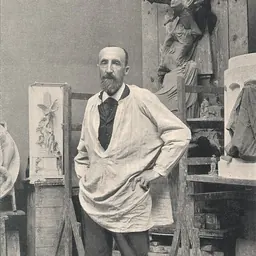
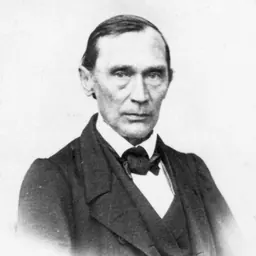

Related people
Same field, nearest in time
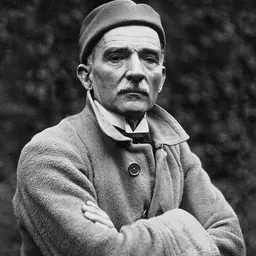
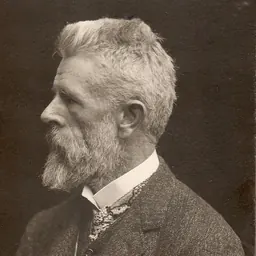



Contemporaries
People whose lives overlapped Amandus Adamson's



Frequently asked questions
Who was Amandus Adamson?
Estonian sculptor (1855-1929)
When was Amandus Adamson born?
Amandus Adamson was born on 31 October 1855 in Paldiski.
When did Amandus Adamson die?
Amandus Adamson died on 26 June 1929 in Paldiski.
What was Amandus Adamson's occupation?
Amandus Adamson was a sculptor, painter and artist.
What nationality was Amandus Adamson?
Amandus Adamson was Russian and Estonian.
Sources & further reading
Cite this page
APA: Biography.guide. (2026). Amandus Adamson. https://biography.guide/amandus-adamson/
MLA: "Amandus Adamson." Biography.guide, https://biography.guide/amandus-adamson/.
Chicago: "Amandus Adamson." Biography.guide. https://biography.guide/amandus-adamson/.
Data last updated: 2026-09-20 · Spot an error? Report a correction.
Page generated 2026-09-27 05:32 UTC