
About Amanda Randles
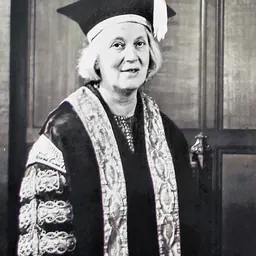
Born 1950. Amanda Randles is a computer scientist, engineer and researcher.
Amanda Randles is an American computer scientist who is the Alfred Winborne and Victoria Stover Mordecai Associate Professor of Biomedical Sciences at Duke University. Randles is an associate professor of biomedical engineering with secondary appointments in computer science, mathematics, and mechanical engineering and materials science. She is a member of the Duke Cancer Institute. Her research interests include biomedical simulation, machine learning, computational fluid dynamics, and high-performance computing.
Early career and education In high school, Randles attended the Utica Center for Math, Science, and Technology, where she learned computer programming and its applications in the sciences. She also participated in Science Olympiad and FIRST Robotics.
Randles attended Duke University, where she completed a B.A. in physics and computer science in 2005. After working for three years as a software developer on the IBM Blue Gene project, advised by Efthimios Kaxiras and Hanspeter Pfister. She received tenure in 2023 in Biomedical Engineering and has secondary appointments in mathematics, computer science, and mechanical and materials science. She is also a member of the Duke Cancer Institute.
Research Randles' research interests are biomedical simulation and high-performance computing; specifically, her focus is developing computational tools that can examine the behavior of different diseases, from atherosclerosis to cancer.
In 2018, Randles was one of ten researchers selected to test simulation-based projects on the Aurora exascale supercomputer in 2021, as part of the Aurora Early Science Program at the Argonne National Laboratory. She was awarded an NSF CAREER Award in May 2020 to support her work on HARVEY.
Awards and honors In 2023, she was warded the NIH Pioneer award to support her work combining wearables with physics-based models. She is a Fellow of the National Academy of Inventors. For her work on ventilator splitting during the Covid-19 pandemic, she was awarded the Alexandra Jane Noble Epiphany Science Inspiration Award. In 2014, Randles was awarded the NIH Director's Early Independence Award. She was named to the 2015 World Economic Forum Young Scientist List for her work on the "design of large-scale parallel applications targeting problems in physics". In 2017, she was awarded the Grace Murray Hopper Award and was later named to the MIT Technology Review Innovators Under 35, both given for her work on HARVEY. In January 2024, she was named an ACM Distinguished Member. She was the 2023 recipient of the ACM Prize in Computing for her contributions to "computational health through innovative algorithms, tools, and high performance computing methods for diagnosing and treating a variety of human diseases".
Selected publications
Don’t just read it —
keep it.
Full-length biographies made to live with: read them, listen on the way to work, watch them tonight.
- E-book
- Audio
- Video
Instant download · yours to keep · every purchase keeps this site free
Important facts
People in Amanda Randles's life
Named in this biography and alive at the same time



Related people
Same field, nearest in time





Contemporaries
People whose lives overlapped Amanda Randles's




Frequently asked questions
Who is Amanda Randles?
American computer scientist
When was Amanda Randles born?
Amanda Randles was born in 1950.
What is Amanda Randles's occupation?
Amanda Randles is a computer scientist, engineer and researcher.
Sources & further reading
Cite this page
APA: Biography.guide. (2026). Amanda Randles. https://biography.guide/amanda-randles/
MLA: "Amanda Randles." Biography.guide, https://biography.guide/amanda-randles/.
Chicago: "Amanda Randles." Biography.guide. https://biography.guide/amanda-randles/.
Data last updated: 2026-09-20 · Spot an error? Report a correction.
Page generated 2026-09-27 05:32 UTC