
About Alwin Seifert
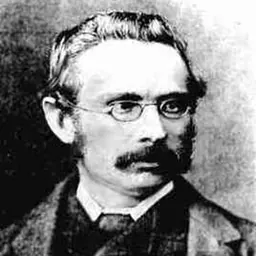
Lived 1890 – 1972 (aged 81). Alwin Seifert was a German architect, author, university teacher, garden designer and conservationist.
Alwin Seifert (31 May 1890 in Munich – 27 February 1972 in Dießen am Ammersee) was a German horticultural architect, architect, university teacher, landscape designer, local curator, and conservationist. He is considered to be one of the most important representatives of the early ecological movement and biodynamic agriculture.
Origin and education Seifert was born the son of the construction engineer and contractor Hermann Seifert. His mother Anna Sourell, who came from a Huguenot family, died while giving birth. From 1909 he studied architecture at the Technical University of Munich and completed an apprenticeship as a mason in the summer months from 1909 to 1911, which he completed in 1912 with the journeyman's examination. He completed his studies in 1913 with a diploma. He then worked as a construction technician and site manager in a Munich construction company. During the First World War he volunteered for the railway troops in 1915 and was a lieutenant at the end of the war.
After the war, Seifert took over his father's construction business, which went bankrupt during the hyperinflation in 1920. From 1920 to 1923 he was a university assistant at the Technical University of Munich with Emil von Mecenseffy and Hermann Buchert in the areas of structural engineering and agricultural construction. In 1923 he started his own business as an architect. Seifert married Maria Orff, sister of the composer Carl Orff, for the second time in 1924. The marriage remained childless.
Seifert, who was already interested in landscape and flora as a high school student, trained himself as a landscape architect, as there was neither a defined job description nor a course for this profession at that time. He was influenced on the one hand by the youth movement's understanding of nature, which he had joined as a member of the Wandervogels. Second, he adopted the writings of Paul Schultze-Naumburg to landscape and technology as well as the design of biodynamic agriculture of the anthroposophy of Rudolf Steiner. In 1932 he got a teaching position at the Technical University of Munich, which he was able to redesign himself to later become the title "practical garden design".
Through his work, Seifert came into contact with the homeland security movement. He became a member of the Bavarian State Association for Homeland Security and has been a member of its Small Building Committee since 1926. In 1927 he began to publish in scientific journals and made in 1929 with the essay "Thoughts on indigenous garden design" in the journal garden design attracts attention. In 1932 he took on a teaching position for garden design and agricultural construction at the Technical University of Munich, which he held until 1944.
Role in National Socialism Seifert's role in National Socialism is shaped by his own trivializing presentation, which he presented in particular in the arbitration chamber proceedings for denazification. It was refuted years later.
Early connections with National Socialism According to Joachim Wolschke-Buhlmahn and Gert Gröning, Seifert belonged to the secret Thule Society. The historian Thomas Zeller sees no evidence of this. According to Seifert's own statements, he had joined the Widar League in 1919. Possibly it was a lodge belonging to the Thule Society. There he allegedly met Rudolf Hess, though such a connection has not been proven. At least from 1919 to 1921 he was a member of the German National People's Party (DNVP). Seifert's ethnic and anti-Semitic attitudes allowed him to easily connect with Nazism.
In 1937, he became a member of the NSDAP, but later claimed that he had never been entirely in line with National Socialist ideology. Thus he adhered to the racial theory of the botanist Friedrich Merkenschlager, an early National Socialist who fell out with Walther Darré in 1933. Seifert's influence during the Nazi era resulted less from his institutional functions than from his personal connections. He benefited from funding from Hess and Fritz Todt and claimed that he lost influence after Todt's death and Hess's "England flight". The fact that he had also acted as a contact person for the anthroposophical movement made him suspicious in the eyes of the Reich Security Main Office, which had him monitored temporarily in 1941.
Reich landscape attorney In 1933 he was assigned to the staff of the commissioner (later general inspector) for motorway construction Fritz Todt, and in 1934 appointed advisor for questions relating to the integration of the landscape in motorway construction. He used this function to get in close contact with Nazi party leaders; He conducted intensive correspondence with Rudolf Hess, Martin Bormann, Heinrich Himmler, Walther Darré, Albert Speer, and Oswald Pohl.
He also derived his ideas of a near-natural hydraulic engineering from his folk ideas and thus became one of the founding fathers of engineering biology . Another field in which Seifert was active was biodynamic agriculture, which goes back to the anthroposophist Rudolf Steiner.
During the Nazi era, Seifert referred to the nature prophet and pacifist Gustav Gräser, a student of the life reformer Karl Wilhelm Diefenbach, whom he portrayed in his book The Age of Living as a “herald” and “forerunner” of this same age.
Denazification process After the Second World War, Seifert's NS Ordensburg Sonthofen was placed on the list of literature to be sorted out in the Soviet occupation zone.
Seifert succeeded in the denazification process initially as a “fellow traveler”, later (1949) to be classified as “unencumbered” because he had to accept “considerable economic and professional disadvantages” under National Socialism. Seifert claimed that the Reichsleiter of the NSDAP, Martin Bormann, prevented Seifert from receiving a chair in 1938. He got himself influenced by anthroposophy in the early 1940sturned away from his “racial arrogance”, which was born out of his materialistic attitude and which had buried the natural instincts for the real values of a person for more than a decade. With Todt's death and Hess's flight to England in 1942, he lost his support in the regime and was massively disadvantaged as a result. His correspondence with party officials "only served scientific tasks or the defense of his professional position". In his favor it was taken into account that he campaigned for the racially persecuted and that he criticized the architecture of party buildings.
Phillip Auerbach, as State Commissioner for Racially, Religiously, and Politically Persecuted Persons, was appalled and initiated a retrial against Seifert, which ended in the second instance in October 1949 with the classification as "unencumbered". Seifert stood up for the biodynamic economy with great moral courage, spoke out in favor of Jews and politically persecuted students and accepted financial and professional disadvantages in the process.
Buildings 1923: Waitzacker estate in Weilheim (Upper Bavaria) 1924/25: residential and studio house for the sculptor Anna von Hentig; associated garden with terracing, paths, stairs and walls; with enclosure in Munich-Laim (inhabited by S.) 1929: Three rows of houses with green spaces at Weßlinger Strasse 1–16 and Stürzerstrasse 40–52 in Munich 1931: Country house near Meersburg 1951–1961: Design of the Pfreimd power plant group 1952–1954: Jochenstein power station outdoor facilities 1958–1959: Own house on Ammersee 1938: Schwangau spa gardens 1938: Garten B. in Munich-Biederstein, Klementinenstrasse 8 (with Roderich Fick ) before 1955: residential garden at Auer Mühlbach in Munich before 1955: Small residential garden in the Rhineland
Memberships and honors after 1945 Honorary member of the University of Innsbruck 1960: Fritz Schumacher Prize from the University of Hanover 1961: Large Federal Cross of Merit 1966: Bavarian Order of Merit 1969: Friedrich Ludwig v. Sckell Ring of Honor of the Bavarian Academy of Fine Arts 1971: Ludwig Thoma Medal from the City of Munich
Books 1930: Down-to-earth garden art . In: Gartenkunst Heft 43/1930, pp. 162–164. 1931: From garden fences to gazebos - woodwork for garden friends . Gartenbauverlag Trowitzsch und Sohn, Frankfurt / Oder 1933: The coming garden . In: Deutsche Bauzeitung, issue 67/1933, pp. 367–371. 1937: Nature and technology in German road construction . In: Naturschutz, issue 18/1937, 229–232. 1938: Hydraulic engineering closer to nature . In: Die Deutsche Wasserwirtschaft, issue 12/1938: 361–366 1938: Alpine walls In: Research work from road construction, Vol. 11, Berlin 1938 1943: The real house in Gau Tirol-Vorarlberg. An investigation into the nature and origin of the alpine flat roof house and the principles of a rebirth in the spirit of our time . 83 p., With num. Fig. Alpenschriften, Innsbruck (Gau-Verlag) 1943: In the age of the living. Nature - home - technology . First volume. Müller publishing house, Planegg 1944: The hedge landscape . Potsdam Lectures VIII, Potsdam 1945/1948/1957?: Compost primer for the Bavarian farmer (forerunner of: gardeners, fields - without poison ) 1950: Italian gardens. A picture book . 110 p., G. Callwey publishing house, Munich 1959: The restoration of the landscape in the area of quarries . Nature and landscape 34:40. 1962: A life for the landscape . 160 pp., 49 ills., Eugen Diederichs Verlag, Düsseldorf / Cologne 1964: Compost in the garden without poisons - primer for small and large gardeners, farmers and farmers . 121 S., Wirtschaftsverlag M. Klug, Munich-Pasing 1971: gardening, farming - without poison . 209 p., With 14 illustrations, Biederstein-Verlag, Munich 2008: Gardening, tillage - without poison. With an afterword by Hansjörg Küster. Verlag CH Beck, Munich, 251st - 255th thousand of the total print run
Don’t just read it —
keep it.
Full-length biographies made to live with: read them, listen on the way to work, watch them tonight.
- E-book
- Audio
- Video
Instant download · yours to keep · every purchase keeps this site free
Important facts
People in Alwin Seifert's life
Named in this biography and alive at the same time

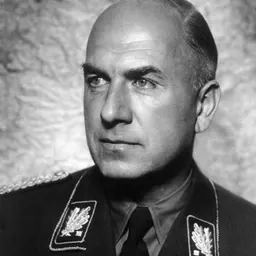

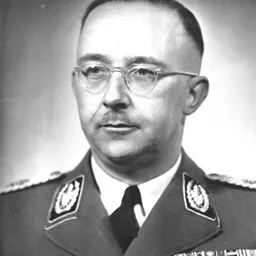


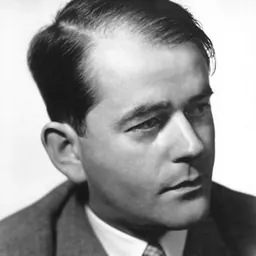
Related people
Same field, nearest in time


Contemporaries
People whose lives overlapped Alwin Seifert's




Frequently asked questions
Who was Alwin Seifert?
German architect and author (1890-1972)
When was Alwin Seifert born?
Alwin Seifert was born on 31 May 1890 in Munich.
When did Alwin Seifert die?
Alwin Seifert died on 27 February 1972 in Dießen am Ammersee.
What was Alwin Seifert's occupation?
Alwin Seifert was an architect, author, university teacher, garden designer and conservationist.
What nationality was Alwin Seifert?
Alwin Seifert was German.
Sources & further reading
Cite this page
APA: Biography.guide. (2026). Alwin Seifert. https://biography.guide/alwin-seifert/
MLA: "Alwin Seifert." Biography.guide, https://biography.guide/alwin-seifert/.
Chicago: "Alwin Seifert." Biography.guide. https://biography.guide/alwin-seifert/.
Data last updated: 2026-09-20 · Spot an error? Report a correction.
Page generated 2026-09-27 05:30 UTC