
About Álvaro de Bazán el Viejo
Lived 1506 – 1558 (aged 51–52). Álvaro de Bazán el Viejo was a Spanish sailor and military personnel.
Álvaro de Bazán y Solís, called the Elder (15061558), was a Spanish admiral and shipbuilder, General-Captain of the Galleys of Spain for Charles V, Holy Roman Emperor.
He was a successful naval commander and ship designer, innovating in the design of galleons and galleasses. He worked extensively to expand and modernize the Spanish fleets to counter the dominant Ottoman Navy, as well as the new threats of foreign piracy and provateering in the Atlantic. Along with the Genoese Andrea Doria, he was the main shipbuilder of Charles V's reign.
Biography Bazán started his career in the royalist side of the revolt of the Comuneros, participating in the Siege of Fuenterrabía with distinguished services. After the revolt, already in 1526, he became General-Captain of Galleys of Spain after the death of his predecessor Juan de Velasco. Gaining renown as a shipbuilder, he moved engineers and workers to Barcelona and built 50 new galleys for Rodrigo de Portuondo to take to the imperial fleet, in which Charles V traveled to Rome to be formally crowned by Pope Clement VII.
Ottoman-Habsburg wars In 1529, Ottoman corsair Hayreddin Barbarossa conquered the Peñón of Algiers, turning it into a base of Barbary privateering. Months later, Portuondo, now General-Captain of Granada, fell unexpectedly against Barbarossa's lieutenant Aydın Reis, due to which Bazán was promoted to his captaincy. In August 1532, with a fleet of ten galleys and 2,000 soldiers, Bazán captured the city of Honaine, another of Barbarossa's ports. Returning with much booty and 1,000 prisoners, he used them to increase the number of galleys under his command up to 15. Bazán's presence dissuaded Aydin and Sinan Reis from acting freely in Spanish waters, although their attacks on European coasts to feed the lucrative Barbary slave trade continued being endemic.
In May 1533, Ottoman Sultan Suleiman the Magnificent issued a 110-ship fleet under Lütfi Pasha to besiege Corone, which grand imperial admiral Andrea Doria had conquered the previous year while sacking the Ottoman Peloponnese. Bazán contributed to Doria's relief fleet with 12 galleys of his own making, although they eventually did not join the fleet, staying in Messina possibly to watch for the movements of the French fleet of Marseille. Doria still managed to lift the siege. The same year, Bazán captured Turkish privateer Jaban Arraez, who came recklessly against him with two galleys and six galiots.
Bazán also led the Spanish galleys during the conquest of Tunis in 1535, serving as Doria's lieutenant in the fleet. Bazán returned momentarily to the Mediterranean in 1541 as reinforcements for Charles V and Andrea Doria, who had taken refuge in the African port of Béjaïa with part of the imperial fleet after the Algiers expedition, disrupted by storms.
Italian War of 1542–1546 In 1543, with the outbreak of the Italian War of 1542–1546, Charles I found the chance to redress Bazán for his former conflicts and reward him for his recent work, appointing him Captain General of the Ocean, with bases in Gipuzkoa, Biscay and the Cuatro Villas. The northern ports were of utmost importance for Castile's warring effort, with Biscayan privateers having captured 25 French naus since the war's beginning. Being ordered to transport the tercio of Pedro de Guzmán to the Habsburg Netherlands, and to gather an armada to counter the French Atlantic fleet, Bazán readied 40 ships of 200–500 tons, sending off Guzmán in 15 of them in June and leaving other 25 to his own command.
Similar preparations were being made in northern France, where vessels from the Mediterranean and Atlantic coasts were being concentrated in order to face both Spain and England. In July, French admiral Jean de Clamorgan sailed off Bayonne with 30 ships to raid Biscayan trade. The French fleet passed Laredo, where Bazán was getting ready his own, and as soon as the Spanish admiral finished in pursue of Clamorgan. He found him in Fisterra, where Clamorgan was trying to get the surrender of the local lords after sacking around the coast of Galicia. In spite of Bazán's disadvantage in numbers, his ships compensated it by their superior size and shipbuilding. In the subsequent Battle of Muros Bay, Bazán attacked the French fleet and rammed their flagship with his own, after which all of the French ships barring one were captured.
By 1545, France had gathered an armada of over 250 ships in Le Havre to launch an invasion of England, although several of the ships were lost by mismanagement, among them the 600-ton flagship Philippe or Carraçon, burnt due a party on board. The invasion ended in failure after being repulsed by the English in the battle of the Solent. By contrast, the Basque armadas organized by Bazán achieved high counts of captures against France, it being reported that in the following decade, the 300–350 privateering ships from Guipozkoa and Biscay took up to 1,400 enemy ships from Europe to Newfoundland, both civilian and warships.
Last services In 1548 Bazán made a series of propositions to improve the system of Spanish treasure fleets. He suggested to replace the existent fleet by 20 galleasses of 200 tons built by him, middle steps between galleys and galleons (bastardas de galera y galeón), which would perform five voyages per year on convoys of four. He found no support, as there was skepticism towards the usage of galleasses to make the long travel to the Indies. The Council of the Indies and the Casa de Contratación also feared the contract would give Bazán an overwhelming monopoly on commercial navigation. He then presented a project improved by following on their criticism, featuring 12 galleasses of 400 tons, which he assured would sail as easily as 300-ton ships, but it was rejected. They also rejected a more conservative proposition on his part which replaced the galleasses by 12 galleons.
His fourth and last proposition, in October 1549, was a system of three galleasses and six galleons with frigate traits (afragatados) also designed by him, which would make three yearly voyages heading other cargo ships. This project was finally accepted and earned Bazán a 15-year contract, but the Casa de Contratación opposed and caused a lawsuit. Although the court eventually favored Bazán, the contract was ultimately not realized. Bazán was forced to relegate his galleasses to escort the treasure fleets, although soundly so, to the point they would be reputed to be among the finest ships of their age.
In 1554, Bazán was part of the fleet tasked with taking Prince Philip to England for his wedding to Mary I. Aside from his Santa María and Magdalena, he prepared a rich galleass to serve as the royal flagship, but Mary I had also send a royal carrack, and in order to affront neither the admiral nor the queen they decided to use a third ship, with Bazán accompanying Philip aboard.
From that year and until his death in 1558, Bazán the Elder defended the Spanish and American coasts against attacks, capturing routinely enemy ships. His son Álvaro de Bazán the Younger, who started his own career, served him as his lieutenant. Bazán's long desired renovation of the treasure fleets was finally undertaken in 1561 by Pedro Menéndez de Avilés, who built a successful escort fleet of 12 medium galleasses.
Issue Don Álvaro de Bazán came from an old Navarrese noble family. He was the father of Álvaro de Bazán, 1st Marquis of Santa Cruz, who surpassed him in fame and success. At the age of eight his son was appointed Military Governor and captain of the fortress and city of Gibraltar. His command however was via his father. It has been speculated that this unusual appointment was intended to show Charles V's confidence, but Bazán the Elder did not share that confidence and he suggested to no effect that Gibraltar's Line Wall Curtain be extended to the southern tip of the rock. Bazán the Elder was also father of Alonso de Bazán, Diego de Bazán and Juan de Bazán, the last being a captain who died during the conquest of the Peñón de Vélez de la Gomera.
Don’t just read it —
keep it.
Full-length biographies made to live with: read them, listen on the way to work, watch them tonight.
- E-book
- Audio
- Video
Instant download · yours to keep · every purchase keeps this site free
Important facts
People in Álvaro de Bazán el Viejo's life
Named in this biography and alive at the same time


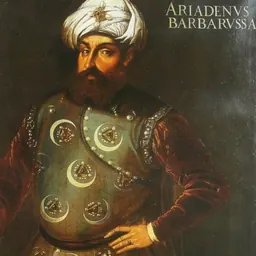
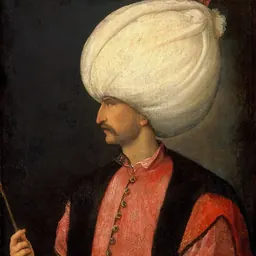

Related people
Same field, nearest in time

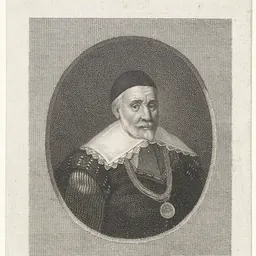



Contemporaries
People whose lives overlapped Álvaro de Bazán el Viejo's






Frequently asked questions
Who was Álvaro de Bazán el Viejo?
Commander of the galleys
When was Álvaro de Bazán el Viejo born?
Álvaro de Bazán el Viejo was born in 1506.
When did Álvaro de Bazán el Viejo die?
Álvaro de Bazán el Viejo died in 1558.
What was Álvaro de Bazán el Viejo's occupation?
Álvaro de Bazán el Viejo was a sailor and military personnel.
What nationality was Álvaro de Bazán el Viejo?
Álvaro de Bazán el Viejo was Spanish.
Sources & further reading
· Wikipedia: Álvaro de Bazán el Viejo
· DBpedia: Álvaro de Bazán the Elder
Cite this page
APA: Biography.guide. (2026). Álvaro de Bazán el Viejo. https://biography.guide/alvaro-de-bazan-el-viejo/
MLA: "Álvaro de Bazán el Viejo." Biography.guide, https://biography.guide/alvaro-de-bazan-el-viejo/.
Chicago: "Álvaro de Bazán el Viejo." Biography.guide. https://biography.guide/alvaro-de-bazan-el-viejo/.
Data last updated: 2026-09-20 · Spot an error? Report a correction.
Page generated 2026-09-27 05:27 UTC