
About Althea Gyles
Lived 1868 – 1949 (aged 81). Althea Gyles was a British poet and writer.
Althea Gyles (January 1867 – 23 January 1949) was an Irish poet and artist. She is known for her book cover designs, for writers who included W. B. Yeats.
Early life Margaret Alithea Gyles was born in Bath, Somerset, and christened there at Walcot on 5 February 1867. She had two older sisters, Lena Louisa and Maud Mary, both also born in Bath.
Her family home was Kilmurry, County Waterford. George Gyles, her father, was from a prominent Anglo-Irish family, which according to W. B. Yeats was "so haughty that their neighbours called them the Royal Family." Her mother, Alithea Emma Gyles, was the daughter of a Bishop of Hereford, Edward Grey, and a niece of Charles Grey, 1st Earl Grey. The family moved to Dublin in 1889.
Career
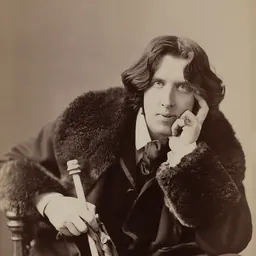
Gyles left Dublin for London in 1892, where she resumed studying art, firstly at Pedders, and then from 1893 at the Slade School of Fine Art. While in London she mixed with writers, including Oscar Wilde, who rated her work highly.
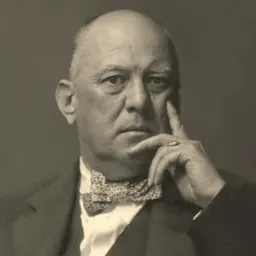
Both Yeats and Gyles were acquaintances of Aleister Crowley, with whom Gyles had a romantic affair. Their experiences with magic and astral vision are chronicled by Crowley as his fictional characters, with Crowley as Count Swanoff, Gyles as Hypatia Gay, and Yeats as Will Bute. In 1899, Gyles illustrated Wilde's The Harlot's House, which was published by Leonard Smithers. Gyles became involved with Smithers, which eventually caused Yeats to distance himself from her. Later in 1899, she designed the covers for Ernest Dowson's Decorations, which featured a stylised rose that Yeats described as her "central symbol." For the top board of The Night (1900), by John White-Rodyng, she pictured four swirling birds pecking at a heart between a sun and a moon, with stars. By mid-September 1900, Arthur Symons discovered her in an empty room at 15, Granby Place, Hampstead Road, "without a thing in the place, except five books (one a presentation copy from Oscar Wilde) and one or two fantastic gold ornaments which she used to wear; chloral by her side, and the bed strewn with MSS." Gyles had left her library with Yeats, to save it from the bailiffs. Symons sold Gyles's poem For a Sepulchre to the Saturday Review. She was recovering in the Royal Hospital for Diseases of the Chest, in the City Road, when Smithers went bankrupt. In November 1900 she offered Smithers £6 towards Wilde's funeral, which he refused.
Symons described Smithers as "a drunken brute whom no one could stand", who had "left her as soon as he had alienated her other friends." The breakdown of Smithers and Gyles's relationship led to a collapse in her health, from which she never recovered completely, and her work as a productive designer was effectively over. Her only surviving work is the rejected frontispiece for Yeats's The Wind Among the Reeds, which in the event was re-used for The Shadowy Waters (1900), and is held in the British Library. The spine design for The Secret Rose was reused in the 1902 edition, but it is unknown whether Gyles was involved in this redesign. In 1903, her front and rear cover designs for The Wind Among the Reeds were redrawn, but it is unlikely she redrew them. Subsequently, Yeats refused a number of her book spine designs.
One of Gyles's unfinished projects was an alphabet she was designing, The alphabet of the wonderful wood, around 1906. Eleanor Farjeon described her as "quite exquisitely gifted, as a writer and an artist; with the sort of temperament that stood in her own light", but added that she was "fascinating and exhausting." In 1914 she published Letters to Children about Drawing, Painting, and Something More, using the name "John Meade". Her manuscripts are now in the collections of the University of Reading.
Don’t just read it —
keep it.
Full-length biographies made to live with: read them, listen on the way to work, watch them tonight.
- E-book
- Audio
- Video
Instant download · yours to keep · every purchase keeps this site free
Important facts
People in Althea Gyles's life
Named in this biography and alive at the same time




Related people
Same field, nearest in time
Contemporaries
People whose lives overlapped Althea Gyles's

Frequently asked questions
Who was Althea Gyles?
Gyles, Margaret Alethea [known as Althea Gyles] (1868–1949), artist and poet
When was Althea Gyles born?
Althea Gyles was born on 17 January 1868 in Bath.
When did Althea Gyles die?
Althea Gyles died on 23 January 1949 in Beckenham.
What was Althea Gyles's occupation?
Althea Gyles was a poet and writer.
What nationality was Althea Gyles?
Althea Gyles was British.
Sources & further reading
Cite this page
APA: Biography.guide. (2026). Althea Gyles. https://biography.guide/althea-gyles/
MLA: "Althea Gyles." Biography.guide, https://biography.guide/althea-gyles/.
Chicago: "Althea Gyles." Biography.guide. https://biography.guide/althea-gyles/.
Data last updated: 2026-09-20 · Spot an error? Report a correction.
Page generated 2026-09-27 05:19 UTC