
Alois Grimm
German priest who was executed because his resistance to the Nazi régime in Germany
About Alois Grimm
Lived 1886 – 1944 (aged 57). Alois Grimm was a catholic priest, theologian, writer and resistance fighter.
Alois Grimm (24 October 1886 in Külsheim, Germany – hanged 11 September 1944 in Brandenburg-Görden) was a Jesuit priest, patristic scholar, educator, and victim of Nazi religious hostility.
Early years After graduation from Gymnasium (German high school), the young Grimm could not decide as to whether he should follow a navy career or become a priest. Together with his father he made a retreat with Jesuits in the Netherlands, since the order had been outlawed in Germany since the Kulturkampf (1870). In the fall of 1907, he entered the Society of Jesus. His philosophical and theological studies were interrupted by World War I, which he spent as a nurse in military hospitals. 1920 he was ordained priest and was assigned to the German Speaking Catholic Mission in Florence, Italy. From 1922 until 1926 he studied the classical languages, Latin and Greek, and history in Vienna and Heidelberg. From 1926 on he taught at the Jesuit Gymnasium, Kolleg Stella Matutina in Feldkirch Austria and after 1934 at the Kolleg St. Blasien in Germany.
Theological research As patristic scholar, Grimm worked on a critical edition of the Ambrosiaster for the Corpus Scriptorum Ecclesiasticorum Latinorum (CSEL) in Vienna, Austria. The Ambrosiaster is a Latin commentary on Saint Paul, dating back to the fourth century. It exists in many manuscripts and was believed to have been written by Ambrose of Milan. Grimm's research was aimed at making a critical edition of the Ambrosiaster, which would determine the original version as well as provide an accurate account of the development of variant texts.
Confrontation with National Socialism The rise of Nazism in Germany caused complications for the Jesuits at Sankt-Blasien, many of whom were openly opposed to the Nazi Party, its ideology, and its political program. Father Grimm was among those who became increasingly vocal in his opposition to Nazism while at Sankt Blasien, and he attracted the negative attention first of more sympathetic colleagues and then of the authorities. A layman who was teaching at Kolleg St. Blasien and a member of the NSDAP remarked, "Grimm talked in derogatory ways about our new ideology. I hope we will shut him up, for a long time, or better even, forever". Grimm was aware of this hostile attention and had some sense of its implications: It would be my greatest honour and luck, if something happens to me. On 12 August 1944, Roland Freisler stripped Father Grimm of all civil rights and privileges damnatio memoriae and sentenced him to death for two counts of undermining the fighting spirit of the German Wehrmacht and for defeatism. Reflecting on his sentence, Grimm wrote: "The hour has come, I am going home into eternity. In a few hours, I will stand in front of my Judge, my Redeemer and my Father. It is God's will, to be done everywhere. Don't mourn over me, I am returning home, you have to wait. I give my life for the kingdom of God, which knows no end, for the society of Jesus, for the youth and religion of our home land". Father Alois Grimm was hanged at the age of 57 on 11 September 1944 in the Brandenburg-Görden Prison.
Honours Five years after the execution, Grimm's ashes were given a resting place at the Kolleg St. Blasien by its Superior, Otto Faller: "Dear friend, this will be our vow on your silent grave, to live for the kingdom of God, which knows no end, for the Society of Jesus, for the youth and religion of our home land. Farewell, dear friend. From now on, be custodian of this house and its ever renewing youth, protect us with your spirit and pray for us, so we may keep our promises, always".
With these words, Kolleg St. Blasien was dedicated to Alois Grimm in 1949. Afterwards, other schools, buildings, streets were named after Father Alois Grimm. Today, in his hometown Kuelsheim, there is a Father Alois Grimm school. In the Jesuit Church in Innsbruck and in Pullach near Munich, Father Grimm is honored with memorial plaques. Last year, a new building in St. Blasien was named after him. Benedicta Kempner, the wife of US attorney Robert Kempner, war crime tribunals in Nuremberg set Alois Grimm a memorial in her book on the persecution of Catholic priests during the Nazi era.
Quotes of Father Grimm We live in a time, in which the Church of God is under attack like never before. Not compassion or pity, honour is being demanded today. But if the orders of this world are contrary to the orders of Christ, then the orders of the World are obviously wrong. Every human authority, yes, the authority of a whole people too, has to step back, before the authority of Christ. The suffering increases, the cross is getting heavier, as all seem to know. But Christ carrying his cross is our model, our consolation, even our joy. In front of us eternity full of light and the full victory of Christ, who will reign in truth forever. (1936) We live in a difficult time. Our responsibility before God and before the coming centuries will be enormous. Our prayer, work and sacrifice must contribute, so that the present and future belong to Christ. This is a large and beautiful calling, which should fill us with joy, despite all the sufferings. This is not the time for petty jealousies or self-pity. Everything is at stake. (1937)
Don’t just read it —
keep it.
Full-length biographies made to live with: read them, listen on the way to work, watch them tonight.
- E-book
- Audio
- Video
Instant download · yours to keep · every purchase keeps this site free
Important facts
People in Alois Grimm's life
Named in this biography and alive at the same time
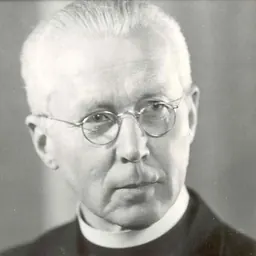
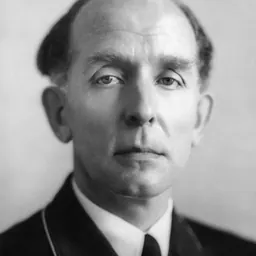
Related people
Same field, nearest in time
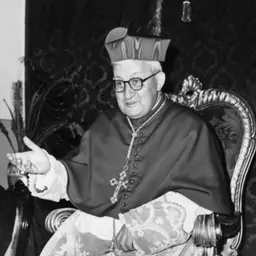
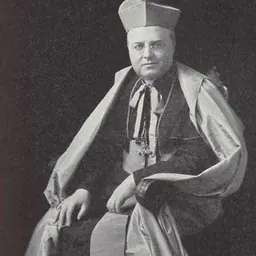


Contemporaries
People whose lives overlapped Alois Grimm's






Frequently asked questions
Who was Alois Grimm?
German priest who was executed because his resistance to the Nazi régime in Germany (1886-1944)
When was Alois Grimm born?
Alois Grimm was born on 24 October 1886 in Külsheim, Wertheim.
When did Alois Grimm die?
Alois Grimm died on 11 September 1944 in Berlin, Brandenburg an der Havel.
What was Alois Grimm's occupation?
Alois Grimm was a catholic priest, theologian, writer and resistance fighter.
What nationality was Alois Grimm?
Alois Grimm's recorded nationality: German Reich.
Sources & further reading
Cite this page
APA: Biography.guide. (2026). Alois Grimm. https://biography.guide/alois-grimm/
MLA: "Alois Grimm." Biography.guide, https://biography.guide/alois-grimm/.
Chicago: "Alois Grimm." Biography.guide. https://biography.guide/alois-grimm/.
Data last updated: 2026-09-20 · Spot an error? Report a correction.
Page generated 2026-09-27 05:28 UTC