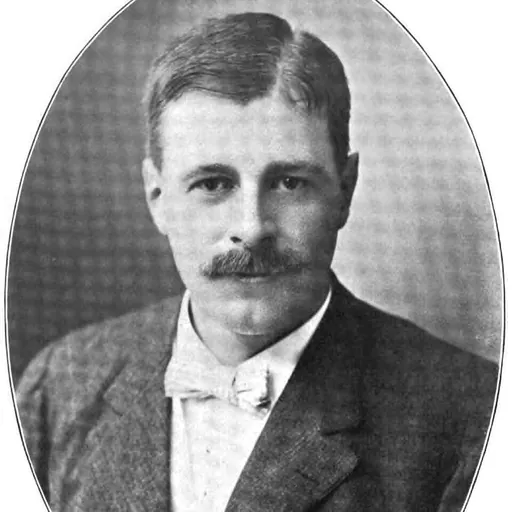
About Allen Hazen
Lived 1869 – 1930 (aged 60). Allen Hazen was an American engineer and chemist.
Allen Hazen (August 28, 1869 – July 26, 1930) was an American civil engineer and an expert in hydraulics, flood control, water purification and sewage treatment. His career extended from 1888 to 1930, and he is, perhaps, best known for his contributions to hydraulics with the Hazen-Williams equation. Hazen published some of the seminal works on sedimentation and filtration. He was President of the New England Water Works Association and Vice President of the American Society of Civil Engineers.
Early life and education Hazen was born in 1869 on his family farm located near the Connecticut River close to the small town of Norwich, Vermont. He attended the New Hampshire College of Agriculture and Mechanical Arts (which was affiliated with Dartmouth College) and graduated with a Bachelor of Science degree at 15 years of age.
During a year spent at MIT (1887–88), Hazen studied chemistry and came into contact with Professor William T. Sedgwick, Dr. Thomas M. Drown and fellow students George W. Fuller and George C. Whipple.
Career
As a direct result of his association with Dr. Thomas M. Drown, Hazen was offered his first job at the Lawrence Experiment Station in Lawrence, Massachusetts. LES was likely the first institute in the world devoted solely to investigations of water purification and sewage treatment. From 1888 to 1893, Hazen headed the research team at this innovative research institute into water purification and sewage treatment.
Hydraulics and dams
Hazen is most widely known for developing in 1902 with Gardner S. Williams the Hazen-Williams equation which described the flow of water in pipelines. In 1905, the two engineers published an influential book, which contained solutions to the Hazen-Williams equation for pipes of widely varying diameters. The equation uses an empirically derived constant for the “roughness” of the pipe walls which became known as the Hazen-Williams coefficient.
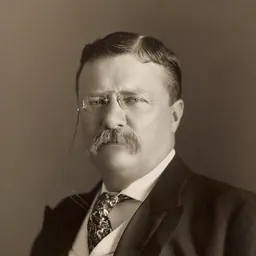
In 1908, Hazen was appointed by President Theodore Roosevelt to a panel of expert engineers to inspect the construction progress on the Panama Canal with President-elect William H. Taft. Hazen specifically reported on the soundness of the Gatun Dam (an integral structure in the canal system), which he said was constructed of the proper materials and not in any danger of failure.
Late in his career, Hazen concentrated on ways to statistically describe the recurrence interval of flood flows in rivers. His book on the subject was published the year he died.
The Allen Hazen Water Tower was built in 1930–31 in Des Moines, Iowa. Hazen designed the tower shortly before he died. In his honor, the City of Des Moines named the tower after him.
Water purification
Hazen’s early work at the Lawrence Experiment Station established some of the basic parameters for the design of slow sand filters. One of his greatest contributions to filtration technology was the derivation of two terms for describing the size distribution of filter media: effective size and uniformity coefficient. These two parameters are used today to specify the size of filter materials for water purification applications. His first book, The Filtration of Public Water Supplies, was published in 1895.
His first assignment as a sole practitioner in 1897 was the design of the filtration plant at Albany, New York. The plant was the first continuously operated slow sand filter plant in the U.S.
One of his early assignments was as consultant to Pittsburgh, Pennsylvania, to determine the best method of providing a safe water supply from the Monongahela River. For decades, the city had been wracked with typhoid fever epidemics. At the time, mechanical filtration (or rapid sand filtration) was just beginning to be understood as a treatment process. As a conservative engineer, Hazen recommended that the City install slow sand filters to remove both turbidity and harmful bacteria from its water supply. As early as 1904, Hazen recommended the filtration of the Croton water supply for New York City. As of 2012, a new filtration plant on that water supply is nearing completion.
Consulting firms
For most of his career, Hazen was a consulting engineer to many municipalities and other clients. Noyes and Hazen, Boston, Massachusetts, 1895–1897 Single practice, New York City, 1897–1904 Hazen and Whipple, New York City, 1904–1924 Hazen and others (Weston E. Fuller, Malcolm Pirnie, Chester M. Everett and L.N. Babbitt), New York City, 1924–1930
In 1897, Allen Hazen opened up a single person practice in New York City and for a couple of years, shared the same address as one of his professional colleagues, George W. Fuller at 220 Broadway.
Hazen’s clients included Albany, New York; New York City; Washington, DC; San Francisco, California; Lawrence and Springfield, Massachusetts; Providence, Rhode Island; Pittsburgh and Philadelphia, Pennsylvania; St. Louis, Missouri, Brisbane, Australia; and Ottawa and Toronto, Canada. Their son Richard Hazen (1911-1990) was also a professional engineer in the field of water supply and wastewater engineering, and founded the consulting firm Hazen and Sawyer in 1951.
Professional associations
He was active in numerous professional associations. He was President of the New England Water Works Association and Vice President of the American Society of Civil Engineers. In the fall of 1929, Hazen and his wife attended the World Engineering Congress in Tokyo, Japan as a representative of the American Society of Civil Engineers.
Honors
Hazen received honorary degrees of Doctor of Science from both New Hampshire College of Agriculture and Mechanical Arts (1913) and Dartmouth College (1917). In 1915, he received the Norman Medal which is the highest honor given by the American Society of Civil Engineers for a technical paper that "makes a definitive contribution to engineering science." He was selected as an Honorary Member of the American Water Works Association in 1930.
Limited list of publications Sedgwick, William T. and Hazen, Allen. (1892). “Typhoid Fever in Chicago.” Engr. News and American Railway Jour. April 21. Hazen, Allen. (1895). The Filtration of Public Water-Supplies. New York:Wiley. Hazen, Allen, (1896). “The Measurement of the Colors of Natural Waters,” American Chemist Jour. 18: 364. Hazen, Allen. (1899). “Report of the Consulting Engineer.” In Report of the Filtration Commission of the City of Pittsburgh, Pennsylvania. Pittsburgh:n.p., 27-86. Hazen, Allen. (1905). “Purification of Water for Domestic Use.” Trans. ASCE. 54:Part D, 131-54. Williams, Gardner S. and Hazen, Allen. (1905). Hydraulic Tables. New York:Wiley. Hazen, Allen. (1906). “Report of Allen Hazen.” In Report on the Joint Committee on Sewage Disposal of the City of Paterson. Paterson:n.p. Hazen, Allen. (1916). Clean Water and How to Get It. New York:Wiley. Hazen, Allen. (1930). Flood Flows: A Study of Frequencies and Magnitudes. New York:Wiley.
Don’t just read it —
keep it.
Full-length biographies made to live with: read them, listen on the way to work, watch them tonight.
- E-book
- Audio
- Video
Instant download · yours to keep · every purchase keeps this site free
Important facts
People in Allen Hazen's life
Named in this biography and alive at the same time

Related people
Same field, nearest in time


Contemporaries
People whose lives overlapped Allen Hazen's



Frequently asked questions
Who was Allen Hazen?
American engineer
When was Allen Hazen born?
Allen Hazen was born on 28 August 1869 in Norwich.
When did Allen Hazen die?
Allen Hazen died on 26 July 1930.
What was Allen Hazen's occupation?
Allen Hazen was an engineer and chemist.
What nationality was Allen Hazen?
Allen Hazen was American.
Sources & further reading
Cite this page
APA: Biography.guide. (2026). Allen Hazen. https://biography.guide/allen-hazen/
MLA: "Allen Hazen." Biography.guide, https://biography.guide/allen-hazen/.
Chicago: "Allen Hazen." Biography.guide. https://biography.guide/allen-hazen/.
Data last updated: 2026-09-22 · Spot an error? Report a correction.
Portrait: Wikimedia Commons · author & licence
Page generated 2026-09-27 05:02 UTC