
About Allen George Newman
Lived 1875 – 1940 (aged 64). Allen George Newman was an American sculptor.
Allen George Newman III (August 28, 1875 – February 2, 1940) was an American sculptor, best known for his statue "The Hiker".
Early life He was born in New York City, the son of hardware manufacturer Allen G. Newman, Jr. and his wife Ada E. Hinde. He attended public schools, and the City College of New York, 1890–92.
Career
Newman's early works were relatively modest, busts and relief portraits, or architectural sculpture for buildings at American expositions. He modeled life-size figures of The Pioneer and Greek Water Carrier for J. L. Mott Iron Works of New York City, which were cast in zinc and mass-produced.
The Hiker
Newman had a tremendous early success with The Hiker, a statue of a slouching Spanish–American War soldier, possibly based on an 1899 illustration by Frederic Remington. A heroic size version (in plaster?) was exhibited in the New York State Building at the 1907 Jamestown Exposition. Jno. Williams, Inc., a New York foundry, cast bronze versions in several sizes – heroic (9 ft / 2.74 m), life size (7 ft / 2.13 m), and multiple reduced sizes. More than twenty examples adorn war memorials across the United States. Sculptor and critic Lorado Taft called The Hiker "the best bronze soldier in America."
Other works
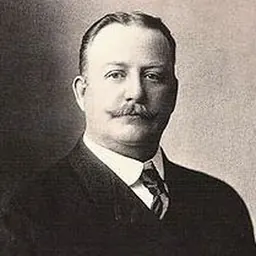
Newman was commissioned by an organization of Atlanta, Georgia, businessmen to create a peace monument for Piedmont Park, commemorating reconciliation between the North and South. The Triumph of Peace depicts a winged goddess holding an olive branch, who declares "Cease Firing – Peace Is Proclaimed," to a Confederate soldier holding a rifle. The gesture of reconciliation was considered significant enough that President William Howard Taft attended the monument's October 10, 1911 dedication. The bronze sculpture was restored in 2016. It was vandalized in August 2017.
The Atlanta peace monument may have led to other Southern commissions. Newman modeled a number of statues and portrait reliefs of Southern politicians and businessmen. and relief portraits of a Confederate officer and a Union officer for monuments in Vicksburg National Military Park.
Newman was commissioned to create a monument in honor of Lt. Col. Herman Koehler, who revolutionized physical education at the United States Military Academy. The bronze tablet, which included a relief portrait, was installed in West Point's Hayes Gymnasium and unveiled on the occasion of the instructor's retirement. Its inscription reads: "To Lieut. Col. Herman J. Koehler, Master of the Sword U.S.M.A. 1885–1923." These [portals] were done in the ornate, highly florid Renaissance style known as "plateresque," from the tendency of the Spanish silversmiths to cover every inch of surface with decoration. Rich pilasters on small tasteful corbels divided the spaces above the entrance openings into three bays, each of which contained a niche, the central one canopied. But no saints were in these niches. What you saw were El Capitan, the Conquistador, in the center under the canopy; and on either side of him, each in his lesser niche, a real old low-browed, bow-legged, walk-the-plank pirate, with a most business-like noosed rope in his hands, the bight of which fell in decorative line to his feet. These figures were the work of Allen Newman. They were of commanding stature, being 13 feet [4 m] tall, and from their pedestals 50 feet [15.2 m] in the air they glowered on the sea, where not so long ago their prototypes had made and for a time had held their strong and cruel empire. They were surrounded by a nimbus of the most delicate ornament, which they saved from fatal sweetness and to which they gave a spark of heroic fire.
The portals were also polychromatic, with the dark pink of the unglazed terra cotta accented by glazed pieces in turquoise and burnt orange.
Honors Newman was elected to the National Sculpture Society in 1907, and voted an associate of the National Academy of Design in 1926. He was a member of the Architectural League of New York and other arts organizations. and Bayonne, New Jersey. See The Hiker (Newman) for a list of other locations. Relief portrait: Gen. Philip H. Sheridan (bronze, 1910), Sheridan Monument, Lackawanna County Courthouse, Scranton Pennsylvania. On the monument's reverse side is a relief panel, Sheridan's Ride. Women of the Confederacy Monument (bronze, 1914–15), Confederate Park, Jacksonville, Florida Relief portrait: Col. Francis M. Cockrell (bronze, 1915), Cockrell Monument, Vicksburg National Military Park, Vicksburg, Mississippi Relief portrait: Col. Thomas J. Lucas (bronze, 1916), Lucas Monument, Vicksburg National Military Park, Vicksburg, Mississippi The Doughboy (bronze, 1921), World War I Memorial, Doughboy Square, Lawrenceville, Pittsburgh, Pennsylvania Later casts in Rhinebeck, New York, and Cliffside Park, New Jersey. Sacrifice (granite, 1922), World War I Memorial, Legion Park, Pittsburgh, Pennsylvania The Rough Rider (bronze, 1931), Spanish–American War Memorial, Buchanan Park, Lancaster, Pennsylvania. Spanish–American War Memorial (bronze, 1932), Belle Isle Park, Detroit, Michigan. It features a cast of Newman's Hiker (1904) and his Sailor (1932). World War II Memorial (granite, 1948), Frankstown Avenue & Bennett Street, East Hills, Pittsburgh, Pennsylvania, J. C. McCabe, fabricator.
Statues
The Owl, Scarritt Memorial Drinking Fountain (bronze, 1903), DePaul University, Chicago, Illinois The Hiker (1904), Munson-Williams-Proctor Arts Institute, Utica, New York The first bronze cast from Newman's 28-in (71 cm) plaster maquette. The Hiker (plaster?, c.1907), New York State Building, 1907 Jamestown Exposition, Jamestown, Virginia. The Pioneer (zinc, c.1905), J. L. Mott Iron Works, New York City. A 1910 cast of The Pioneer stands atop the Carter Memorial Fountain in Ashland, Oregon. Music of the Waters Fountain (marble, 1910), Riverside Drive at 156th Street, Manhattan, New York City Audrey Munson posed for the mermaid figure. The Triumph of Peace (bronze, 1911), Piedmont Park, Atlanta, Georgia. William C. Oates (bronze, c.1911), Oates Grave Monument, Oakwood Cemetery, Montgomery, Alabama. The life-size statue stands before an obelisk. Israel A. Marks (bronze, 1913), Highland Park, Meridian, Mississippi Life-size crucifix (bronze, c.1913), Saint John the Baptist Greek Orthodox Church, Perth Amboy, New Jersey Thomas Johnston Grier (bronze, c.1920), Christ Episcopal Church, Lead, South Dakota Daniel S. Dickinson (bronze, 1924), Broome County Courthouse, Binghamton, New York
Architectural sculpture Pedimental relief: Liberty and Justice—Seal of the State of New York (medium, 1904), New York State Building, 1904 World's Fair, Saint Louis, Missouri The Conquistador (terra cotta, 1915) The Pirate (terra cotta, 1915). A reduced size version of The Pirate was exhibited at the National Sculpture Society, 1916, and the Pennsylvania Academy of the Fine Arts, 1916. History of Medicine Frieze (marble, 1937), Lobby, Jersey City Medical Center, Jersey City, New Jersey
Busts, bas reliefs & medals
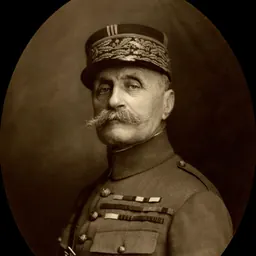
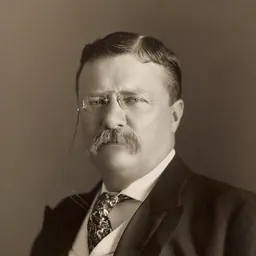
Relief portrait: Thomas C. Wrigley (bronze, c.1905), Wrigley Memorial, Wrigley Park, Paterson, New Jersey An ornate streetlight erected by The Colonial Dames of America. Bust: Maj. Gen. Edgar A. Russell (bronze, c.1910), U.S. Military Academy, West Point, New York Edward Ames Temple Memorial Tablet (1913), Historical Department Building, Iowa State University, Ames, Iowa. Features 6 relief portraits of Iowa pioneers. Features a nude St. Joan grasping her shield. Exhibited at the Pennsylvania Academy of the Fine Arts, 1916. Relief portrait: Lewis Cass (bronze, 1915), Cass Memorial, Mackinac Island State Park, Mackinac Island, Michigan National Arts Club Valor Medal (bronze, 1917), National Arts Club of New York. Newman's medal design was chosen from the submissions of about 100 sculptors. Bust: Cardinal William H. O'Connell, Cardinal O'Connell Memorial Fountain (bronze, 1918), Cardinal O'Connell Parkway, Lowell, Massachusetts Relief portrait, Theodore Roosevelt Memorial Plaque (bronze, 1919), cast by John Polachek, Long Island City. Relief portrait, Ferdinand Foch Memorial Plaque (bronze, 1919), cast by John Polachek, Long Island City. Relief portrait, Woodrow Wilson Memorial Plaque (bronze, c.1919), cast by John Polachek, Long Island City. An example is at Woodrow Wilson Presidential Library, Saunton, Virginia. Relief portrait: Lt. Col. Herman Koehler (bronze, 1923), Koehler Tablet, Hayes Gymnasium, U.S. Military Academy, West Point, New York.
Don’t just read it —
keep it.
Full-length biographies made to live with: read them, listen on the way to work, watch them tonight.
- E-book
- Audio
- Video
Instant download · yours to keep · every purchase keeps this site free
Important facts
People in Allen George Newman's life
Named in this biography and alive at the same time



Related people
Same field, nearest in time



Contemporaries
People whose lives overlapped Allen George Newman's



Frequently asked questions
Who was Allen George Newman?
American artist (1875–1940)
When was Allen George Newman born?
Allen George Newman was born on 28 August 1875 in New York City.
When did Allen George Newman die?
Allen George Newman died on 2 February 1940 in New York City.
What was Allen George Newman's occupation?
Allen George Newman was a sculptor.
What nationality was Allen George Newman?
Allen George Newman was American.
Sources & further reading
· Wikipedia: Allen George Newman
· DBpedia: Allen George Newman
Cite this page
APA: Biography.guide. (2026). Allen George Newman. https://biography.guide/allen-george-newman/
MLA: "Allen George Newman." Biography.guide, https://biography.guide/allen-george-newman/.
Chicago: "Allen George Newman." Biography.guide. https://biography.guide/allen-george-newman/.
Data last updated: 2026-09-20 · Spot an error? Report a correction.
Page generated 2026-09-27 05:05 UTC