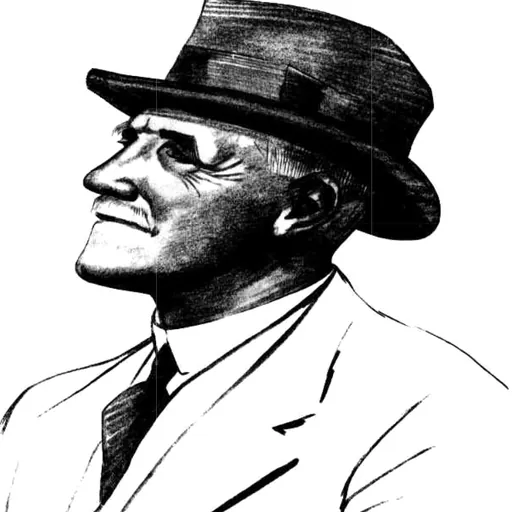
Alister Clark
Australian rosarian
About Alister Clark
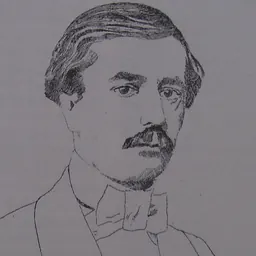
Lived 1864 – 1949 (aged 84–85). Alister Clark was an Australian rose breeder.
Alister Clark (1864–1949) was the best known and most influential Australian rose breeder. His roses were the most widely planted in Australia between the World Wars and made an enduring difference to the appearance of Australian cities. His experiments hybridising Rosa gigantea were in world class and have never been surpassed.
Biography
Alister Clark was the son of an immigrant Scottish tenant farmer who did well in Australia, leaving his family with several outback cattle stations, as well as "Glenara", a big property in a valley at Bulla, north of Melbourne. Clarke and his siblings received a genteel upbringing and knew Europe well: Clark was educated at Loretto School in Scotland and at Jesus College, Cambridge. He married Edith Mary a New Zealander with a considerable fortune and never worked, giving himself over to the business of being a gentleman: huntsman, polo player, racehorse owner, golfer, photographer — and rose breeder. He began his rose breeding by ordering roses from Paul & Son in England; later they came from the Nabonnand nursery at Golfe-Juan on the French Riviera. Between 1912 and his death, Clark released about 150 roses, usually through the garden and sporting clubs to which he gave the royalties.
Daffodils Clark was also a keen breeder of daffodils. In 1897 Clark had joined a syndicate, including Thomas Hanbury (creator of the famous Riviera garden of La Mortola) and Ellen Willmott (of Warley Place), which bought the stock of daffodil bulbs bred by Rev. G. H. Engleheart. He also bought half the stock of a bulb collection made by English Shakespearean actor, George Titheradge. According to Tommy Garnett, the best known of Clark's daffodils is probably 'Mabel Taylor', still in commerce and used for breeding. of 1924 and 'Nancy Hayward' of 1937 have never lost public favour. of 1919, 'Lady Huntingfield' of 1937 (named after the State Governor's wife) and 'Squatter's Dream' of 1923 (named after a racehorse) are roses which have been unknown or underrated outside Australia.
Soon after the First World War, Clark's experiments with Rosa gigantea slowed down. He turned to creating what are essentially hybrid teas in a wide variety of forms: low shrubs ('Mab Grimwade'), high bushes ('Editor Stewart'), rampant climbers ('Mrs Richard Turnbull'), pillar roses ('Princeps'), roses for hedges ('Sunny South'), ramblers ('Gladsome') and dwarves ('Borderer'). He seems to have had no breeding plan beyond making as many crosses as possible at "Glenara" and seeing what came up. His grounds became "a vast nursery for the propagation of roses and daffodils." Roses should be tested in the climate they were meant for, he said. And he insisted that a seedling (like a yearling) takes three years to show what it can do.
Perhaps it is surprising for a man who wore a bowler hat and wing collar to the races in 1920, but his roses have the bright pinks, creamy apricots and hard reds of between-the-wars taste. It was the great age of the single or near-single rose; he bred 'Nancy Hayward,' 'Cicely Lascelles' and 'Squatter's Dream.' It is difficult to tell how his taste adjusted to the 1940s since 30 of the 40 roses he produced then have been lost, casualties of war.
'Lorraine Lee,' 'Nancy Hayward' and 'Black Boy' have never left the nursery catalogues. A heading in Charles Quest-Ritson's authoritative Climbing Roses of the World says simply "Alister Clark: The Great Australian Rose Breeder."
Rose names and dedications Most of Clark's roses are named after and for women he knew, more often than not from landed families ('Cicely Lascelles,' 'Kitty Kininmonth'). Most women in his own family and all wives of Victorian Governors and Australian Governors-General had roses named for them. Lady Gowrie already had one, so hers had to be called 'Zara Hore-Ruthven.' Very few men received roses, all of them rose people in one way or another. Far more are devoted to racehorses: 'Squatter's Dream,' 'Flying Colours' and so on. Trailing the field are descriptive titles: 'Sunny South,' 'Borderer' and 'Daydream.' 'Scorcher' and 'Billy Boiler' were slang for a hot day.
Where Alister Clark roses can be seen Alister Clark made an enormous and enduring difference to the appearance of Australia. Thousands of plants of 'Lorraine Lee' in particular, bred ninety years ago, can be seen in every temperate town and city.
Sixty-seven of his available roses are collected at the Alister Clark Memorial Rose Garden in Bulla, the township next to "Glenara." The Morwell Centenary Rose Garden in Morwell, Victoria lists 38, including the often-confused 'Black Boy' and 'Countess of Stradbroke.' In Canberra the centre of the Rex Hazlewood Rose Garden at Old Parliament House has 26 Alister Clark roses, including such relative rarities as 'Mrs Albert Nash.' The Victoria State Rose Garden at Werribee Park has a large collection, especially of his gigantea climbers. The Geelong Botanic Gardens have 'Borderer,' 'Lady Huntingfield,' Mrs Maud Alston,' 'Mrs Fred Danks' and 'Squatter's Dream.' The Adelaide Botanical Garden has some, including 'Amy Johnson.' The Kodja Place Roze Maze at Kojonup, Western Australia uses hedges of Australian roses, including 32 by Alister Clark.
Public gardens in suitable climates beyond Australia contain a tiny number of his roses. The Monserrate Palace garden at Sintra outside Lisbon has three. Sangerhausen in northern Germany has a small selection of Clark roses including two which would otherwise be extinct. Many of his roses were popular in the United States between the wars and, after a long lapse, interest has revived. Few European collectors of hybrid gigantea crosses have Clark examples in private gardens.
Gallery
Don’t just read it —
keep it.
Full-length biographies made to live with: read them, listen on the way to work, watch them tonight.
- E-book
- Audio
- Video
Instant download · yours to keep · every purchase keeps this site free
Important facts
People in Alister Clark's life
Named in this biography and alive at the same time




Related people
Same field, nearest in time




Contemporaries
People whose lives overlapped Alister Clark's
Frequently asked questions
Who was Alister Clark?
Australian rosarian
When was Alister Clark born?
Alister Clark was born in 1864.
When did Alister Clark die?
Alister Clark died in 1949.
What was Alister Clark's occupation?
Alister Clark was a rose breeder.
What nationality was Alister Clark?
Alister Clark was Australian.
Sources & further reading
Cite this page
APA: Biography.guide. (2026). Alister Clark. https://biography.guide/alister-clark-rose-breeder/
MLA: "Alister Clark." Biography.guide, https://biography.guide/alister-clark-rose-breeder/.
Chicago: "Alister Clark." Biography.guide. https://biography.guide/alister-clark-rose-breeder/.
Data last updated: 2026-09-24 · Spot an error? Report a correction.
Portrait: Wikimedia Commons · author & licence
Page generated 2026-10-03 09:37 UTC