
Alika Kinan
Argentina-born feminist and anti-trafficking activist
About Alika Kinan
Born 1976. Alika Kinan is an Argentine women's rights activist and activist.
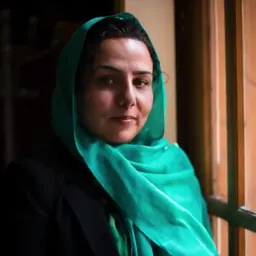
Alika Kinan Sánchez (born 24 June 1976) is an Argentine feminist and anti-human trafficking activist. After a police raid at the brothel where she was being sexually exploited in 2012, she began advocating for the abolition of prostitution. She attracted media attention in Argentina when she sued her exploiters and the city where the brothel was located. She became known worldwide when the United States Department of State gave her an award for her anti-trafficking activism.
Kinan holding an award together with Rex Tillerson and Ivanka Trump on 27 June 2017.
Childhood and family Kinan's family had enough money to provide her a good education, but her life began to spiral downhill when her father began to abuse her mother. Kinan has said that her mother, along with her grandmother and her aunts, were prostituted. She has described how her father used to tell stories after dinner about how he met her mother and how he rescued her from the zulo. (Zulo is a word with many meanings. In this context, it could mean either a small, wretched apartment, or a brothel.) Kinan was raped at age fourteen. Her parents separated when she was fifteen and her younger sister was nine, and her father stopped supporting the family.
Abandoned by parents, enters sex work A year later Kinan's mother went to Buenos Aires, leaving her to care for her sister. ) Kinan tried cooking and selling a local pastry but couldn't earn enough to support herself and her sister. Her father refused to help her. which would have reduced the amount of money she could earn to support herself and her sister. She says
... when I was younger, I tried to avoid the police because there was a follow-up, a payment of fines, but I was still underage and if the police caught me it would be worse. Kinan was told that she would get many clients who paid well in dollars, and she could keep 50% of the clients fees, as opposed to the 40% that she kept in Córdoba.
She said to me "I was in the south, you earn very good money, there are fishing boats, many foreigners, you can charge in dollars, you earn double because you are paid best." ... they gave you 40%, and so I went to Ushuaia where they did not deduct so much. eighteen, nineteen or twenty. A plane ticket was sent to her and in Ushuaia she began work at a nightclub called Sheik where, as promised, she kept 50% of the clients' fees. After a while she rented a place and sent for her sister, paying for her school, English classes, computers, clothing, and food. He paid her managers extra to spend extra time with her, but she wasn't informed and as she comments, "... obviously I did not see any of it." and Kinan returned to Ushuaia and Sheik to support herself and her children. Information and employees seem to have moved more or less freely between the six brothels of Ushuaia, which were located within a few blocks of each other. When many of Ushuaia's sex workers migrated to Punta Arenas in Chile after the police raids shut down the brothels in Ushuaia, (Equivalent to the American expression "butterface" or the Australian expression "prawn.") This was cited at the trial as an example of the managers' contempt toward the women. Kinan remembers the following scene:
The nightclub had installed bells in the women's rooms that they could ring if they needed help, for example, if a client became violent. However, Kinan testified that often no one would come, the excuse being that the manager was busy with customers.
On the subject of condoms, if a client was too forceful during penetration and tore one, the women got a syringe full of vinegar in the vagina.
Brothels didn't sell drugs as part of their business, but they were present. They show up in Kinan's interviews as part of the environment she worked in. If a client paid for an hour with a woman and wanted her to do a line of coke with him, the ever-present threat of fines and the pressure to keep the client happy would have made it hard to refuse. Stimulants would also counter the effects of alcohol and help the woman stay alert enough to continue working into the morning. Presumably, the women would have repaid the manager and not the nightclub. This seems to show the managers personally making loans to the sex workers. On the other hand, the managers who made loans were part owners, and there may have been no clear line between their money and the nightclub's money.
At least some of the women who worked at Sheik arrived in such a state of poverty that the nightclub or its managers had to extend credit for the airplane fare, clothes for the women to wear while working, and housing. The employees would not have been able to work at Sheik and the nightclub would not have been able to recruit and keep employees without making loans to them.
Kinan has said "Every time we said we wanted to leave, we were told that we could not because we had debts," During both periods that Kinan was working in Ushuaia as a sex worker, the cost of living was higher than more northern parts of Argentina. Anyone moving there for higher wages would discover that they were having trouble retaining the extra money they were earning. When the women at Sheik complained about not being able to hold on to a single peso, their complaints may have been due as much to the cost of living as to the fines and costs the brothel was imposing on them.
Children
He pointed out that Montoya had faced a similar charge in the provincial court in 2011 and the case had been dismissed.
... now the same complaint has been reissued in Federal, therefore we will ask for acquittal. As part of the suspended sentences, the court placed restrictions on where the two women could reside, required them to avoid overconsumption of alcohol, and ordered them to refrain from using narcotics.
The prosecutor stated that even though the penalties were less than the prosecution had requested, the verdict was a change in the way the judicial system viewed sex trafficking.
Kinan on sex work Kinan is an abolitionist opposed to decriminalization. She believes that trafficking can only be abolished by giving women the things that she herself has struggled for.
For Kinan, the alternative to abolishing sex work is regulating it. Her experience of regulation was the medical exams at Ushuaia, where physicians authorized by the city ridiculed and disparaged the sex workers they were examining. This combined with similar treatment from clients leads her to place regulators and clients in interlocking roles.
The Municipality set up the sanitary notebooks, very much like Senasa or bromatological analysis. [SENASA is the federal food safety agency in Argentina.] Did you see when you go to buy meat in the supermarket? There you walk down the aisle and you see that everything has passed through sanitary inspections, and that the meat is fit for human consumption. And you are one more piece of meat. The client of prostitution enters the premises and says I'm having a ribeye, or a piece of beef, a hamburger. You feel like the merchandise that has given up its own will, to be consumed, to be raped.
And another says she was "a victim of forced prostitution for 16 years." The sources cited use the word "trapped" in a context implying some sort of physical coercion. In Córdoba she didn't live in the brothel. The brothel work paid for the place she rented for herself and her younger sister.
Don’t just read it —
keep it.
Full-length biographies made to live with: read them, listen on the way to work, watch them tonight.
- E-book
- Audio
- Video
Instant download · yours to keep · every purchase keeps this site free
Important facts
People in Alika Kinan's life
Named in this biography and alive at the same time


Related people
Same field, nearest in time





Contemporaries
People whose lives overlapped Alika Kinan's





Frequently asked questions
Who is Alika Kinan?
Argentina-born feminist and anti-trafficking activist
When was Alika Kinan born?
Alika Kinan was born on 24 June 1976 in Córdoba.
What is Alika Kinan's occupation?
Alika Kinan is a women's rights activist and activist.
What nationality is Alika Kinan?
Alika Kinan is Argentine.
Sources & further reading
Cite this page
APA: Biography.guide. (2026). Alika Kinan. https://biography.guide/alika-kinan/
MLA: "Alika Kinan." Biography.guide, https://biography.guide/alika-kinan/.
Chicago: "Alika Kinan." Biography.guide. https://biography.guide/alika-kinan/.
Data last updated: 2026-09-26 · Spot an error? Report a correction.
Page generated 2026-09-27 05:14 UTC