
About Alibhai Mulla Jeevanjee
Lived 1856 – 1939 (aged 82–83). Alibhai Mulla Jeevanjee was an Indian merchant and politician.
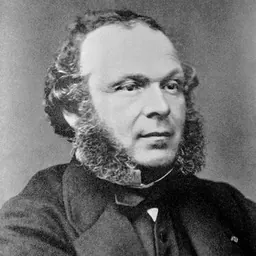
Alibhai Mulla Jeevanjee (1856– 2 May 1936) was an Indian-born Kenyan merchant, politician and philanthropist. He was amongst the first and most influential Indian settlers in Kenya, amassing significant wealth and becoming a leader of Kenya's Indian community.
Early life Jeevanjee was born in Karachi, then part of the Bombay Presidency in British India present day Pakistan, to Shia Dawoodi Bohra parents. He has also been incorrectly referred to as a Parsi in several contemporary sources.
His father Moosajee Mulla Jeevanjee was a horse and cart driver and he received minimal education. At the age of thirty and upon the death of his father he left home to wander India, embarking on a career as an itinerant peddler.
Returning to Karachi, he established a company providing stevedoring and translation services to visiting ships. In 1890 he sailed to Mombasa on a dhow to open a branch of his company there, branching out into road building, construction and transport. The first group to arrive had a total of 350 men and the number grew for the next six years to reach a total of 31,895. Most of the workforce were Sikhs, Hindus and Muslims who worked as skilled labourers, artisans, bricklayers, carpenters, plumbers, tailors, motor mechanics and electrical fitters.
The construction of the railway proved hugely profitable for Jevanjee and his company in Mombasa. He now established a commercial empire across the Indian Ocean, including two steamships between Mauritius and Bombay and between Bombay and Jeddah. He was lauded in the European press as a "real asset to a young country", who spoke English with "quite a good accent" and whose methods were "approximating more to the European, than the Asiatic type.
In 1901 he bought the Indian bazaar in Nairobi, and in 1904 built a permanent market named Jeevanjee market with the aim of developing trade in European produce on a global scale.
He was also a notable philanthropist, supporting religious institutions, the Bohra mosque and cemetery in Nairobi and several schools in Karachi. In 1906 he gifted Nairobi City Council a marble statue of Queen Victoria which he had commissioned. During the First World War, he offered his services to the government to help alleviate food shortages suffered by Indians in German East Africa and Zanzibar.
Politics When construction of the Uganda Railway reached Lake Victoria, Jeevanjee began taking an active role in political life, and launched the African Standard which was a weekly newspaper. He had hired an editor-reporter, W.H. Tiller whose work was to oversee the operations of the newspaper. In 1905, he sold the newspaper to two British businessmen, Anderson and Mayer, who renamed it the East African Standard. Later in 1910 the paper became a daily newspaper and it moved its headquarters to Nairobi which was a fast developing commercial center.
Jeevanjee co-founded the Mombasa Indian Association in response to the European settlers' Convention on Associations and began to mobilise the Indian community in the struggle for equal rights. By positioning himself as pro-imperialist, fighting for Indian equality within the framework of the Empire and reserving his ire for the policies of the white settlers, the majority of whom happened to be Boer rather than British, he was able to attract sympathy amongst the British press.
Jeevanjee's increasing political activism began to be detrimental to his business interests and during this period he began losing grip on the empire he had built up.
In 1920, he gave a fiery speech attacking racist settler policies restricting Indian access to the franchise and White Highlands and citing discrimination in taxation, education, municipal services and residential areas. The following year, he mobilised the Indian community of Nairobi to withhold payment of rates for the Municipal Council of Nairobi. He was indicted for non-payment of rates but won the case in the courts on a technicality forcing the legislature to pass a new bill on the collection of municipal rates. One newspaper described him as the "Grand Old Man of Kenya", whilst another stated he was the "first man to demand equality and that "he laid the foundations of an organised political movement in Kenya".
Jeevanjee Gardens In 1906, whilst at the height of his wealth, Jeevanjee began construction of gardens which were to be known as Jeevanjee Gardens. In 1906 he gifted the gardens to the people of Nairobi to use as a place to relax. These gardens became the subject in the news headlines in 1991 where some leaders in authority were purporting to turn it into a commercial plot. There had been a proposed construction of a Multi-storey car park which was against the wish of Jeevanjee. The youngest remaining daughter of Jeevanjee, the late Shirin Najmudean moved to Nairobi to stop the planned development on the piece of land.
Don’t just read it —
keep it.
Full-length biographies made to live with: read them, listen on the way to work, watch them tonight.
- E-book
- Audio
- Video
Instant download · yours to keep · every purchase keeps this site free
Important facts
People in Alibhai Mulla Jeevanjee's life
Named in this biography and alive at the same time

Related people
Same field, nearest in time


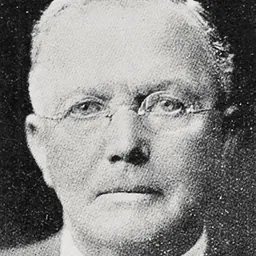
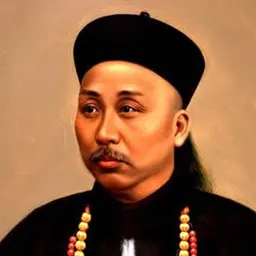
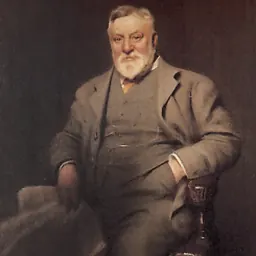
Contemporaries
People whose lives overlapped Alibhai Mulla Jeevanjee's
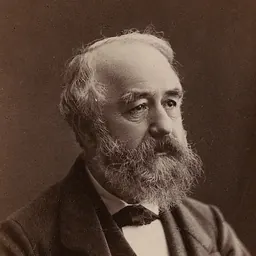




Frequently asked questions
Who was Alibhai Mulla Jeevanjee?
entrepreneur
When was Alibhai Mulla Jeevanjee born?
Alibhai Mulla Jeevanjee was born in 1856 in Karachi.
When did Alibhai Mulla Jeevanjee die?
Alibhai Mulla Jeevanjee died in 1939 in Nairobi.
What was Alibhai Mulla Jeevanjee's occupation?
Alibhai Mulla Jeevanjee was a merchant and politician.
What nationality was Alibhai Mulla Jeevanjee?
Alibhai Mulla Jeevanjee was Indian.
Sources & further reading
· Wikipedia: Alibhai Mulla Jeevanjee
· DBpedia: Alibhai Mulla Jeevanjee
Cite this page
APA: Biography.guide. (2026). Alibhai Mulla Jeevanjee. https://biography.guide/alibhai-mulla-jeevanjee/
MLA: "Alibhai Mulla Jeevanjee." Biography.guide, https://biography.guide/alibhai-mulla-jeevanjee/.
Chicago: "Alibhai Mulla Jeevanjee." Biography.guide. https://biography.guide/alibhai-mulla-jeevanjee/.
Data last updated: 2026-09-25 · Spot an error? Report a correction.
Page generated 2026-09-27 05:10 UTC